



 Chat with AI
Exam 4: Organization of the Cell

Exam 1: A View of Life66 Questions
Exam 2: Atoms and Molecules the Chemical Basis of Life69 Questions
Exam 3: The Chemistry of Life Organic Compounds68 Questions
Exam 4: Organization of the Cell71 Questions
Exam 5: Biological Membranes69 Questions
Exam 6: Cell Communication69 Questions
Exam 7: Energy and Metabolism73 Questions
Exam 8: How Cells Make Atp Energy-Releasing Pathways66 Questions
Exam 9: Photosynthesis Capturing Light Energy72 Questions
Exam 10: Chromosomes, Mitosis, and Meiosis66 Questions
Exam 11: The Basic Principles of Heredity78 Questions
Exam 12: Dna the Carrier of Genetic Information68 Questions
Exam 13: Gene Expression82 Questions
Exam 14: Gene Regulation77 Questions
Exam 15: Dna Technology and Genomics81 Questions
Exam 16: Human Genetics and the Human Genome75 Questions
Exam 17: Developmental Genetics83 Questions
Exam 18: Introduction to Darwinian Evolution66 Questions
Exam 19: Evolutionary Change in Populations72 Questions
Exam 20: Speciation and Macroevolution139 Questions
Exam 21: The Origin and Evolutionary History of Life67 Questions
Exam 22: The Evolution of Primates70 Questions
Exam 23: Understanding Diversity Systematics66 Questions
Exam 24: Viruses and Subviral Agents51 Questions
Exam 25: Bacteria and Archaea59 Questions
Exam 26: Protists69 Questions
Exam 27: Seedless Plants70 Questions
Exam 28: Seed Plants69 Questions
Exam 29: The Fungi69 Questions
Exam 30: An Introduction to Animal Diversity66 Questions
Exam 31: Sponges, Cnidarians, Ctenophores, and Protostomes99 Questions
Exam 32: The Deuterostomes75 Questions
Exam 33: Plant Structure Growth and Development73 Questions
Exam 34: Leaf Structure and Function76 Questions
Exam 35: Stem Structure and Transport75 Questions
Exam 36: Roots and Mineral Nutrition84 Questions
Exam 37: Reproduction in Flowering Plants81 Questions
Exam 38: Plant Developmental Responses to External and Internal Signals84 Questions
Exam 39: Animal Structure and Function an Introduction84 Questions
Exam 40: Protection Support and Movement68 Questions
Exam 41: Neural Signaling66 Questions
Exam 42: Neural Regulation67 Questions
Exam 43: Sensory Systems78 Questions
Exam 44: Internal Transport90 Questions
Exam 45: The Immune System Internal Defense79 Questions
Exam 46: Gas Exchange93 Questions
Exam 47: Processing Food and Nutrition90 Questions
Exam 48: Osmoregulation and Disposal of Metabolic Wastes111 Questions
Exam 49: Endocrine Regulation69 Questions
Exam 50: Reproduction95 Questions
Exam 51: Animal Development88 Questions
Exam 52: Animal Behavior83 Questions
Exam 53: Introduction to Ecology Population Ecology90 Questions
Exam 54: Community Ecology73 Questions
Exam 55: Ecosystems and the Biosphere91 Questions
Exam 56: Ecology and the Geography of Life81 Questions
Exam 57: Biological Diversity and Conservation Biology68 Questions
Select questions type


You isolate a cellular structure and determine that it is composed of α -tubulin and β -tubulin. Based on this evidence, you correctly identify this structure as a(n):
(Multiple Choice)
4.8/5  (78)
(78) For the following medical conditions, describe the likely cellular organelle or structure that has been affected in such a way as to cause the condition (note: There may be more than one organelle or structure involved):
A. The sperm of a man cannot swim, thus rendering him infertile.
B. A child experiences kidney failure due to Fabry's disease where the cells lining the inside of the kidney tubule accumulate abnormally large amounts of glycolipids that are usually degraded by enzymes.
C. A person dies within minutes after ingesting cyanide because ATP is no longer being synthesized.
(Essay)
4.9/5 (76)
(76) What cellular structure is unique to plant cells and some photosynthetic fungi?
(Multiple Choice)
4.9/5 (88)
(88) The outer membrane of the nuclear envelope is continuous with the membrane of the ____ and is usually covered with attached ribosomes.
(Multiple Choice)
4.9/5 (87)
(87) Peroxisomes are found in large numbers in cells that synthesize, store, and degrade lipids, and one of their functions is to break down protein molecules.
__________________
(True/False)
4.8/5 (82)
(82) What two organelles are both responsible for converting energy into forms that can be used by cells?
(Multiple Choice)
4.9/5 (72)
(72) Proteasomes direct the destruction of defective DNA . __________________
(True/False)
4.8/5 (86)
(86) The largest and most complex assembly of proteins in most eukaryotic cells are the:
(Multiple Choice)
4.7/5 (82)
(82) The existence of a separate set of enzymes and DNA molecules in mitochondria and chloroplasts provide support for serial endosymbiosis.
__________________
(True/False)
4.7/5 (74)
(74) A bacterial pathogen has just entered the body of a person. Describe the sequence of events that lead to the production of enzymes that will hydrolytically destroy the bacterial cell, beginning with events in the nucleus and ending with destruction of the pathogen.
(Essay)
4.9/5 (85)
(85) Intermediate filaments are most closely associated with which of the following?
(Multiple Choice)
4.8/5 (61)
(61) Some cells are very large, seemingly in defiance of maintaining a large surface area to volume ratio. What are some strategies or adaptations that these cells may use in order to maintain a reasonable surface area to volume ratio?
(Essay)
4.9/5 (80)
(80) The smooth ER is the primary site for the synthesis of proteins and cholesterol needed to make membranes.
__________________
(True/False)
4.7/5 (74)
(74) What protects a cell and may help keep other cells at a distance?
(Multiple Choice)
4.7/5 (77)
(77) The force necessary to cause microtubules of cilia and flagella to slide alongside one another is provided through the action of ____ proteins, which derive the energy to perform their work directly from ____ molecules.
(Multiple Choice)
4.9/5 (71)
(71) The accompanying image is the product which type of microscope? 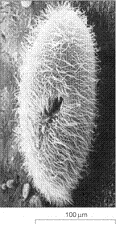
(Multiple Choice)
4.7/5 (74)
(74) Which organelle can be considered a sorting, processing and packaging center?
(Multiple Choice)
4.7/5 (74)
(74) 
Filters
- Essay(0)
- Multiple Choice(0)
- Short Answer(0)
- True False(0)
- Matching(0)