



 Chat with AI
Exam 2: Polar Covalent Bonds;acids and Bases

Exam 1: Structure and Bonding29 Questions
Exam 2: Polar Covalent Bonds;acids and Bases50 Questions
Exam 3: Organic Compounds: Alkanes and Their Stereochemistry37 Questions
Exam 4: Organic Compounds: Cycloalkanes and Their Stereochemistry37 Questions
Exam 5: Stereochemistry at Tetrahedral Centers43 Questions
Exam 6: An Overview of Organic Reactions42 Questions
Exam 6: Par 12 Questions
Exam 7: Alkenes: Structure and Reactivity37 Questions
Exam 8: Alkenes: Reactions and Synthesis42 Questions
Exam 9: Alkynes: an Introduction to Organic Synthesis31 Questions
Exam 10: Organohalides31 Questions
Exam 11: Reactions of Alkyl Halides: Nucleophilic Substitutions and Eliminations34 Questions
Exam 11: Par 22 Questions
Exam 12: Structure Determination: Mass Spectrometry and Infrared Spectroscopy42 Questions
Exam 13: Structure Determination: Nuclear Magnetic Resonance Spectroscopy46 Questions
Exam 14: Conjugated Compounds and Ultraviolet Spectroscopy40 Questions
Exam 14: Par 32 Questions
Exam 15: Benzene and Aromaticity47 Questions
Exam 16: Chemistry of Benzene: Electrophilic Aromatic Substitution30 Questions
Exam 17: Alcohols and Phenols44 Questions
Exam 18: Ethers and Epoxides;thiols and Sulfides33 Questions
Exam 19: Aldehydes and Ketones: Nucleophilic Addition Reactions48 Questions
Exam 19: Par 42 Questions
Exam 20: Carboxylic Acids and Nitriles32 Questions
Exam 21: Carboxylic Acid Derivatives: Nucleophilic Acyl Substitution Reactions44 Questions
Exam 22: Carbonyl Alpha-Substitution Reactions33 Questions
Exam 23: Carbonyl Condensation Reactions36 Questions
Exam 23: Par 52 Questions
Exam 24: Amines and Heterocycles41 Questions
Exam 25: Biomolecules: Carbohydrates63 Questions
Exam 26: Biomolecules: Amino Acids,peptides,and Proteins45 Questions
Exam 27: Par 72 Questions
Exam 27: Biomolecules: Lipids54 Questions
Exam 28: Biomolecules: Nucleic Acids44 Questions
Exam 29: The Organic Chemistry of Metabolic Pathways48 Questions
Exam 30: Orbitals and Organic Chemistry: Pericyclic Reactions44 Questions
Exam 31: Synthetic Polymers33 Questions
Exam 30: Par 12 Questions
Select questions type


Exhibit 2-1
Give the corresponding letter of the term that best matches the given definition.
-_____ A bond between two atoms differing in electronegativity by > 2.
(Multiple Choice)
4.7/5  (80)
(80) Draw the resonance forms of methyl acetate anion formed during the protonation of methyl acetate in the presence of sulfuric acid. 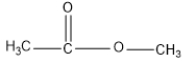
(Essay)
4.9/5 (76)
(76) Exhibit 2-1
Give the corresponding letter of the term that best matches the given definition.
-_____ A compound that can accept a proton.
(Multiple Choice)
4.9/5 (78)
(78) Which of the following substances would be expected to have the largest pKa?
(Multiple Choice)
4.9/5 (90)
(90) 
Exhibit 2-1
Give the corresponding letter of the term that best matches the given definition.
-_____ A term used to describe a "water fearing" species.
(Multiple Choice)
4.7/5 (80)
(80) 
Exhibit 2-1
Give the corresponding letter of the term that best matches the given definition.
-_____ A term used to describe a "water loving" species.
(Multiple Choice)
4.9/5 (83)
(83) Exhibit 2-4
Use the  convention and the crossed arrow
 to show the direction of the expected polarity of the indicated bonds in the following compounds.
-Refer to Exhibit 2-4.The C−O bond in furan,

convention and the crossed arrow to show the direction of the expected polarity of the indicated bonds in the following compounds.
-Refer to Exhibit 2-4.The C−O bond in furan, (Essay)
4.8/5 (73)
(73) Based on electronegativity values,in which of the following is the bond,represented by -,the most polar?
(Multiple Choice)
4.9/5 (97)
(97) Exhibit 2-3
Phenylalanine is an amino acid that is essential to human nutrition.The representation below shows the structure of phenylalanine at physiological pH.Consider this structure to answer the following question(s). 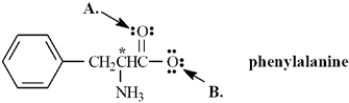 -Refer to Exhibit 2-3.The oxygen atom labeled A.has ______ non-bonding electrons.
 (Short Answer)
4.8/5 (77)
(77) Exhibit 2-9
Indole is pleasant smelling in highly dilute solutions and has been used in perfumery.Use the structure of indole,below,to answer the following question(s). 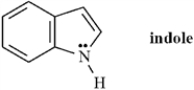 -Refer to Exhibit 2-9.Indole can function as a Brønsted-Lowry acid in the presence of strong bases.Formulate a reaction,showing electron flow with arrows,that demonstrates this reactivity of indole.
 (Essay)
4.9/5 (70)
(70) Exhibit 2-1
Give the corresponding letter of the term that best matches the given definition.
-_____ Any species that accepts electrons.
(Multiple Choice)
4.8/5 (88)
(88) 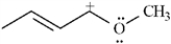
In which series are the elements listed in order of increasing electronegativity?
(Multiple Choice)
4.9/5 (89)
(89) Exhibit 2-2
Calculate the formal charges on the indicated atoms in each compound below. 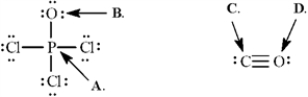 -Refer to Exhibit 2-2.The formal charge on oxygen (D) is ______.
 (Short Answer)
4.8/5 (71)
(71) Exhibit 2-8
Consider the reaction below to answer the following question(s).  -Refer to Exhibit 2-8.Label the acid and the base in the reaction.
 (Essay)
4.7/5 (72)
(72) Exhibit 2-8
Consider the reaction below to answer the following question(s).
-Refer to Exhibit 2-8.Using the curved arrow formalism,show the flow of electrons for this reaction.
-Refer to Exhibit 2-8.Using the curved arrow formalism,show the flow of electrons for this reaction. (Essay)
4.8/5 (87)
(87) 
Filters
- Essay(0)
- Multiple Choice(0)
- Short Answer(0)
- True False(0)
- Matching(0)