



 Chat with AI
Exam 18: Ethers and Epoxides;thiols and Sulfides

Exam 1: Structure and Bonding29 Questions
Exam 2: Polar Covalent Bonds;acids and Bases50 Questions
Exam 3: Organic Compounds: Alkanes and Their Stereochemistry37 Questions
Exam 4: Organic Compounds: Cycloalkanes and Their Stereochemistry37 Questions
Exam 5: Stereochemistry at Tetrahedral Centers43 Questions
Exam 6: An Overview of Organic Reactions42 Questions
Exam 6: Par 12 Questions
Exam 7: Alkenes: Structure and Reactivity37 Questions
Exam 8: Alkenes: Reactions and Synthesis42 Questions
Exam 9: Alkynes: an Introduction to Organic Synthesis31 Questions
Exam 10: Organohalides31 Questions
Exam 11: Reactions of Alkyl Halides: Nucleophilic Substitutions and Eliminations34 Questions
Exam 11: Par 22 Questions
Exam 12: Structure Determination: Mass Spectrometry and Infrared Spectroscopy42 Questions
Exam 13: Structure Determination: Nuclear Magnetic Resonance Spectroscopy46 Questions
Exam 14: Conjugated Compounds and Ultraviolet Spectroscopy40 Questions
Exam 14: Par 32 Questions
Exam 15: Benzene and Aromaticity47 Questions
Exam 16: Chemistry of Benzene: Electrophilic Aromatic Substitution30 Questions
Exam 17: Alcohols and Phenols44 Questions
Exam 18: Ethers and Epoxides;thiols and Sulfides33 Questions
Exam 19: Aldehydes and Ketones: Nucleophilic Addition Reactions48 Questions
Exam 19: Par 42 Questions
Exam 20: Carboxylic Acids and Nitriles32 Questions
Exam 21: Carboxylic Acid Derivatives: Nucleophilic Acyl Substitution Reactions44 Questions
Exam 22: Carbonyl Alpha-Substitution Reactions33 Questions
Exam 23: Carbonyl Condensation Reactions36 Questions
Exam 23: Par 52 Questions
Exam 24: Amines and Heterocycles41 Questions
Exam 25: Biomolecules: Carbohydrates63 Questions
Exam 26: Biomolecules: Amino Acids,peptides,and Proteins45 Questions
Exam 27: Par 72 Questions
Exam 27: Biomolecules: Lipids54 Questions
Exam 28: Biomolecules: Nucleic Acids44 Questions
Exam 29: The Organic Chemistry of Metabolic Pathways48 Questions
Exam 30: Orbitals and Organic Chemistry: Pericyclic Reactions44 Questions
Exam 31: Synthetic Polymers33 Questions
Exam 30: Par 12 Questions
Select questions type


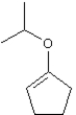

Exhibit 18-3
Consider the data below to answer the following question(s).
Epoxides are synthesized industrially in one step by silver oxide air oxidation of ethylene and on a laboratory scale in one step by treating an alkene with m-chloroperoxybenzoic acid.An alternative two-step process converts alkenes to halohydrins,which are converted by treatment with base to epoxides.
 -Refer to Exhibit 18-3.The synthesis of epoxides by base treatment of halohydrins is an example of an intramolecular:
Free
(Multiple Choice)
4.9/5  (76)
(76) Correct Answer: Verified
D
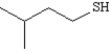
Which of the following will undergo rearrangement upon heating?
(Multiple Choice)
4.9/5 (77)
(77) Exhibit 18-1
Consider the reaction below to answer the following question(s).  -Refer to Exhibit 18-1.Alternatively,cyclopentyl methyl ether may be synthesized from cyclopentene.Outline a synthesis of cyclopentyl methyl ether from cyclopentene.
 (Essay)
4.8/5 (76)
(76) Choose the best reagent for carrying out the following reactions from the list below.Place the letter of the reagent(s) in the box over the reaction arrow.Use only one letter per box.  A.
NaH,then CH3I
B.
NaOCH3,CH3OH
C.
m-ClC6H4CO3H
D.
CH3MgBr in ether,then H3O+
E.
warm H2SO4/H2O
F.
Hg(O2CCF3)2,CH3OH
G.
H2/Pd
H.
PCC,CH2Cl2
I.
Cl2,H2O
J.
LiAlH4 in ether,then H3O+
A.
NaH,then CH3I
B.
NaOCH3,CH3OH
C.
m-ClC6H4CO3H
D.
CH3MgBr in ether,then H3O+
E.
warm H2SO4/H2O
F.
Hg(O2CCF3)2,CH3OH
G.
H2/Pd
H.
PCC,CH2Cl2
I.
Cl2,H2O
J.
LiAlH4 in ether,then H3O+ (Short Answer)
4.8/5 (58)
(58) When 1,2-epoxypropane is treated with sodium ethoxide in ethanol 1-ethoxy-2-propanol is the major product while only a trace amount of 2-ethoxy-1-propanol is produced.Explain these results based on the reaction mechanism. 
(Essay)
4.9/5 (89)
(89) 
Consider the following species.Atoms other than carbon and hydrogen are labeled.  Which of the following would be produced upon treatment with I2?
 (Multiple Choice)
4.9/5 (81)
(81) Exhibit 18-2
Consider the data below to answer the following question(s).
Acetals are a special class of ethers which have two ether linkages at a single carbon.Tetrahydropyranyl ethers are acetals that are easily cleaved with mild aqueous acids at room temperature to yield alcohols.  -Refer to Exhibit 18-2.Draw arrows showing the electron flow for this reaction on the structures provided below.

-Refer to Exhibit 18-2.Draw arrows showing the electron flow for this reaction on the structures provided below. (Essay)
4.7/5 (79)
(79) Show how the ether below could be prepared from toluene and any other necessary reagents.Show all reagents and all intermediate structures. 
(Essay)
4.7/5 (75)
(75) Draw the structure of the ether that could be used to produce the following compound. 
(Essay)
4.8/5 (82)
(82) Although not always evident in an IR spectrum,which peak in the IR spectrum below might be due to the C-O stretch of an ether? 
(Multiple Choice)
4.9/5 (89)
(89) 
The following is the proton NMR of a symmetrical alkyl ether.Which peak is most likely due to the protons adjacent to the ether oxygen atom? 
(Multiple Choice)
5.0/5 (84)
(84) 
Write the complete stepwise mechanism for the reaction below.Show all electron flow with arrows and draw all intermediate structures. 
(Essay)
4.8/5 (91)
(91) 
Filters
- Essay(0)
- Multiple Choice(0)
- Short Answer(0)
- True False(0)
- Matching(0)