



 Chat with AI
Exam 13: Structure Determination: Nuclear Magnetic Resonance Spectroscopy

Exam 1: Structure and Bonding29 Questions
Exam 2: Polar Covalent Bonds;acids and Bases50 Questions
Exam 3: Organic Compounds: Alkanes and Their Stereochemistry37 Questions
Exam 4: Organic Compounds: Cycloalkanes and Their Stereochemistry37 Questions
Exam 5: Stereochemistry at Tetrahedral Centers43 Questions
Exam 6: An Overview of Organic Reactions42 Questions
Exam 6: Par 12 Questions
Exam 7: Alkenes: Structure and Reactivity37 Questions
Exam 8: Alkenes: Reactions and Synthesis42 Questions
Exam 9: Alkynes: an Introduction to Organic Synthesis31 Questions
Exam 10: Organohalides31 Questions
Exam 11: Reactions of Alkyl Halides: Nucleophilic Substitutions and Eliminations34 Questions
Exam 11: Par 22 Questions
Exam 12: Structure Determination: Mass Spectrometry and Infrared Spectroscopy42 Questions
Exam 13: Structure Determination: Nuclear Magnetic Resonance Spectroscopy46 Questions
Exam 14: Conjugated Compounds and Ultraviolet Spectroscopy40 Questions
Exam 14: Par 32 Questions
Exam 15: Benzene and Aromaticity47 Questions
Exam 16: Chemistry of Benzene: Electrophilic Aromatic Substitution30 Questions
Exam 17: Alcohols and Phenols44 Questions
Exam 18: Ethers and Epoxides;thiols and Sulfides33 Questions
Exam 19: Aldehydes and Ketones: Nucleophilic Addition Reactions48 Questions
Exam 19: Par 42 Questions
Exam 20: Carboxylic Acids and Nitriles32 Questions
Exam 21: Carboxylic Acid Derivatives: Nucleophilic Acyl Substitution Reactions44 Questions
Exam 22: Carbonyl Alpha-Substitution Reactions33 Questions
Exam 23: Carbonyl Condensation Reactions36 Questions
Exam 23: Par 52 Questions
Exam 24: Amines and Heterocycles41 Questions
Exam 25: Biomolecules: Carbohydrates63 Questions
Exam 26: Biomolecules: Amino Acids,peptides,and Proteins45 Questions
Exam 27: Par 72 Questions
Exam 27: Biomolecules: Lipids54 Questions
Exam 28: Biomolecules: Nucleic Acids44 Questions
Exam 29: The Organic Chemistry of Metabolic Pathways48 Questions
Exam 30: Orbitals and Organic Chemistry: Pericyclic Reactions44 Questions
Exam 31: Synthetic Polymers33 Questions
Exam 30: Par 12 Questions
Select questions type


Propose a structure for Compound X,which has M+ = 120 and (M + 2) = 122 of approximately equal intensity in its mass spectrum and has the following 13C NMR spectral data:
Broadband decoupled 13C NMR:
32.6,118.8,134.3 δ
DEPT-90:
134.3 δ
DEPT-135:
positive peaks at 134.3 δ;negative peaks at 32.6,118.8 δ

Free
(Essay)
4.9/5  (75)
(75) Correct Answer: Verified
Exhibit 13-10
Answer the question(s) for the compound whose 1H NMR spectra is shown below.
C4H8O 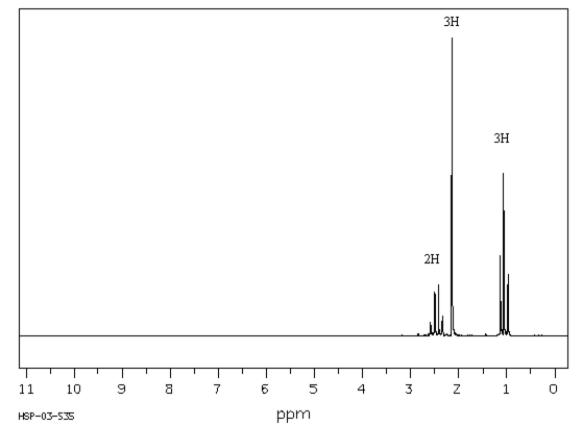 Spectrum obtained from: SDBSWeb: http://www.aist.go.jp/RIODB/SDBS/
-Refer to Exhibit 13-10.Propose a structure for this compound.
Spectrum obtained from: SDBSWeb: http://www.aist.go.jp/RIODB/SDBS/
-Refer to Exhibit 13-10.Propose a structure for this compound.Free
(Short Answer)
4.7/5 (80)
(80) Correct Answer:Verified
Verified2-butanone,CH3COCH2CH3
Find all the types of nonequivalent protons in the given compound. 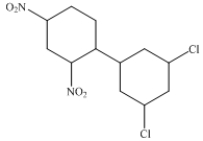
Free
(Essay)
4.8/5 (78)
(78) Correct Answer:Verified
VerifiedNine 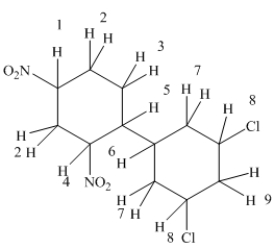
Exhibit 13-1
The following question(s) pertain to the charting of NMR spectra.MATCH a term to each description below.
-_____ The exact place on the chart at which a nucleus absorbs is called its _____.
(Multiple Choice)
4.8/5 (90)
(90) Exhibit 13-1
The following question(s) pertain to the charting of NMR spectra.MATCH a term to each description below.
-_____ The calibration standard for 1H and 13C NMR is _____.
(Multiple Choice)
4.8/5 (75)
(75) Which of the following occurs when a DEPT-135 spectrum is run?
(Multiple Choice)
5.0/5 (71)
(71) Identify the different types of protons in 1-chloro-2-butene.What would be the chemical shift observed for each type of proton? 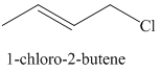
(Essay)
4.9/5 (71)
(71) Exhibit 13-9
To answer the following question(s),consider the data and 1H NMR spectrum below:
The mass spectrum of this compound shows a molecular ion at m/z = 113,the IR spectrum has characteristic absorptions at 2270 and 1735 cm−1,and the 13C NMR spectrum has five signals.  Spectrum obtained from: SDBSWeb: http://www.aist.go.jp/RIODB/SDBS/
-Refer to Exhibit 13-9.Propose a structure for this compound.
Spectrum obtained from: SDBSWeb: http://www.aist.go.jp/RIODB/SDBS/
-Refer to Exhibit 13-9.Propose a structure for this compound. (Essay)
4.9/5 (83)
(83) Exhibit 13-11
Answer the question(s) for the compound whose 1H NMR spectra is shown below.
C5H12O  Spectrum obtained from: SDBSWeb: http://www.aist.go.jp/RIODB/SDBS/
-Refer to Exhibit 13-11.Calculate the degree of unsaturation for this compound.
Spectrum obtained from: SDBSWeb: http://www.aist.go.jp/RIODB/SDBS/
-Refer to Exhibit 13-11.Calculate the degree of unsaturation for this compound. (Essay)
4.7/5 (76)
(76) Exhibit 13-8
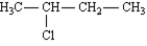
Below are three isomeric chlorobutanes and their 13C NMR spectral data.MATCH the spectral data to the correct structures by placing the letter of the spectrum in the blank to the left of the corresponding structure.
-_____ 
(Multiple Choice)
4.9/5 (84)
(84) Exhibit 13-8
Below are three isomeric chlorobutanes and their 13C NMR spectral data.MATCH the spectral data to the correct structures by placing the letter of the spectrum in the blank to the left of the corresponding structure.
-_____ 
(Multiple Choice)
4.9/5 (75)
(75) Exhibit 13-12
Answer the question(s) for the compound whose 1H NMR spectra is shown below.
C8H7ClO  Spectrum obtained from: SDBSWeb: http://www.aist.go.jp/RIODB/SDBS/
-Refer to Exhibit 13-12.Calculate the degree of unsaturation in this compound.
Spectrum obtained from: SDBSWeb: http://www.aist.go.jp/RIODB/SDBS/
-Refer to Exhibit 13-12.Calculate the degree of unsaturation in this compound. (Essay)
4.9/5 (77)
(77) Exhibit 13-9
To answer the following question(s),consider the data and 1H NMR spectrum below:
The mass spectrum of this compound shows a molecular ion at m/z = 113,the IR spectrum has characteristic absorptions at 2270 and 1735 cm−1,and the 13C NMR spectrum has five signals. Spectrum obtained from: SDBSWeb: http://www.aist.go.jp/RIODB/SDBS/
-Refer to Exhibit 13-9.How many types of nonequivalent protons are there in this molecule?
Spectrum obtained from: SDBSWeb: http://www.aist.go.jp/RIODB/SDBS/
-Refer to Exhibit 13-9.How many types of nonequivalent protons are there in this molecule? (Short Answer)
4.8/5 (77)
(77) Nuclear magnetic resonance spectroscopy provides information about a molecule's:
(Multiple Choice)
4.8/5 (82)
(82) Treatment of tert-butyl alcohol with hydrogen chloride yields a mixture of tert-butyl chloride (SN1 product) and 2-methylpropene (E1 product).After chromatographic separation,how would you use 1H NMR to help you decide which was which? 
(Essay)
4.9/5 (80)
(80) Propose a structure for Compound Z,which has the following spectroscopic properties:
MS:
M+ = 88
IR:
3380 cm−1
1H NMR:
0.85 δ (6H doublet);1.40 δ (3H multiplet);2.68 δ (1H singlet);3.55 δ (2H triplet)
Broadband decoupled 13C NMR:
22.7,25.0,41.8,60.5 δ
DEPT-90:
25.0 δ
DEPT-135:
positive peaks at 22.7,25.0 δ;negative peaks at 41.8,60.5 δ
(Short Answer)
4.8/5 (95)
(95) Which of the following provides information about the carbon framework of a molecule?
(Multiple Choice)
4.7/5 (80)
(80) Exhibit 13-9
To answer the following question(s),consider the data and 1H NMR spectrum below:
The mass spectrum of this compound shows a molecular ion at m/z = 113,the IR spectrum has characteristic absorptions at 2270 and 1735 cm−1,and the 13C NMR spectrum has five signals. Spectrum obtained from: SDBSWeb: http://www.aist.go.jp/RIODB/SDBS/
-Refer to Exhibit 13-9.What is the significance of the 13C NMR data?
Spectrum obtained from: SDBSWeb: http://www.aist.go.jp/RIODB/SDBS/
-Refer to Exhibit 13-9.What is the significance of the 13C NMR data? (Essay)
4.9/5 (81)
(81) Identify the splitting pattern of the numbered protons.Atoms other than hydrogen and carbon are labeled. 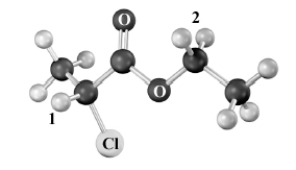
(Multiple Choice)
4.8/5 (72)
(72) The following is the tree diagram for the protons on a specific carbon. 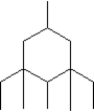 Which of the following signals in a proton NMR could correspond to these protons?
 (Multiple Choice)
4.9/5 (77)
(77) 
Filters
- Essay(0)
- Multiple Choice(0)
- Short Answer(0)
- True False(0)
- Matching(0)