



 Chat with AI
Exam 8: Alkenes: Reactions and Synthesis

Exam 1: Structure and Bonding29 Questions
Exam 2: Polar Covalent Bonds;acids and Bases50 Questions
Exam 3: Organic Compounds: Alkanes and Their Stereochemistry37 Questions
Exam 4: Organic Compounds: Cycloalkanes and Their Stereochemistry37 Questions
Exam 5: Stereochemistry at Tetrahedral Centers43 Questions
Exam 6: An Overview of Organic Reactions42 Questions
Exam 6: Par 12 Questions
Exam 7: Alkenes: Structure and Reactivity37 Questions
Exam 8: Alkenes: Reactions and Synthesis42 Questions
Exam 9: Alkynes: an Introduction to Organic Synthesis31 Questions
Exam 10: Organohalides31 Questions
Exam 11: Reactions of Alkyl Halides: Nucleophilic Substitutions and Eliminations34 Questions
Exam 11: Par 22 Questions
Exam 12: Structure Determination: Mass Spectrometry and Infrared Spectroscopy42 Questions
Exam 13: Structure Determination: Nuclear Magnetic Resonance Spectroscopy46 Questions
Exam 14: Conjugated Compounds and Ultraviolet Spectroscopy40 Questions
Exam 14: Par 32 Questions
Exam 15: Benzene and Aromaticity47 Questions
Exam 16: Chemistry of Benzene: Electrophilic Aromatic Substitution30 Questions
Exam 17: Alcohols and Phenols44 Questions
Exam 18: Ethers and Epoxides;thiols and Sulfides33 Questions
Exam 19: Aldehydes and Ketones: Nucleophilic Addition Reactions48 Questions
Exam 19: Par 42 Questions
Exam 20: Carboxylic Acids and Nitriles32 Questions
Exam 21: Carboxylic Acid Derivatives: Nucleophilic Acyl Substitution Reactions44 Questions
Exam 22: Carbonyl Alpha-Substitution Reactions33 Questions
Exam 23: Carbonyl Condensation Reactions36 Questions
Exam 23: Par 52 Questions
Exam 24: Amines and Heterocycles41 Questions
Exam 25: Biomolecules: Carbohydrates63 Questions
Exam 26: Biomolecules: Amino Acids,peptides,and Proteins45 Questions
Exam 27: Par 72 Questions
Exam 27: Biomolecules: Lipids54 Questions
Exam 28: Biomolecules: Nucleic Acids44 Questions
Exam 29: The Organic Chemistry of Metabolic Pathways48 Questions
Exam 30: Orbitals and Organic Chemistry: Pericyclic Reactions44 Questions
Exam 31: Synthetic Polymers33 Questions
Exam 30: Par 12 Questions
Select questions type


Draw the mechanism of the bromination of 3-hexene in the presence of water via bromohydrin formation.

Free
(Essay)
4.8/5  (75)
(75) Correct Answer: Verified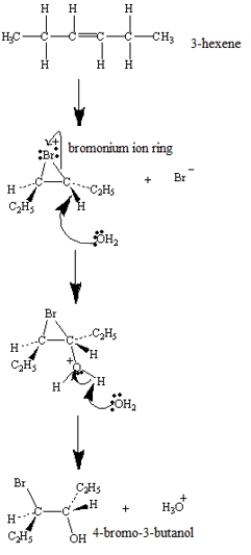
Povidone is produced commercially as a series of products having mean molecular weights ranging from about 10,000 to 700,000.Complexed with iodine,povidone yields an iodophor,marketed under the tradename Betadine,which is used as a topical anti-infective. 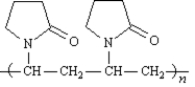 Identify the monomer unit(s) in povidone.
Free
(Essay)
4.8/5 (71)
(71) Correct Answer:Verified
Verified
Exhibit 8-4
Consider the reaction below to answer the following question(s).
When dichlorocarbene is generated in the presence of an alkene,a dichlorocyclopropane is formed.
 -Refer to Exhibit 8-4.The reaction of an alkene with dichlorocarbene is:
Free
(Multiple Choice)
4.7/5 (82)
(82) Correct Answer:Verified
VerifiedC
Consider the following intermediate. 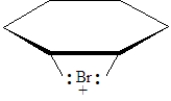 Which is applicable to this structure?
 (Multiple Choice)
4.9/5 (91)
(91) Exhibit 8-5
The sequence of (1) alkene hydroxylation followed by (2) diol cleavage is often an excellent alternative to direct alkene cleavage with ozone.For this sequence below,answer the following question(s).
 -Refer to Exhibit 8-5.Draw the structure of A.
 (Essay)
4.9/5 (77)
(77) Hydration of an alkene during enzyme catalysis in a biological system produces an optically active product even through there is a potential to form a racemic mixture.Explain why this occurs.
(Essay)
4.8/5 (95)
(95) Draw a condensed formula for a polymer containing five repeating units derived from the following monomer.Name the polymer. 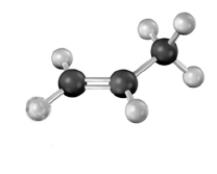
(Essay)
4.9/5 (77)
(77) Which of the following will not undergo catalytic reduction in the presence of H2 and metal catalyst?
(Multiple Choice)
4.8/5 (66)
(66) Exhibit 8-3
Consider the reaction below to answer the following question(s).
Alkenes may be hydrated by the hydroboration/oxidation procedure shown.
 -Refer to Exhibit 8-3.The regiochemistry of hydroboration/oxidation of alkenes is:
 (Multiple Choice)
4.7/5 (84)
(84) Draw both chair conformations of trans-1,2-dichlorocyclohexane on the templates provided below.Circle the least stable conformation. 
(Essay)
4.9/5 (73)
(73) Exhibit 8-4
Consider the reaction below to answer the following question(s).
When dichlorocarbene is generated in the presence of an alkene,a dichlorocyclopropane is formed.
-Refer to Exhibit 8-4.Draw the complete Lewis electron dot structure for dichlorocarbene,CCl2.
-Refer to Exhibit 8-4.Draw the complete Lewis electron dot structure for dichlorocarbene,CCl2. (Essay)
4.8/5 (76)
(76) Consider the following polymer. 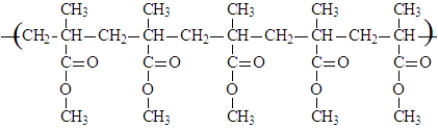 Draw the condensed formula for its monomer.
 (Essay)
4.8/5 (71)
(71) Exhibit 8-3
Consider the reaction below to answer the following question(s).
Alkenes may be hydrated by the hydroboration/oxidation procedure shown.
-Refer to Exhibit 8-3.Hydroboration/oxidation of alkenes occurs with:
-Refer to Exhibit 8-3.Hydroboration/oxidation of alkenes occurs with: (Multiple Choice)
4.8/5 (85)
(85) Exhibit 8-1
To answer the question(s) below consider the following reaction:
When cyclohexene reacts with chlorine in carbon tetrachloride the trans-dihalide is formed.
 -Refer to Exhibit 8-1.Since the two chlorine atoms add to opposite faces of the cyclohexene double bond,we say that the reaction occurs with:
 (Multiple Choice)
4.8/5 (75)
(75) Exhibit 8-3
Consider the reaction below to answer the following question(s).
Alkenes may be hydrated by the hydroboration/oxidation procedure shown.
-Refer to Exhibit 8-3.Hydroboration of alkenes is an example of:
-Refer to Exhibit 8-3.Hydroboration of alkenes is an example of: (Multiple Choice)
4.8/5 (85)
(85) Exhibit 8-3
Consider the reaction below to answer the following question(s).
Alkenes may be hydrated by the hydroboration/oxidation procedure shown.
-Refer to Exhibit 8-3.The intermediate formed in the first step of this reaction is:
-Refer to Exhibit 8-3.The intermediate formed in the first step of this reaction is: (Multiple Choice)
4.8/5 (79)
(79) Draw the skeletal structure(s) and name the product(s) of the reaction when the following substance is treated with sulfuric acid and warmed to approximately 50 °C.Atoms other than hydrogen and carbon are labeled. 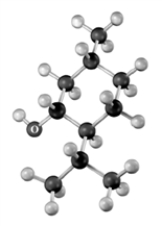
(Essay)
4.8/5 (82)
(82) Draw the mechanism of the epoxidation of 2-butene using a halohydrin.
(Essay)
4.8/5 (78)
(78) Consider the polymeric structure below for amylose (a type of starch).Draw a box around the monomer of amylose.Extra: Propose a structure for the monomer.Hint: This polymer is formed in a dehydration reaction. 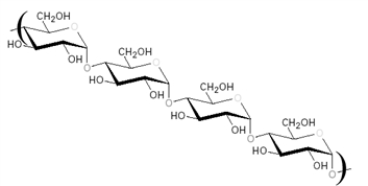
(Essay)
4.9/5 (74)
(74) Exhibit 8-9
To answer the question(s) below consider the following information:
In an abandoned laboratory has been found a flammable liquid,A,in a bottle bearing only the label "Compound A: C7H12." Government agents have offered you a considerable sum to determine the structure of this compound.After verifying the molecular formula by elemental analysis,you find that Compound A reacts with 1 mol equiv of hydrogen;and,after treatment with acidic KMnO4,Compound A gives the dicarboxylic acid C (see below).Another bottle from the same laboratory is labeled "Compound B (isomer of A)." Compound B also reacts with 1 mol equiv of hydrogen,but yields cyclohexanone after treatment with acidic KMnO4.
 -Refer to Exhibit 8-9.What was the other product formed in the KMnO4 oxidation of B?
 (Short Answer)
4.8/5 (74)
(74) 
Filters
- Essay(0)
- Multiple Choice(0)
- Short Answer(0)
- True False(0)
- Matching(0)