



 Chat with AI
Exam 2: Polar Covalent Bonds;acids and Bases

Exam 1: Structure and Bonding29 Questions
Exam 2: Polar Covalent Bonds;acids and Bases50 Questions
Exam 3: Organic Compounds: Alkanes and Their Stereochemistry37 Questions
Exam 4: Organic Compounds: Cycloalkanes and Their Stereochemistry37 Questions
Exam 5: Stereochemistry at Tetrahedral Centers43 Questions
Exam 6: An Overview of Organic Reactions42 Questions
Exam 6: Par 12 Questions
Exam 7: Alkenes: Structure and Reactivity37 Questions
Exam 8: Alkenes: Reactions and Synthesis42 Questions
Exam 9: Alkynes: an Introduction to Organic Synthesis31 Questions
Exam 10: Organohalides31 Questions
Exam 11: Reactions of Alkyl Halides: Nucleophilic Substitutions and Eliminations34 Questions
Exam 11: Par 22 Questions
Exam 12: Structure Determination: Mass Spectrometry and Infrared Spectroscopy42 Questions
Exam 13: Structure Determination: Nuclear Magnetic Resonance Spectroscopy46 Questions
Exam 14: Conjugated Compounds and Ultraviolet Spectroscopy40 Questions
Exam 14: Par 32 Questions
Exam 15: Benzene and Aromaticity47 Questions
Exam 16: Chemistry of Benzene: Electrophilic Aromatic Substitution30 Questions
Exam 17: Alcohols and Phenols44 Questions
Exam 18: Ethers and Epoxides;thiols and Sulfides33 Questions
Exam 19: Aldehydes and Ketones: Nucleophilic Addition Reactions48 Questions
Exam 19: Par 42 Questions
Exam 20: Carboxylic Acids and Nitriles32 Questions
Exam 21: Carboxylic Acid Derivatives: Nucleophilic Acyl Substitution Reactions44 Questions
Exam 22: Carbonyl Alpha-Substitution Reactions33 Questions
Exam 23: Carbonyl Condensation Reactions36 Questions
Exam 23: Par 52 Questions
Exam 24: Amines and Heterocycles41 Questions
Exam 25: Biomolecules: Carbohydrates63 Questions
Exam 26: Biomolecules: Amino Acids,peptides,and Proteins45 Questions
Exam 27: Par 72 Questions
Exam 27: Biomolecules: Lipids54 Questions
Exam 28: Biomolecules: Nucleic Acids44 Questions
Exam 29: The Organic Chemistry of Metabolic Pathways48 Questions
Exam 30: Orbitals and Organic Chemistry: Pericyclic Reactions44 Questions
Exam 31: Synthetic Polymers33 Questions
Exam 30: Par 12 Questions
Select questions type


Exhibit 2-1
Give the corresponding letter of the term that best matches the given definition.
-_____ The ability of an atom to attract the shared electrons in a covalent bond.

Free
(Multiple Choice)
4.7/5  (82)
(82) Correct Answer: Verified
E
Which of the following substances has a zero dipole moment?
Free
(Multiple Choice)
4.8/5 (68)
(68) Correct Answer:Verified
VerifiedE
Exhibit 2-3
Phenylalanine is an amino acid that is essential to human nutrition.The representation below shows the structure of phenylalanine at physiological pH.Consider this structure to answer the following question(s). 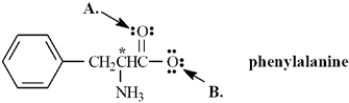 -Refer to Exhibit 2-3.Assign any formal charges to atoms in this representation of phenylalanine.
Free
(Essay)
4.8/5 (77)
(77) Correct Answer:Verified
Verified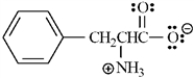
Exhibit 2-3
Phenylalanine is an amino acid that is essential to human nutrition.The representation below shows the structure of phenylalanine at physiological pH.Consider this structure to answer the following question(s).
-Refer to Exhibit 2-3.The oxygen atom labeled B.has _____ bonding electrons.
-Refer to Exhibit 2-3.The oxygen atom labeled B.has _____ bonding electrons. (Short Answer)
4.7/5 (72)
(72) 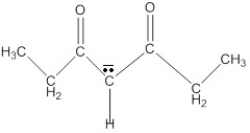
Exhibit 2-9
Indole is pleasant smelling in highly dilute solutions and has been used in perfumery.Use the structure of indole,below,to answer the following question(s). 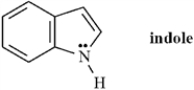 -Refer to Exhibit 2-9.Indole can function as a Lewis base in the presence of strong acid.Formulate a reaction,showing electron flow with arrows,that demonstrates this reactivity of indole.
 (Essay)
4.9/5 (86)
(86) Exhibit 2-6
Refer to the following equation to answer the question(s) below.Place the letter corresponding to the correct answer in the blank.  -Refer to Exhibit 2-6.The strongest Brønsted-Lowry acid in the equation is ______.
 (Short Answer)
4.9/5 (83)
(83) Exhibit 2-6
Refer to the following equation to answer the question(s) below.Place the letter corresponding to the correct answer in the blank.
-Refer to Exhibit 2-6.Will this reaction take place as written? Explain.
-Refer to Exhibit 2-6.Will this reaction take place as written? Explain. (Essay)
5.0/5 (67)
(67) 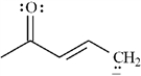
Use the curved arrow formalism to show the electron flow in the reaction of ammonia with water.
(Essay)
4.9/5 (70)
(70) Exhibit 2-10
Consider the acid-base reaction below to answer the following question(s). 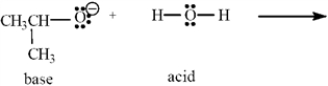 -Refer to Exhibit 2-10.Using the curved arrow formalism,show the flow of electrons for this reaction.
 (Essay)
4.8/5 (95)
(95) Exhibit 2-10
Consider the acid-base reaction below to answer the following question(s).
-Refer to Exhibit 2-10.Write the products of this Lewis acid - base reaction.
-Refer to Exhibit 2-10.Write the products of this Lewis acid - base reaction. (Essay)
5.0/5 (86)
(86) 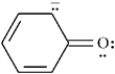
Exhibit 2-1
Give the corresponding letter of the term that best matches the given definition.
-_____ A bond between two atoms differing in electronegativity by < 0.5.
(Multiple Choice)
4.8/5 (75)
(75) Exhibit 2-4
Use the  convention and the crossed arrow
 to show the direction of the expected polarity of the indicated bonds in the following compounds.
-Refer to Exhibit 2-4.The C−F bond in fluorobenzene,
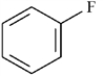
convention and the crossed arrow to show the direction of the expected polarity of the indicated bonds in the following compounds.
-Refer to Exhibit 2-4.The C−F bond in fluorobenzene, (Essay)
4.7/5 (79)
(79) The following is generic depiction of a reaction using the curve arrow formalism. 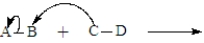 Which of these statements is not correct for this reaction?
 (Multiple Choice)
4.9/5 (83)
(83) The following is a representation of the pain reliever,acetaminophen,the active ingredient in Tylenol .Indicate the positions of any multiple bonds.Atoms other than carbon and hydrogen are labeled. 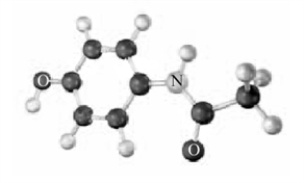
(Essay)
4.8/5 (76)
(76) Exhibit 2-4
Use the convention and the crossed arrow to show the direction of the expected polarity of the indicated bonds in the following compounds.
-Refer to Exhibit 2-4.The C−Si bond in tetramethylsilane, (CH3)4Si
convention and the crossed arrow to show the direction of the expected polarity of the indicated bonds in the following compounds.
-Refer to Exhibit 2-4.The C−Si bond in tetramethylsilane, (CH3)4Si (Essay)
4.9/5 (73)
(73) Put a box around all the Lewis acids in the group of compounds below. 
(Essay)
4.9/5 (86)
(86) 
Filters
- Essay(0)
- Multiple Choice(0)
- Short Answer(0)
- True False(0)
- Matching(0)