



 Chat with AI
Exam 20: Carboxylic Acids and Nitriles

Exam 1: Structure and Bonding29 Questions
Exam 2: Polar Covalent Bonds;acids and Bases50 Questions
Exam 3: Organic Compounds: Alkanes and Their Stereochemistry37 Questions
Exam 4: Organic Compounds: Cycloalkanes and Their Stereochemistry37 Questions
Exam 5: Stereochemistry at Tetrahedral Centers43 Questions
Exam 6: An Overview of Organic Reactions42 Questions
Exam 6: Par 12 Questions
Exam 7: Alkenes: Structure and Reactivity37 Questions
Exam 8: Alkenes: Reactions and Synthesis42 Questions
Exam 9: Alkynes: an Introduction to Organic Synthesis31 Questions
Exam 10: Organohalides31 Questions
Exam 11: Reactions of Alkyl Halides: Nucleophilic Substitutions and Eliminations34 Questions
Exam 11: Par 22 Questions
Exam 12: Structure Determination: Mass Spectrometry and Infrared Spectroscopy42 Questions
Exam 13: Structure Determination: Nuclear Magnetic Resonance Spectroscopy46 Questions
Exam 14: Conjugated Compounds and Ultraviolet Spectroscopy40 Questions
Exam 14: Par 32 Questions
Exam 15: Benzene and Aromaticity47 Questions
Exam 16: Chemistry of Benzene: Electrophilic Aromatic Substitution30 Questions
Exam 17: Alcohols and Phenols44 Questions
Exam 18: Ethers and Epoxides;thiols and Sulfides33 Questions
Exam 19: Aldehydes and Ketones: Nucleophilic Addition Reactions48 Questions
Exam 19: Par 42 Questions
Exam 20: Carboxylic Acids and Nitriles32 Questions
Exam 21: Carboxylic Acid Derivatives: Nucleophilic Acyl Substitution Reactions44 Questions
Exam 22: Carbonyl Alpha-Substitution Reactions33 Questions
Exam 23: Carbonyl Condensation Reactions36 Questions
Exam 23: Par 52 Questions
Exam 24: Amines and Heterocycles41 Questions
Exam 25: Biomolecules: Carbohydrates63 Questions
Exam 26: Biomolecules: Amino Acids,peptides,and Proteins45 Questions
Exam 27: Par 72 Questions
Exam 27: Biomolecules: Lipids54 Questions
Exam 28: Biomolecules: Nucleic Acids44 Questions
Exam 29: The Organic Chemistry of Metabolic Pathways48 Questions
Exam 30: Orbitals and Organic Chemistry: Pericyclic Reactions44 Questions
Exam 31: Synthetic Polymers33 Questions
Exam 30: Par 12 Questions
Select questions type


Draw the mechanism of the conversion of isopropyl nitrile to an amine.

Free
(Essay)
4.9/5  (70)
(70) Correct Answer: Verified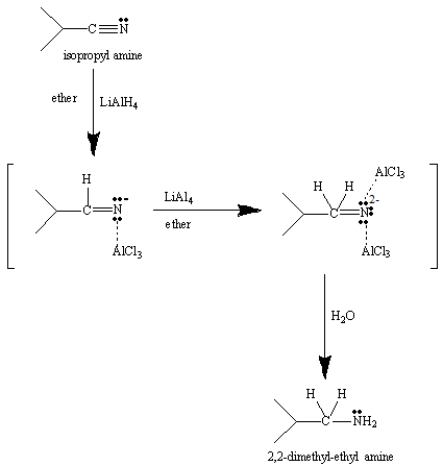
In order to produce a carboxylic acid as a product of the Grignard reaction,the Grignard reagent reacts with:
Free
(Multiple Choice)
4.8/5 (77)
(77) Correct Answer:Verified
VerifiedA
Name: 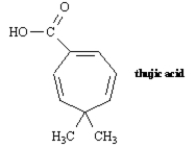
Free
(Short Answer)
4.8/5 (71)
(71) Correct Answer:Verified
Verified5,5-dimethyl-1,3,6-cycloheptatriene-1-carboxylic acid
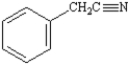
Draw the mechanism for the preparation of nitriles by dehydration of a primary amide, e.g. ,propanamide,using thionyl chloride.
(Essay)
4.9/5 (75)
(75) Which of the following is not an acyl derivative of a carboxylic acid?
(Multiple Choice)
4.7/5 (80)
(80) In a solution of acetic acid ( 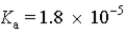 ) at physiological pH of 7.3,it is most accurate to represent this substance as:
 (Multiple Choice)
5.0/5 (75)
(75) Name the following substance.Atoms other than carbon and hydrogen are labeled. 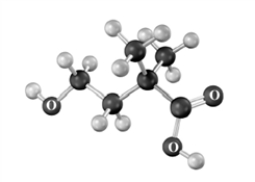
(Short Answer)
4.9/5 (77)
(77) Explain the differences in acidity between p-methoxybenzoic acid and m-methoxybenzoic acid.
(Essay)
4.9/5 (85)
(85) Even though the para position is one carbon farther from the carboxy group than the meta position,p-cyanobenzoic acid is more acidic than m-cyanobenzoic acid.Explain the differences in acidity between p-cyanobenzoic acid and m-cyanobenzoic acid.
(Essay)
5.0/5 (94)
(94) 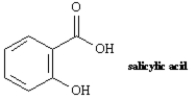
Which of the following is not a common feature of both carboxylic acids and nitriles?
(Multiple Choice)
5.0/5 (85)
(85) Name the following substance.Atoms other than carbon and hydrogen are labeled. 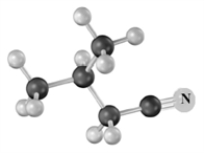
(Short Answer)
4.9/5 (76)
(76) 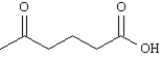
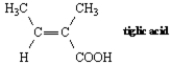
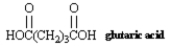
Which labeled peaks would disappear if D2O were added to the sample? 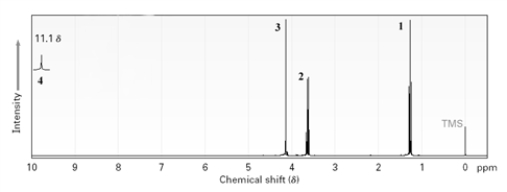
(Multiple Choice)
4.9/5 (79)
(79) 
Filters
- Essay(0)
- Multiple Choice(0)
- Short Answer(0)
- True False(0)
- Matching(0)