



 Chat with AI
Exam 20: Carboxylic Acids and Nitriles

Exam 1: Structure and Bonding29 Questions
Exam 2: Polar Covalent Bonds;acids and Bases50 Questions
Exam 3: Organic Compounds: Alkanes and Their Stereochemistry37 Questions
Exam 4: Organic Compounds: Cycloalkanes and Their Stereochemistry37 Questions
Exam 5: Stereochemistry at Tetrahedral Centers43 Questions
Exam 6: An Overview of Organic Reactions42 Questions
Exam 6: Par 12 Questions
Exam 7: Alkenes: Structure and Reactivity37 Questions
Exam 8: Alkenes: Reactions and Synthesis42 Questions
Exam 9: Alkynes: an Introduction to Organic Synthesis31 Questions
Exam 10: Organohalides31 Questions
Exam 11: Reactions of Alkyl Halides: Nucleophilic Substitutions and Eliminations34 Questions
Exam 11: Par 22 Questions
Exam 12: Structure Determination: Mass Spectrometry and Infrared Spectroscopy42 Questions
Exam 13: Structure Determination: Nuclear Magnetic Resonance Spectroscopy46 Questions
Exam 14: Conjugated Compounds and Ultraviolet Spectroscopy40 Questions
Exam 14: Par 32 Questions
Exam 15: Benzene and Aromaticity47 Questions
Exam 16: Chemistry of Benzene: Electrophilic Aromatic Substitution30 Questions
Exam 17: Alcohols and Phenols44 Questions
Exam 18: Ethers and Epoxides;thiols and Sulfides33 Questions
Exam 19: Aldehydes and Ketones: Nucleophilic Addition Reactions48 Questions
Exam 19: Par 42 Questions
Exam 20: Carboxylic Acids and Nitriles32 Questions
Exam 21: Carboxylic Acid Derivatives: Nucleophilic Acyl Substitution Reactions44 Questions
Exam 22: Carbonyl Alpha-Substitution Reactions33 Questions
Exam 23: Carbonyl Condensation Reactions36 Questions
Exam 23: Par 52 Questions
Exam 24: Amines and Heterocycles41 Questions
Exam 25: Biomolecules: Carbohydrates63 Questions
Exam 26: Biomolecules: Amino Acids,peptides,and Proteins45 Questions
Exam 27: Par 72 Questions
Exam 27: Biomolecules: Lipids54 Questions
Exam 28: Biomolecules: Nucleic Acids44 Questions
Exam 29: The Organic Chemistry of Metabolic Pathways48 Questions
Exam 30: Orbitals and Organic Chemistry: Pericyclic Reactions44 Questions
Exam 31: Synthetic Polymers33 Questions
Exam 30: Par 12 Questions
Select questions type


Draw the structure of the reactant needed to form the following upon treatment with SOCl2 at a moderately elevated temperature.Atoms other than carbon and hydrogen are labeled. 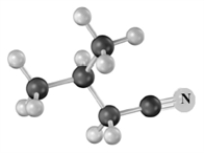
(Essay)
4.7/5  (68)
(68) A sample is known to contain either hexanoic acid or 3-methylpentanoic acid.Which of the following spectra would not distinguish between the two isomers?
(Multiple Choice)
4.9/5 (77)
(77) Exhibit 20-2
Consider the data below to answer the following question(s).
When CO2 is bubbled through an ether solution of benzylmagnesium bromide,and the resulting mixture is acidified,phenylacetic acid is produced.Any unreacted benzylmagnesium bromide is converted to toluene in the acidification step.
-Refer to Exhibit 20-2.Write the complete reaction sequence for the process described above.
(Essay)
4.8/5 (79)
(79) Propose a synthesis of the anti-inflammatory drug Ibuprofen from benzene.Show all reagents and all intermediate structures.Assume that ortho and para isomers can be separated. 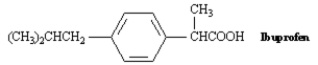
(Essay)
4.9/5 (69)
(69) Exhibit 20-2
Consider the data below to answer the following question(s).
When CO2 is bubbled through an ether solution of benzylmagnesium bromide,and the resulting mixture is acidified,phenylacetic acid is produced.Any unreacted benzylmagnesium bromide is converted to toluene in the acidification step.
-Refer to Exhibit 20-2.This reaction is described as a _____ process.
(Multiple Choice)
4.9/5 (70)
(70) Draw the mechanism of the basic hydrolysis of methyl nitrile to yield methyl amide,which is then hydrolyzed to yield an acetate ion.
(Essay)
5.0/5 (87)
(87) A solution of glycolic acid is prepared such that the glycolic acid is 69% dissociated.Calculate the pH of this solution.( 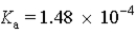 )
) (Multiple Choice)
5.0/5 (72)
(72) Exhibit 20-2
Consider the data below to answer the following question(s).
When CO2 is bubbled through an ether solution of benzylmagnesium bromide,and the resulting mixture is acidified,phenylacetic acid is produced.Any unreacted benzylmagnesium bromide is converted to toluene in the acidification step.
-Refer to Exhibit 20-2.How could you separate phenylacetic acid from toluene?
(Essay)
4.9/5 (65)
(65) 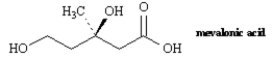
Draw the structure of the product formed when the following is treated with 1) NaOH (aq) and 2) H3O+.Explain,if necessary how the product would be affected if the treatment with acid were omitted. 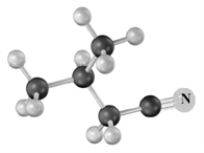
(Essay)
4.8/5 (78)
(78) 
Filters
- Essay(0)
- Multiple Choice(0)
- Short Answer(0)
- True False(0)
- Matching(0)