



 Chat with AI
Exam 3: Organic Compounds: Alkanes and Their Stereochemistry

Exam 1: Structure and Bonding29 Questions
Exam 2: Polar Covalent Bonds;acids and Bases50 Questions
Exam 3: Organic Compounds: Alkanes and Their Stereochemistry37 Questions
Exam 4: Organic Compounds: Cycloalkanes and Their Stereochemistry37 Questions
Exam 5: Stereochemistry at Tetrahedral Centers43 Questions
Exam 6: An Overview of Organic Reactions42 Questions
Exam 6: Par 12 Questions
Exam 7: Alkenes: Structure and Reactivity37 Questions
Exam 8: Alkenes: Reactions and Synthesis42 Questions
Exam 9: Alkynes: an Introduction to Organic Synthesis31 Questions
Exam 10: Organohalides31 Questions
Exam 11: Reactions of Alkyl Halides: Nucleophilic Substitutions and Eliminations34 Questions
Exam 11: Par 22 Questions
Exam 12: Structure Determination: Mass Spectrometry and Infrared Spectroscopy42 Questions
Exam 13: Structure Determination: Nuclear Magnetic Resonance Spectroscopy46 Questions
Exam 14: Conjugated Compounds and Ultraviolet Spectroscopy40 Questions
Exam 14: Par 32 Questions
Exam 15: Benzene and Aromaticity47 Questions
Exam 16: Chemistry of Benzene: Electrophilic Aromatic Substitution30 Questions
Exam 17: Alcohols and Phenols44 Questions
Exam 18: Ethers and Epoxides;thiols and Sulfides33 Questions
Exam 19: Aldehydes and Ketones: Nucleophilic Addition Reactions48 Questions
Exam 19: Par 42 Questions
Exam 20: Carboxylic Acids and Nitriles32 Questions
Exam 21: Carboxylic Acid Derivatives: Nucleophilic Acyl Substitution Reactions44 Questions
Exam 22: Carbonyl Alpha-Substitution Reactions33 Questions
Exam 23: Carbonyl Condensation Reactions36 Questions
Exam 23: Par 52 Questions
Exam 24: Amines and Heterocycles41 Questions
Exam 25: Biomolecules: Carbohydrates63 Questions
Exam 26: Biomolecules: Amino Acids,peptides,and Proteins45 Questions
Exam 27: Par 72 Questions
Exam 27: Biomolecules: Lipids54 Questions
Exam 28: Biomolecules: Nucleic Acids44 Questions
Exam 29: The Organic Chemistry of Metabolic Pathways48 Questions
Exam 30: Orbitals and Organic Chemistry: Pericyclic Reactions44 Questions
Exam 31: Synthetic Polymers33 Questions
Exam 30: Par 12 Questions
Select questions type


MATCH a structure below to each of the following descriptions and place the letter corresponding to the structure in the blank.
-_____ is a tertiary chloride.

Free
(Multiple Choice)
4.9/5  (81)
(81) Correct Answer: Verified
C
Arrange the following conformation from lowest to highest energy. 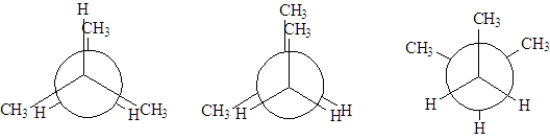
Free
(Essay)
5.0/5 (80)
(80) Correct Answer:Verified
Verified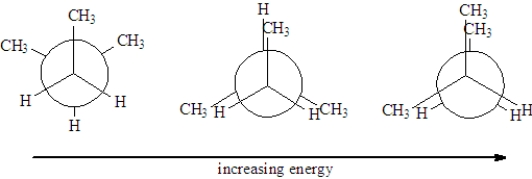
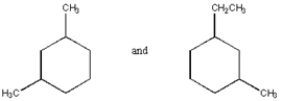
Exhibit 3-3
Label the following pairs of compounds as:
-_____ 
Free
(Multiple Choice)
4.8/5 (84)
(84) Correct Answer:Verified
VerifiedC
If the following alkyl group were attached to a cyclohexane ring, 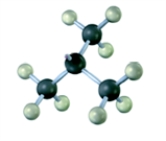 the group would be named as:
 (Multiple Choice)
4.9/5 (80)
(80) Which of the following functional groups if bonded to a three-carbon chain would have the largest δ- charge?
(Multiple Choice)
4.7/5 (89)
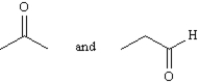
(89) Exhibit 3-3
Label the following pairs of compounds as:
-_____ 
(Multiple Choice)
4.9/5 (85)
(85) MATCH a structure below to each of the following descriptions and place the letter corresponding to the structure in the blank.
-_____ is a cyclic alkane with two cis methyl groups.
(Multiple Choice)
4.9/5 (75)
(75) Exhibit 3-4
Experiments have shown that for 1,2-dichloroethane,ClCH2CH2Cl,in carbon tetrachloride solution at 25 °C,70% of the molecules are in the anti and 30% are in the gauche conformation.
-Refer to Exhibit 3-4.Draw a Newman projection of the gauche conformation of 1,2-dichloroethane.Explain why the majority of the molecules are not in the gauche conformation.
(Essay)
4.8/5 (89)
(89) How many isomeric chloroalkanes have the molecular formula shown below? C4H9Cl
(Multiple Choice)
4.9/5 (63)
(63) Exhibit 3-4
Experiments have shown that for 1,2-dichloroethane,ClCH2CH2Cl,in carbon tetrachloride solution at 25 °C,70% of the molecules are in the anti and 30% are in the gauche conformation.
-Refer to Exhibit 3-4.Draw a Newman projection of the anti conformation of 1,2-dichloroethane.
(Short Answer)
4.7/5 (73)
(73) Exhibit 3-6
Predict the hybridization of the indicated atoms in Cipro .  -Refer to Exhibit 3-6.The hybridization of this carbon atom (B) is __________.
 (Short Answer)
4.8/5 (73)
(73) Draw at least four isomers with molecular formula given below.
C4H10O
(Essay)
4.8/5 (79)
(79) Exhibit 3-2
Label the indicated atoms in the structure below as 1°,2°,3°,or 4°.  -Refer to Exhibit 3-2.The atom at C is _____.
 (Short Answer)
4.9/5 (91)
(91) Exhibit 3-2
Label the indicated atoms in the structure below as 1°,2°,3°,or 4°.
-Refer to Exhibit 3-2.The atom at B is _____.
-Refer to Exhibit 3-2.The atom at B is _____. (Short Answer)
4.8/5 (82)
(82) Exhibit 3-6
Predict the hybridization of the indicated atoms in Cipro .
-Refer to Exhibit 3-6.The hybridization of this nitrogen atom (A) is __________.
-Refer to Exhibit 3-6.The hybridization of this nitrogen atom (A) is __________. (Short Answer)
4.9/5 (82)
(82) Exhibit 3-2
Label the indicated atoms in the structure below as 1°,2°,3°,or 4°.
-Refer to Exhibit 3-2.The atom at A is _____.
-Refer to Exhibit 3-2.The atom at A is _____. (Short Answer)
4.8/5 (86)
(86) 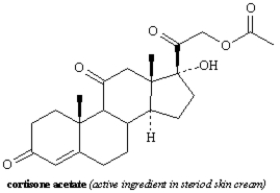
Exhibit 3-2
Label the indicated atoms in the structure below as 1°,2°,3°,or 4°.
-Refer to Exhibit 3-2.The atom at D is _____.
-Refer to Exhibit 3-2.The atom at D is _____. (Short Answer)
4.7/5 (57)
(57) 
Filters
- Essay(0)
- Multiple Choice(0)
- Short Answer(0)
- True False(0)
- Matching(0)