



 Chat with AI
Exam 5: General Chemistry

Exam 1: Behavioral Sciences343 Questions
Exam 2: Biochemistry307 Questions
Exam 3: Biology319 Questions
Exam 4: Critical Analysis & Reasoning Skills358 Questions
Exam 5: General Chemistry317 Questions
Exam 6: Organic Chemistry191 Questions
Exam 7: Physics200 Questions
Select questions type


Passage
Living organisms that require oxygen to respire can build up hydrogen peroxide (H2O2) as a byproduct of respiration. Because hydrogen peroxide can cause oxidative damage to cells, the amount of H2O2 in cells must be closely regulated. Although H2O2 decomposes spontaneously, a catalyst is needed for the reaction to occur at a sufficiently rapid rate suitable for biological purposes. In biological systems, an enzyme called a catalase accelerates the catalytic decomposition of H2O2 into water and oxygen (Reaction 1).
 Reaction 1In a laboratory setting, several different inorganic compounds can also serve as catalysts for H2O2 decomposition, allowing researchers to compare how different catalysts affect the efficiency of the reaction. To compare Fe(NO3)3 (a metal homogeneous catalyst) and NaI (a halogen homogeneous catalyst), researchers measured the amount of heat evolved after placing each catalyst in a fresh solution of 3% hydrogen peroxide.To perform the measurements, the researchers placed 50 mL of 3% H2O2 in an insulated coffee cup to be used as a calorimeter, as shown in Figure 1. Before adding any catalyst, the initial, baseline temperature of the H2O2 solution was determined by recording the temperature every 30 seconds for 5 minutes. Then 10 mL of 0.10 M Fe(NO3)3(aq) catalyst was added to the H2O2 solution. The temperature was recorded every 30 seconds for another 15 minutes. The experiment was then repeated using 10 mL of 0.50 M sodium iodide in 0.01 M NaOH as the catalyst. The results for each reaction are shown in Figure 2.
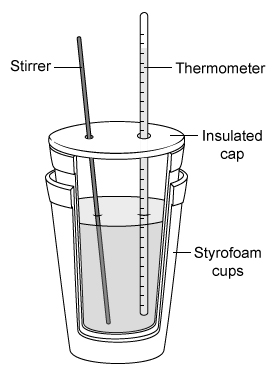 Figure 1 Coffee cup calorimeter
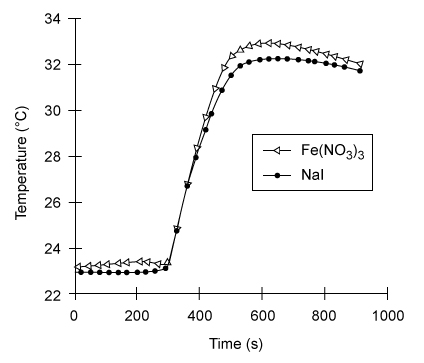 Figure 2 Temperature vs. time measurements for reactions catalyzed by Fe(NO3)3 and NaI
Adapted from: C. Marzzacco, "The effect of a change in catalyst on the enthalpy of decomposition of hydrogen peroxide." Chem13 News Magazine. ©2008 University of Waterloo.
-Which of the following statements explains why the change in temperature of the H2O2 decomposition reaction using Fe(NO3)3 is approximately the same value as the change in temperature using NaI?
Reaction 1In a laboratory setting, several different inorganic compounds can also serve as catalysts for H2O2 decomposition, allowing researchers to compare how different catalysts affect the efficiency of the reaction. To compare Fe(NO3)3 (a metal homogeneous catalyst) and NaI (a halogen homogeneous catalyst), researchers measured the amount of heat evolved after placing each catalyst in a fresh solution of 3% hydrogen peroxide.To perform the measurements, the researchers placed 50 mL of 3% H2O2 in an insulated coffee cup to be used as a calorimeter, as shown in Figure 1. Before adding any catalyst, the initial, baseline temperature of the H2O2 solution was determined by recording the temperature every 30 seconds for 5 minutes. Then 10 mL of 0.10 M Fe(NO3)3(aq) catalyst was added to the H2O2 solution. The temperature was recorded every 30 seconds for another 15 minutes. The experiment was then repeated using 10 mL of 0.50 M sodium iodide in 0.01 M NaOH as the catalyst. The results for each reaction are shown in Figure 2.
Figure 1 Coffee cup calorimeter
Figure 2 Temperature vs. time measurements for reactions catalyzed by Fe(NO3)3 and NaI
Adapted from: C. Marzzacco, "The effect of a change in catalyst on the enthalpy of decomposition of hydrogen peroxide." Chem13 News Magazine. ©2008 University of Waterloo.
-Which of the following statements explains why the change in temperature of the H2O2 decomposition reaction using Fe(NO3)3 is approximately the same value as the change in temperature using NaI? (Multiple Choice)
4.8/5  (83)
(83) Passage
Copper plays a vital role as a trace mineral for biological processes. The amount of dietary copper needed by an adult each day is about 30 μg/kg of body weight, and blood plasma normally has a copper concentration of 1 mg/L.Copper is an essential element, and toxic effects are not common. However, given sufficient exposure to high levels by inhalation, absorption, or ingestion from sources such as industrial hazards or contaminated groundwater, copper toxicity can occur.Salts that are more soluble tend to exhibit higher toxicity when ingested, but the solubilities of copper salts vary and are also temperature-dependent, as shown by selected examples in Figure 1.
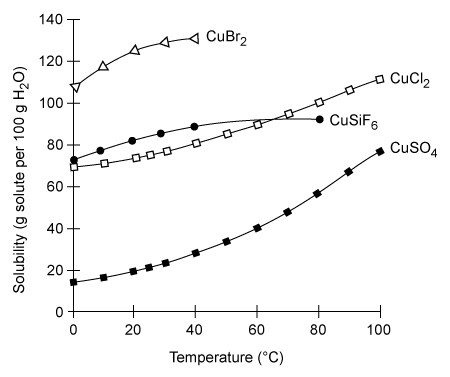 Figure 1 The solubility of selected copper salts in distilled water with increasing temperatureSome copper salts have solubilities much lower than those shown in Figure 1. For example, CuF2 has a solubility of only 0.075 g per 100 g of water (at 25 °C). This indicates that CuF2 dissociates in water only to a small extent (Reaction 1) and that the equilibrium favors the undissociated salt, giving CuF2 a solubility product constant of Ksp = 1.6 × 10⁻⁶.
 Reaction 1Compound-specific properties can also impact solubility. In CuF2, the dissociated F− ion is mildly basic (pKb = 10.8), causing the equilibrium to be influenced by the pH of the solution.Specific characteristics of copper can also play a role. For example, copper ions in solution express an affinity to form coordinate bonds with available lone-pair electrons of nitrogen atoms in amines (Reaction 2).
 Reaction 2If excess amine ligands are present, coordinate bonds like that shown in Reaction 2 will continue to form until each Cu2+ ion in solution is coordinated with four nitrogen atoms. This acquisition of copper ions by ligands in solution can also impact the solubility equilibrium of copper salts by forming soluble coordination complexes.
-Based on the passage, which of the following procedures would assist in separating an aqueous mixture of CuCl2 and CuSO4 salts at 90 °C?Add Cu(NO3)2 to the solution mixtureAdd Na2SO4 to the solution mixtureCool the solution mixture to 5°CLower the pH of the mixture
Figure 1 The solubility of selected copper salts in distilled water with increasing temperatureSome copper salts have solubilities much lower than those shown in Figure 1. For example, CuF2 has a solubility of only 0.075 g per 100 g of water (at 25 °C). This indicates that CuF2 dissociates in water only to a small extent (Reaction 1) and that the equilibrium favors the undissociated salt, giving CuF2 a solubility product constant of Ksp = 1.6 × 10⁻⁶.
Reaction 1Compound-specific properties can also impact solubility. In CuF2, the dissociated F− ion is mildly basic (pKb = 10.8), causing the equilibrium to be influenced by the pH of the solution.Specific characteristics of copper can also play a role. For example, copper ions in solution express an affinity to form coordinate bonds with available lone-pair electrons of nitrogen atoms in amines (Reaction 2).
Reaction 2If excess amine ligands are present, coordinate bonds like that shown in Reaction 2 will continue to form until each Cu2+ ion in solution is coordinated with four nitrogen atoms. This acquisition of copper ions by ligands in solution can also impact the solubility equilibrium of copper salts by forming soluble coordination complexes.
-Based on the passage, which of the following procedures would assist in separating an aqueous mixture of CuCl2 and CuSO4 salts at 90 °C?Add Cu(NO3)2 to the solution mixtureAdd Na2SO4 to the solution mixtureCool the solution mixture to 5°CLower the pH of the mixture (Multiple Choice)
4.9/5 (75)
(75) Oxalate anions, C2O42−, added to a solution of [Fe(H2O)6]3+ displace water molecules within the complex ion to form [Fe(C2O4)3]3−, as shown in the reaction below:[Fe(H2O)6]3+(aq) + 3 C2O42−(aq) → [Fe(C2O4)3]3−(aq) + 6 H2O(l)Which of the following does NOT explain why C2O42− displaces H2O in the formation of [Fe(C2O4)3]3− ?
(Multiple Choice)
4.7/5 (87)
(87) Passage
The alkaline-earth metals are a highly reactive family of metals occupying Group 2 (IIA) of the periodic table. In their elemental form, the alkaline-earth metals have a shiny, silvery-white to slightly yellowish appearance. The alkaline-earth metals exhibit some similarities to the chemistry of the alkali metals (Group 1) but are a little less reactive.Atoms of the alkaline-earth metals (M) have only two valence electrons and a low first and second ionization energy. Consequently, these metals readily lose both electrons to produce cations with a +2 charge (M+2) during reactions with nonmetals. As a result, the alkaline-earth metals do not exist in their elemental metallic form in nature. Instead, the Group 2 elements are found primarily as metal oxides, which form by reacting oxygen (Reaction 1).
 Similarly, elemental samples of alkaline-earth metals will react with elemental halogens (X2) to form metal halides (Reaction 2), all of which are ionic except for BeCl2.
 Except for beryllium, the alkaline-earth metals react with water to produce very basic metal hydroxide solutions and hydrogen gas (Reaction 3).
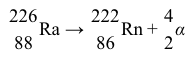
 The most difficult alkaline-earth metal to study is radium, because it is a rare radioactive element that is produced from the nuclear decay of uranium. The most common natural isotope, radium-226, has a half-life of 1,600 years and decays by alpha emission into radon-222 (Reaction 4).
 -Based on the reaction in Figure 1 and the energy profile in Figure 2, which statement correctly describes both Compound 2 and Compound 3?
Similarly, elemental samples of alkaline-earth metals will react with elemental halogens (X2) to form metal halides (Reaction 2), all of which are ionic except for BeCl2.
Except for beryllium, the alkaline-earth metals react with water to produce very basic metal hydroxide solutions and hydrogen gas (Reaction 3).
The most difficult alkaline-earth metal to study is radium, because it is a rare radioactive element that is produced from the nuclear decay of uranium. The most common natural isotope, radium-226, has a half-life of 1,600 years and decays by alpha emission into radon-222 (Reaction 4).
-Based on the reaction in Figure 1 and the energy profile in Figure 2, which statement correctly describes both Compound 2 and Compound 3? (Multiple Choice)
4.8/5 (82)
(82) The effective nuclear charge experienced by the valence electrons of a neutral nitrogen atom is:
(Multiple Choice)
4.9/5 (88)
(88) Passage
A group of students were given water from two reservoirs and asked to determine water hardness using flame atomic absorbance (AA) spectroscopy. Water hardness can be found by relating the concentration of calcium and magnesium ions to the concentration of carbonate species in the sample using Equation 1.[CO32-] = 2.5[Ca2+] + 4.1[Mg2+]Equation 1To correlate the concentration of the metal ions to absorbance, the students made standard solutions of MgO (MW = 40.31 g/mol) and CaO (MW = 56.08 g/mol) by diluting small portions of 0.01 M MgO and 0.01 M CaO stock solutions with 2% HNO3 into 100 mL volumetric flasks. The calibration curves generated from the standard solutions are shown in Figures 1 and 2.
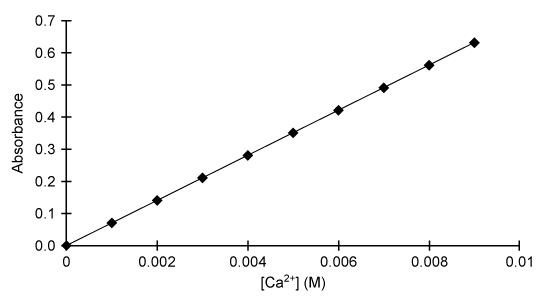 Figure 1 Calibration curve from the absorption of the Ca2+ solution standards
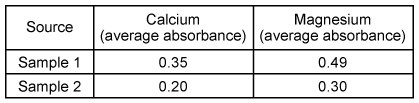
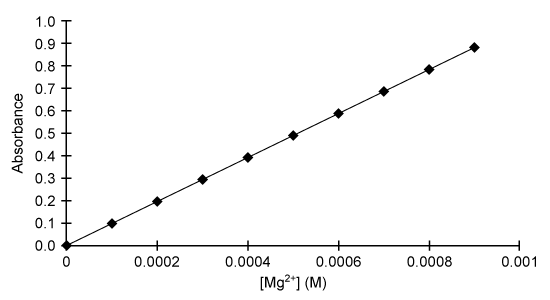 Figure 2 Calibration curve from the absorption of the Mg2+ solution standardsLanthanum(III) chloride (MM = 245.25) can be used to eliminate chemical interference in a sample by competitively binding to PO43−, releasing calcium to be atomized in the flame for detection.The students prepared unknown Samples 1 and 2 by mixing 25 mL reservoir water, 16 mL of 2% HNO3, and 9 mL of 0.1 M LaCl3 for a total sample volume of 50 mL each. The samples were each tested three times using flame AA spectroscopy, yielding the results reported in Table 1.Table 1 AA Spectroscopy Results for Reservoir Water Samples
 -How many La3+ ions are present in each of the unknown samples?
Figure 1 Calibration curve from the absorption of the Ca2+ solution standards
Figure 2 Calibration curve from the absorption of the Mg2+ solution standardsLanthanum(III) chloride (MM = 245.25) can be used to eliminate chemical interference in a sample by competitively binding to PO43−, releasing calcium to be atomized in the flame for detection.The students prepared unknown Samples 1 and 2 by mixing 25 mL reservoir water, 16 mL of 2% HNO3, and 9 mL of 0.1 M LaCl3 for a total sample volume of 50 mL each. The samples were each tested three times using flame AA spectroscopy, yielding the results reported in Table 1.Table 1 AA Spectroscopy Results for Reservoir Water Samples
-How many La3+ ions are present in each of the unknown samples? (Multiple Choice)
4.8/5 (79)
(79) Passage
Umami is one of five basic tastes that humans recognize, and it is triggered by L-amino acids as well as some synthetic ingredients and organic acids. Three common umami tastant molecules are shown in Figure 1.
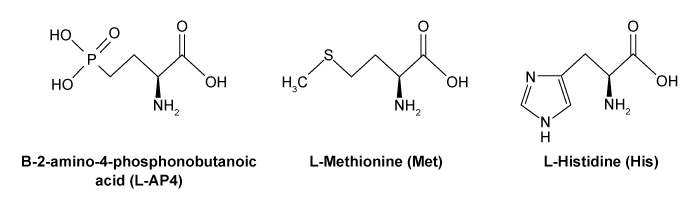 Figure 1 Three common tastant molecules known to trigger the umami taste sensationUmami taste signals are triggered upon binding of tastant molecules to the G protein-coupled receptor (GPCR) heterodimer T1R1-T1R3, which ultimately causes the breakdown of phosphatidylinositol 4,5-bisphosphate (PIP2) into the messenger molecules inositol-1,4,5-trisphosphate (IP3) and diacylglycerol (DAG). IP3 triggers the release of Ca2+ cations and the subsequent gating of the taste-transduction channels (Figure 2).
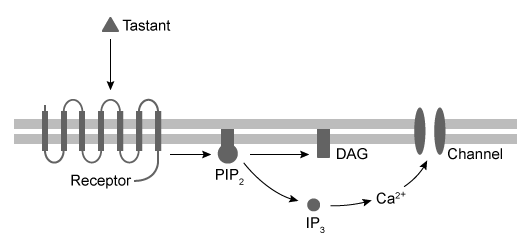 Figure 2 Signal pathway for transduction of umami taste sensationInosine monophosphate (IMP) has been suggested as enhancing (potentiating) the response of T1R1+T1R3 GPCRs to umami tastant molecules. Scientists tested this hypothesis by culturing receptors from human embryonic kidney (HEK) cells containing promiscuous G proteins. The HEK cells were then stimulated with umami tastants in the presence or absence of IMP. In each test, the cells were exposed to the same amounts of amino acid tastant and IMP. The number of cells that responded to each tastant was measured using a calcium indicator dye (FURA-2AM) in conjunction with fluorescence microscopy. By comparing the cellular response ratio of the stimulated to unstimulated HEK cells, the extent of potentiation can be assessed. The results are shown in Figure 3.
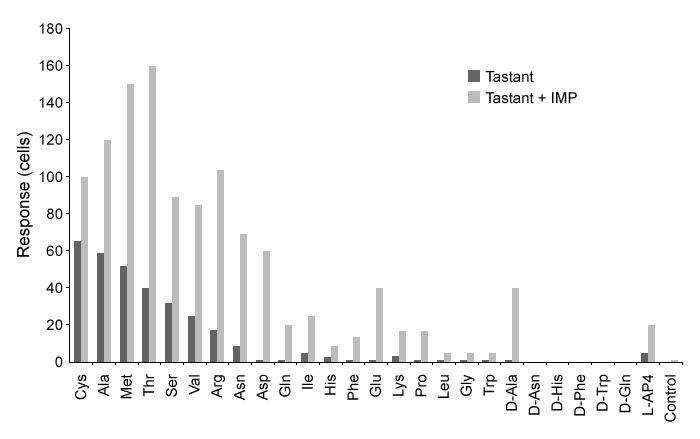 Figure 3 Quantification of amino-acid responses for T1R1+T1R3 with and without IMP
Adapted from Nelson G, Chandrashekar J, Hoon MA, et al. An amino-acid taste receptor. Nature. 2002;416(6877):199-202.
-Which of the following best explains the results regarding D-amino acids in Figure 3?
Figure 1 Three common tastant molecules known to trigger the umami taste sensationUmami taste signals are triggered upon binding of tastant molecules to the G protein-coupled receptor (GPCR) heterodimer T1R1-T1R3, which ultimately causes the breakdown of phosphatidylinositol 4,5-bisphosphate (PIP2) into the messenger molecules inositol-1,4,5-trisphosphate (IP3) and diacylglycerol (DAG). IP3 triggers the release of Ca2+ cations and the subsequent gating of the taste-transduction channels (Figure 2).
Figure 2 Signal pathway for transduction of umami taste sensationInosine monophosphate (IMP) has been suggested as enhancing (potentiating) the response of T1R1+T1R3 GPCRs to umami tastant molecules. Scientists tested this hypothesis by culturing receptors from human embryonic kidney (HEK) cells containing promiscuous G proteins. The HEK cells were then stimulated with umami tastants in the presence or absence of IMP. In each test, the cells were exposed to the same amounts of amino acid tastant and IMP. The number of cells that responded to each tastant was measured using a calcium indicator dye (FURA-2AM) in conjunction with fluorescence microscopy. By comparing the cellular response ratio of the stimulated to unstimulated HEK cells, the extent of potentiation can be assessed. The results are shown in Figure 3.
Figure 3 Quantification of amino-acid responses for T1R1+T1R3 with and without IMP
Adapted from Nelson G, Chandrashekar J, Hoon MA, et al. An amino-acid taste receptor. Nature. 2002;416(6877):199-202.
-Which of the following best explains the results regarding D-amino acids in Figure 3? (Multiple Choice)
4.7/5 (63)
(63) Passage
Sulfur is the 10th most abundant element on Earth and is an essential element in biological systems. Sulfur can form a variety of chemical compounds and will react with nearly every element except Au, Pt, Ir, Te, and the noble gases. A list of several common inorganic compounds of sulfur is given in Table 1.Table 1 Selected Common Inorganic Sulfur Compounds
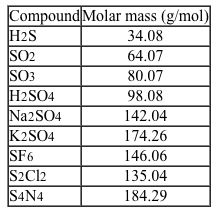 Reduction of elemental sulfur by bacteria during anaerobic digestion produces the toxic, foul-smelling gas H2S. Oxidation of elemental sulfur via combustion or volcanic processes yields gases of SO2 and SO3. When dissolved in water, both SO2 and SO3 produce acidic solutions, and SO3 reacts with water to form the acid H2SO4. Neutralization of H2SO4 can provide a variety of salts, including Na2SO4.Elemental sulfur can also react with halogen gases to form sulfur halides such as the industrially important insulator gas SF6 and the synthetic reagent S2Cl2. S2Cl2 facilitates the formation of other sulfur compounds. For example, reacting S2Cl2 with NH3 produces the sulfur pnictide S4N4.
-Which of the following compounds from Table 1 has a sulfur atom with a d2sp3 hybridization state?
Reduction of elemental sulfur by bacteria during anaerobic digestion produces the toxic, foul-smelling gas H2S. Oxidation of elemental sulfur via combustion or volcanic processes yields gases of SO2 and SO3. When dissolved in water, both SO2 and SO3 produce acidic solutions, and SO3 reacts with water to form the acid H2SO4. Neutralization of H2SO4 can provide a variety of salts, including Na2SO4.Elemental sulfur can also react with halogen gases to form sulfur halides such as the industrially important insulator gas SF6 and the synthetic reagent S2Cl2. S2Cl2 facilitates the formation of other sulfur compounds. For example, reacting S2Cl2 with NH3 produces the sulfur pnictide S4N4.
-Which of the following compounds from Table 1 has a sulfur atom with a d2sp3 hybridization state? (Multiple Choice)
4.8/5 (97)
(97) Which of the following molecules has the shortest nitrogen-nitrogen bond?
(Multiple Choice)
4.8/5 (79)
(79) Passage
Dmitri Mendeleev is credited with grouping the elements by atomic mass and observing that similar properties emerge periodically. Henry Moseley then determined that a fundamental property, which Ernest Rutherford later called the atomic number, is more important than atomic mass for ordering the elements.As the periodic table took shape, scientists noted certain properties and trends. For example, Rayleigh and Ramsay observed that some elements are unreactive and gave them the name noble gases. But it was not until Niels Bohr described his model of the atom that scientists understood why noble gases are stable.Another important trend was discovered by Linus Pauling. He was the first to identify electronegativity as a way to describe bonds that are neither completely ionic nor completely covalent. Pauling assigned fluorine the highest electronegativity value of 4.0 because of its strong tendency to attract electrons when bonded to other atoms. All other atoms were assigned values relative to fluorine. This became known as the Pauling electronegativity scale.Scientists identified other trends based on x-ray crystallography and reactivity studies. Figure 1 shows the first ionization energy of the elements, and Figure 2 shows electron affinity.
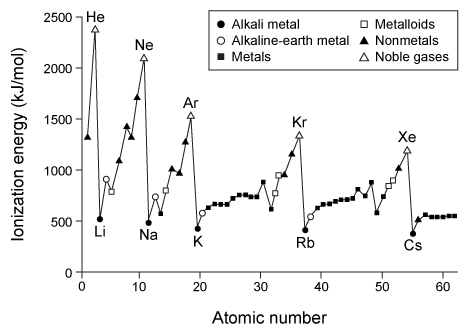 Figure 1 First ionization energy of elements
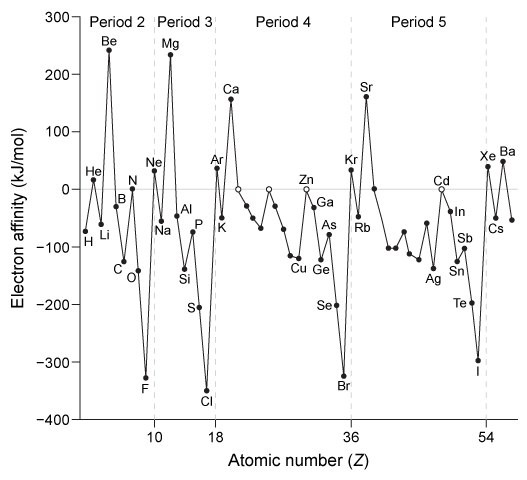 Figure 2 Electron affinity of several elements (larger negative values indicate greater electron affinity)
-Why are noble gases the least reactive group on the periodic table?
Figure 1 First ionization energy of elements
Figure 2 Electron affinity of several elements (larger negative values indicate greater electron affinity)
-Why are noble gases the least reactive group on the periodic table? (Multiple Choice)
4.9/5 (63)
(63) Passage
Magnetic resonance imaging (MRI) interprets the nuclear relaxation or relaxivity of hydrogen nuclei in resident water molecules. Hydrogen nuclei in water have two magnetic spin states: alpha and beta. In the presence of an applied magnetic field, these spins will align with the field in an "excited" state and then relax back to the "ground" state, producing a signal with intensity proportional to relaxivity. Frequently, an MRI contrast agent is used to increase the relaxation time in coordinated molecules, resulting in a more intense signal.Commonly used contrast agents include gadolinium-based agents. Depending on its environment, gadolinium (Gd) can have eight or nine sites in its coordination sphere, allowing Gd3+ to interact with eight water molecules as in Gd(H2O)83+. The electronic configuration of gadolinium is shown in Figure 1.
 Figure 1 Electronic configuration of gadoliniumGd3+ alone is toxic to cells because its ionic radius is similar to that of Ca2+, allowing Gd3+ to displace Ca2+ in biologically important settings. Therefore, Gd3+ must be coordinated to an organic ligand such as 1,4,7,10-tetraazacyclododecane-1,4,7,10-tetraacetic acid (DOTA) to allow it to pass through the body safely. When chelated, DOTA displaces the water around gadolinium and leaves only one coordination site for a water molecule (Figure 2).
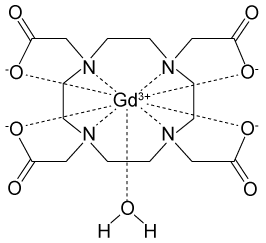 Figure 2 Gd-DOTA with a water coordinated to Gd3+Zinc ions (Zn2+) are required to store insulin and are co-released when insulin is secreted by the pancreas. To detect zinc ions in the body, researchers have designed a variation of Gd-DOTA called Gd-daa3 with two diaminoacetate (daa) arms that preferentially bind to Zn2+ ions (Figure 3). When Zn2+ is absent, these arms coordinate to Gd3+ and create a nine-coordinate complex that prohibits water from binding to Gd3+. Binding of diaminoacetate arms to Zn2+ frees Gd3+ to coordinate with water molecules. This configuration results in increased signal intensity in the parts of the cell where Zn2+ is located.
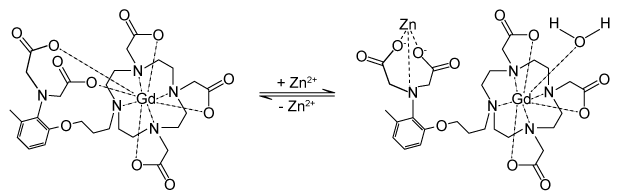 Figure 3 Gd-daa3 when Zn2+ is present
Adapted from Louie A. MRI biosensors: a short primer. J Magn Reson Imaging. 2013;38(3):530-9.
-Two MRI images of the pancreas were taken at different times (Time A and Time B) in a mouse injected with Gd-daa3. Greater relaxivity was detected at Time B, suggesting all of the following EXCEPT:
Figure 1 Electronic configuration of gadoliniumGd3+ alone is toxic to cells because its ionic radius is similar to that of Ca2+, allowing Gd3+ to displace Ca2+ in biologically important settings. Therefore, Gd3+ must be coordinated to an organic ligand such as 1,4,7,10-tetraazacyclododecane-1,4,7,10-tetraacetic acid (DOTA) to allow it to pass through the body safely. When chelated, DOTA displaces the water around gadolinium and leaves only one coordination site for a water molecule (Figure 2).
Figure 2 Gd-DOTA with a water coordinated to Gd3+Zinc ions (Zn2+) are required to store insulin and are co-released when insulin is secreted by the pancreas. To detect zinc ions in the body, researchers have designed a variation of Gd-DOTA called Gd-daa3 with two diaminoacetate (daa) arms that preferentially bind to Zn2+ ions (Figure 3). When Zn2+ is absent, these arms coordinate to Gd3+ and create a nine-coordinate complex that prohibits water from binding to Gd3+. Binding of diaminoacetate arms to Zn2+ frees Gd3+ to coordinate with water molecules. This configuration results in increased signal intensity in the parts of the cell where Zn2+ is located.
Figure 3 Gd-daa3 when Zn2+ is present
Adapted from Louie A. MRI biosensors: a short primer. J Magn Reson Imaging. 2013;38(3):530-9.
-Two MRI images of the pancreas were taken at different times (Time A and Time B) in a mouse injected with Gd-daa3. Greater relaxivity was detected at Time B, suggesting all of the following EXCEPT: (Multiple Choice)
4.8/5 (76)
(76) The Nernst equation states: 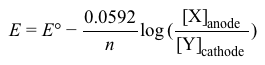 For a concentration cell that has a potential of 0.089 V and utilizes Ni2+ solutions at the anode and the cathode, which of the following statements correctly describes the molar cell concentrations [Ni2+]anode and [Ni2+]cathode and the direction of electron flow within the cell?
 (Multiple Choice)
4.9/5 (61)
(61) Passage
A group of students were given water from two reservoirs and asked to determine water hardness using flame atomic absorbance (AA) spectroscopy. Water hardness can be found by relating the concentration of calcium and magnesium ions to the concentration of carbonate species in the sample using Equation 1.[CO32-] = 2.5[Ca2+] + 4.1[Mg2+]Equation 1To correlate the concentration of the metal ions to absorbance, the students made standard solutions of MgO (MW = 40.31 g/mol) and CaO (MW = 56.08 g/mol) by diluting small portions of 0.01 M MgO and 0.01 M CaO stock solutions with 2% HNO3 into 100 mL volumetric flasks. The calibration curves generated from the standard solutions are shown in Figures 1 and 2.
Figure 1 Calibration curve from the absorption of the Ca2+ solution standards
Figure 2 Calibration curve from the absorption of the Mg2+ solution standardsLanthanum(III) chloride (MM = 245.25) can be used to eliminate chemical interference in a sample by competitively binding to PO43−, releasing calcium to be atomized in the flame for detection.The students prepared unknown Samples 1 and 2 by mixing 25 mL reservoir water, 16 mL of 2% HNO3, and 9 mL of 0.1 M LaCl3 for a total sample volume of 50 mL each. The samples were each tested three times using flame AA spectroscopy, yielding the results reported in Table 1.Table 1 AA Spectroscopy Results for Reservoir Water Samples
-The passage states that the standard solutions were prepared for analysis by diluting small portions of the stock solutions. How does the concentration of the MgO standard solution with the lowest nonzero absorbance compare to the concentration of the MgO stock solution?
Figure 1 Calibration curve from the absorption of the Ca2+ solution standards
Figure 2 Calibration curve from the absorption of the Mg2+ solution standardsLanthanum(III) chloride (MM = 245.25) can be used to eliminate chemical interference in a sample by competitively binding to PO43−, releasing calcium to be atomized in the flame for detection.The students prepared unknown Samples 1 and 2 by mixing 25 mL reservoir water, 16 mL of 2% HNO3, and 9 mL of 0.1 M LaCl3 for a total sample volume of 50 mL each. The samples were each tested three times using flame AA spectroscopy, yielding the results reported in Table 1.Table 1 AA Spectroscopy Results for Reservoir Water Samples
-The passage states that the standard solutions were prepared for analysis by diluting small portions of the stock solutions. How does the concentration of the MgO standard solution with the lowest nonzero absorbance compare to the concentration of the MgO stock solution? (Multiple Choice)
4.8/5 (84)
(84) Considering the type of element represented by each of the following, which of the elements below is most likely to have the highest electrical conductivity?
(Multiple Choice)
4.9/5 (91)
(91) Passage
The primary structure of a protein is a series of amino acids that are connected in a long chain via C−N peptide bonds (Figure 1).
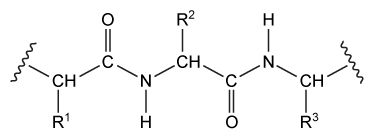 Figure 1 Peptide bonds within a protein segment (Note: Rn = amino acid side chains)Protein chain folding is guided by multiple intramolecular interactions that can occur between two peptide bonds, between a peptide bond and a side chain, or between two side chains, as shown in the protein in Figure 2. Although these interactions are intramolecular because they are within the same molecule, they act effectively like intermolecular interactions because proteins are such large molecules.
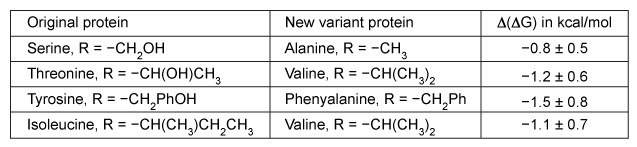
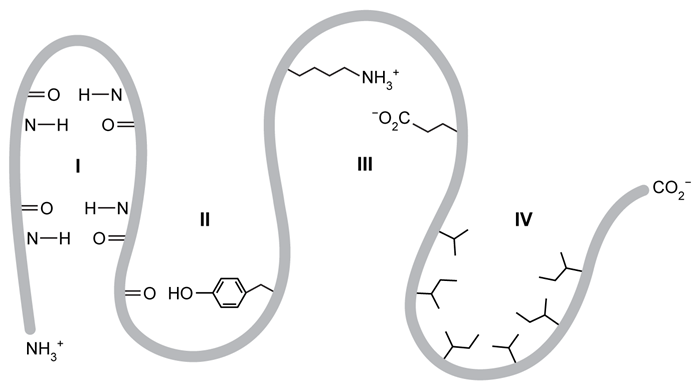 Figure 2 Intramolecular interactions between the peptide chain and amino acid side chains within a hypothetical proteinBecause intramolecular interactions play a significant role in maintaining the three-dimensional folded structure of a protein, having a greater number of interactions or stronger interactions will result in increased protein stability. The energy required to break these interactions within a protein is related to free energy, ΔG. The greater the ΔG value, the more stable the protein.To find the overall contribution of particular intramolecular interactions to protein stability, researchers made several protein variants in which one amino acid is replaced by another to change the noncovalent interactions between the side chains. The difference in free energy between the variant and the original protein, Δ(ΔG), indicates the change in overall stability of the protein. A negative Δ(ΔG) means the variant protein is less stable than the original.Table 1 shows the results of the amino acid substitution experiments for a protein with the approximate energy difference when each amino acid is changed.Table 1 Change in Free Energy Based on Changing Intramolecular Interactions Caused by Amino Acid Substitutions
 Adapted from: C. N. Pace, J. M. Scholtz, G. R. Grimsley, "Forces stabilizing proteins." FEBS Lett. ©2014 Wiley.
-The regions from the protein in Figure 2 that exhibit noncovalent hydrogen bonding and ionic bonding, respectively, are:
Figure 1 Peptide bonds within a protein segment (Note: Rn = amino acid side chains)Protein chain folding is guided by multiple intramolecular interactions that can occur between two peptide bonds, between a peptide bond and a side chain, or between two side chains, as shown in the protein in Figure 2. Although these interactions are intramolecular because they are within the same molecule, they act effectively like intermolecular interactions because proteins are such large molecules.
Figure 2 Intramolecular interactions between the peptide chain and amino acid side chains within a hypothetical proteinBecause intramolecular interactions play a significant role in maintaining the three-dimensional folded structure of a protein, having a greater number of interactions or stronger interactions will result in increased protein stability. The energy required to break these interactions within a protein is related to free energy, ΔG. The greater the ΔG value, the more stable the protein.To find the overall contribution of particular intramolecular interactions to protein stability, researchers made several protein variants in which one amino acid is replaced by another to change the noncovalent interactions between the side chains. The difference in free energy between the variant and the original protein, Δ(ΔG), indicates the change in overall stability of the protein. A negative Δ(ΔG) means the variant protein is less stable than the original.Table 1 shows the results of the amino acid substitution experiments for a protein with the approximate energy difference when each amino acid is changed.Table 1 Change in Free Energy Based on Changing Intramolecular Interactions Caused by Amino Acid Substitutions
Adapted from: C. N. Pace, J. M. Scholtz, G. R. Grimsley, "Forces stabilizing proteins." FEBS Lett. ©2014 Wiley.
-The regions from the protein in Figure 2 that exhibit noncovalent hydrogen bonding and ionic bonding, respectively, are: (Multiple Choice)
5.0/5 (75)
(75) Passage
The alkali metals are a highly reactive family of metals occupying Group 1 (1A) of the periodic table. In their elemental form, the alkali metals have a shiny, metallic appearance, but they are also very soft and can be easily cut by hand. Due to their high reactivity, however, the alkali metals do not exist in their elemental form in nature.Because the alkali metals possess only a single valence electron with a low first ionization energy, the alkali metals (M) readily react with nonmetals and lose this electron to form cations with a +1 charge (M+) that are incorporated into ionic compounds. Consequently, elemental samples of alkali metals will rapidly tarnish in oxygen by forming oxides (Reaction 1) and vigorously react with elemental halogens (X2) to form halide salts (Reaction 2).2 M(s) + O2(g) → M2O(s)Reaction 12 M(s) + X2(g) → 2 MX(s)Reaction 2Alkali metals also react violently with water to form very basic metal hydroxide (alkali) solutions while releasing hydrogen gas in the process (Reaction 3).2 M(s) + 2 H2O(l) → 2 MOH(aq) + H2(g)Reaction 3As demonstrated by these reactions, alkali metals possess a low electron affinity that makes accepting an additional electron to form an anion less favorable than losing the valence electron to form a cation.Of the alkali metals, francium is the rarest since it is a trace radioactive byproduct formed from the decay of uranium ores and has a very short half-life. As a result, any francium formed will quickly decay into radium or astatine by beta decay or by alpha decay, respectively.Whereas hydrogen is a part of Group 1 based on its number of valence electrons, hydrogen is not an alkali metal. Interestingly, some research has suggested that under extreme pressures and very low temperatures, hydrogen may form a solid with metallic properties.
-According to trends in the first ionization energy, which of the following alkali metals is the LEAST reactive?
(Multiple Choice)
4.8/5 (72)
(72) Passage
Living organisms that require oxygen to respire can build up hydrogen peroxide (H2O2) as a byproduct of respiration. Because hydrogen peroxide can cause oxidative damage to cells, the amount of H2O2 in cells must be closely regulated. Although H2O2 decomposes spontaneously, a catalyst is needed for the reaction to occur at a sufficiently rapid rate suitable for biological purposes. In biological systems, an enzyme called a catalase accelerates the catalytic decomposition of H2O2 into water and oxygen (Reaction 1).
Reaction 1In a laboratory setting, several different inorganic compounds can also serve as catalysts for H2O2 decomposition, allowing researchers to compare how different catalysts affect the efficiency of the reaction. To compare Fe(NO3)3 (a metal homogeneous catalyst) and NaI (a halogen homogeneous catalyst), researchers measured the amount of heat evolved after placing each catalyst in a fresh solution of 3% hydrogen peroxide.To perform the measurements, the researchers placed 50 mL of 3% H2O2 in an insulated coffee cup to be used as a calorimeter, as shown in Figure 1. Before adding any catalyst, the initial, baseline temperature of the H2O2 solution was determined by recording the temperature every 30 seconds for 5 minutes. Then 10 mL of 0.10 M Fe(NO3)3(aq) catalyst was added to the H2O2 solution. The temperature was recorded every 30 seconds for another 15 minutes. The experiment was then repeated using 10 mL of 0.50 M sodium iodide in 0.01 M NaOH as the catalyst. The results for each reaction are shown in Figure 2.
Figure 1 Coffee cup calorimeter
Figure 2 Temperature vs. time measurements for reactions catalyzed by Fe(NO3)3 and NaI
Adapted from: C. Marzzacco, "The effect of a change in catalyst on the enthalpy of decomposition of hydrogen peroxide." Chem13 News Magazine. ©2008 University of Waterloo.
-Below is a reaction energy diagram for the decomposition of H2O2. 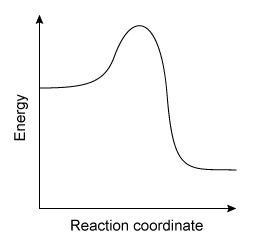 As the reaction proceeds, the enthalpy of the reaction is:
Reaction 1In a laboratory setting, several different inorganic compounds can also serve as catalysts for H2O2 decomposition, allowing researchers to compare how different catalysts affect the efficiency of the reaction. To compare Fe(NO3)3 (a metal homogeneous catalyst) and NaI (a halogen homogeneous catalyst), researchers measured the amount of heat evolved after placing each catalyst in a fresh solution of 3% hydrogen peroxide.To perform the measurements, the researchers placed 50 mL of 3% H2O2 in an insulated coffee cup to be used as a calorimeter, as shown in Figure 1. Before adding any catalyst, the initial, baseline temperature of the H2O2 solution was determined by recording the temperature every 30 seconds for 5 minutes. Then 10 mL of 0.10 M Fe(NO3)3(aq) catalyst was added to the H2O2 solution. The temperature was recorded every 30 seconds for another 15 minutes. The experiment was then repeated using 10 mL of 0.50 M sodium iodide in 0.01 M NaOH as the catalyst. The results for each reaction are shown in Figure 2.
Figure 1 Coffee cup calorimeter
Figure 2 Temperature vs. time measurements for reactions catalyzed by Fe(NO3)3 and NaI
Adapted from: C. Marzzacco, "The effect of a change in catalyst on the enthalpy of decomposition of hydrogen peroxide." Chem13 News Magazine. ©2008 University of Waterloo.
-Below is a reaction energy diagram for the decomposition of H2O2. As the reaction proceeds, the enthalpy of the reaction is: (Multiple Choice)
4.9/5 (98)
(98) When oxalate anions, C2O42−, are added to a solution of [Fe(H2O)6]3+, the formation of [Fe(C2O4)3]3− occurs in a series of steps that together result in the following overall reaction:[Fe(H2O)6]3+(aq) + 3 C2O42−(aq) → [Fe(C2O4)3]3−(aq) + 6 H2O(l)During the first step of the reaction, two new coordinate bonds are formed to produce an intermediate ion of:
(Multiple Choice)
4.7/5 (83)
(83) Passage
The bicarbonate (HCO3−) buffer system (Reaction 1) helps to maintain acid-base homeostasis and a blood pH near 7.4. Therefore, concentrations of carbon dioxide (CO2) and HCO3− must be tightly regulated through adaptations in respiratory and renal physiology. For patients with suspected acid-base imbalance, these concentrations can be monitored by blood gas analysis performed on arterial or venous blood.
 CO2g+H2Ol⇔carbonic anhydraseH2CO3aq⇔pKa=6.35HCO3-aq+H+aqReaction 1In most automated blood gas analyzers, ionized hydrogen, CO2, and oxygen (O2) in the sample diffuse through semipermeable membranes and are measured at separate electrodes (Figure 1). The pH-sensitive glass electrode (E1) is separated from the blood sample by a membrane permeable to hydrogen ions. The sample pH is determined according to the voltage difference between E1 and a reference electrode maintained in a solution of standard pH. CO2 diffuses across a gas-permeable membrane to E2, where it reacts to generate HCO3− and free hydrogen ions. In a modification of the mechanism used in E1, partial pressure of CO2 (PaCO2) is calculated indirectly from the change in pH, as determined by the potential difference between E2 and its reference electrode.E3, also called the Clark electrode, is an electrochemical cell containing a silver anode and a platinum cathode. O2 diffuses through another gas-permeable membrane and reacts with hydrogen ions to form water. The current measured at E3 is then used to calculate PaO2 in the blood sample.
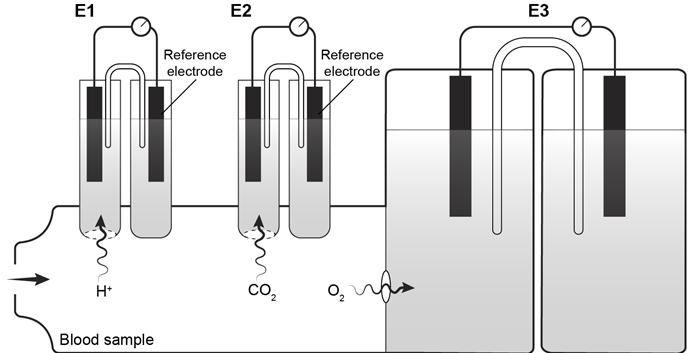 Figure 1 Automated blood gas analyzerThe concentration of carbonic acid (H2CO3), reported in milliequivalents per liter (mEq/L), can be calculated from PaCO2 by Equation 1:
 H2CO3mEqL=0.03×PaCO2mm HgEquation 1Subsequently, using the concentration of H2CO3 obtained from Equation 1, the HCO3− concentration resulting from decomposition of carbonic acid can then be calculated by applying the Henderson-Hasselbalch equation.
-If a 0.2-mL blood sample with a PaCO2 of 40 mm Hg diffuses across a membrane into the E2 electrode containing 0.3 mL of solution, the final PaCO2 in the blood sample will be:
CO2g+H2Ol⇔carbonic anhydraseH2CO3aq⇔pKa=6.35HCO3-aq+H+aqReaction 1In most automated blood gas analyzers, ionized hydrogen, CO2, and oxygen (O2) in the sample diffuse through semipermeable membranes and are measured at separate electrodes (Figure 1). The pH-sensitive glass electrode (E1) is separated from the blood sample by a membrane permeable to hydrogen ions. The sample pH is determined according to the voltage difference between E1 and a reference electrode maintained in a solution of standard pH. CO2 diffuses across a gas-permeable membrane to E2, where it reacts to generate HCO3− and free hydrogen ions. In a modification of the mechanism used in E1, partial pressure of CO2 (PaCO2) is calculated indirectly from the change in pH, as determined by the potential difference between E2 and its reference electrode.E3, also called the Clark electrode, is an electrochemical cell containing a silver anode and a platinum cathode. O2 diffuses through another gas-permeable membrane and reacts with hydrogen ions to form water. The current measured at E3 is then used to calculate PaO2 in the blood sample.
Figure 1 Automated blood gas analyzerThe concentration of carbonic acid (H2CO3), reported in milliequivalents per liter (mEq/L), can be calculated from PaCO2 by Equation 1:
H2CO3mEqL=0.03×PaCO2mm HgEquation 1Subsequently, using the concentration of H2CO3 obtained from Equation 1, the HCO3− concentration resulting from decomposition of carbonic acid can then be calculated by applying the Henderson-Hasselbalch equation.
-If a 0.2-mL blood sample with a PaCO2 of 40 mm Hg diffuses across a membrane into the E2 electrode containing 0.3 mL of solution, the final PaCO2 in the blood sample will be: (Multiple Choice)
4.8/5 (77)
(77) A scientist uses extreme temperature environments to study the non-ideal behavior of gas molecules. One way to increase the non-ideal behavior of gas molecules under investigation would be to:
(Multiple Choice)
4.8/5 (74)
(74) 
Filters
- Essay(0)
- Multiple Choice(0)
- Short Answer(0)
- True False(0)
- Matching(0)