



 Chat with AI
Exam 5: General Chemistry

Exam 1: Behavioral Sciences343 Questions
Exam 2: Biochemistry307 Questions
Exam 3: Biology319 Questions
Exam 4: Critical Analysis & Reasoning Skills358 Questions
Exam 5: General Chemistry317 Questions
Exam 6: Organic Chemistry191 Questions
Exam 7: Physics200 Questions
Select questions type


The reversible reaction  Hb+4O2⇄Hb(O2)4exists in blood between hemoglobin (Hb) and oxyhemoglobin Hb(O2)4. According to the law of mass action, doubling the O2 concentration would:
 (Multiple Choice)
4.7/5  (82)
(82) Sebacic acid (HOOC−(CH2)8−COOH) is a naturally occurring dicarboxylic acid that is also found as a normal urinary acid. Which procedure should be followed to determine the amount of sebacic acid present in 200 mg of an unknown sample composed primarily of sebacic acid and a small percentage of neutral impurities?
(Multiple Choice)
4.9/5 (90)
(90) Passage
Oxytocin is a naturally occurring peptide hormone that is used clinically to prevent postpartum hemorrhage, one of the leading causes of maternal mortality globally. Because oxytocin is heat and light sensitive, it requires refrigeration at temperatures below 8 °C. However, in underdeveloped regions with hot climates (such as sub-Saharan Africa), refrigeration is often unavailable for pharmaceutical storage and transport.In an effort to improve the availability of oxytocin in regions with limited refrigeration, researchers conducted two experiments to investigate the use of buffers and divalent alkaline-earth metal salt additives as a means to produce an aqueous oxytocin formulation that is stable when stored at temperatures up to 50 °C.Experiment 1To evaluate effects from buffer concentration, two sets of solutions were prepared containing 0.3 mg/mL oxytocin monoacetate salt in 5, 10, and 50 mM citrate buffer solution made from a mixture of citric acid (a weak acid) and sodium citrate (a salt of the conjugate base). An unbuffered aqueous solution served as a control sample. Using 1.0 M NaOH, the buffered solutions were adjusted to pH 4.5 (the pH at which oxytocin is more stable) and then stored at 5 °C (set 1) and 50 °C (set 2) for 4 weeks in a dark area. After storage, the amount of undegraded oxytocin in each sample was determined (Figure 1) using reverse-phase, high-performance liquid chromatography (RP-HPLC).
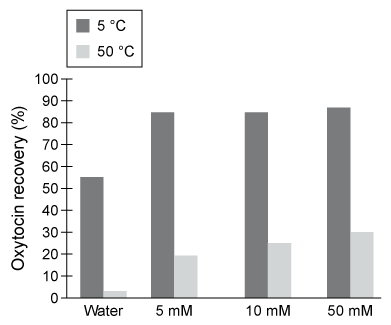 Figure 1 Oxytocin recovery in a citrate buffer (pH 4.5) and water (pH 6.8)Experiment 2To examine the effect of divalent alkaline-earth metal cation additives, Experiment 1 was repeated, but the solutions were modified to contain 0.3 mg/mL of oxytocin with 5, 10, or 50 mM of a divalent cation (from a chloride salt) dissolved in 10 mM citrate buffer. The results are shown in Figure 2.
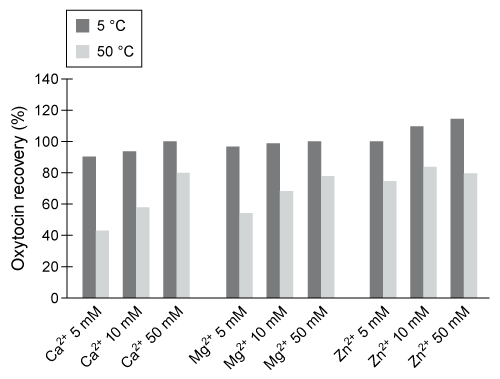 Figure 2 Oxytocin in 10 mM citrate buffer with added Ca2+, Mg2+, or Zn2+ salts
-What volume of the solutions tested would contain 0.075 g of oxytocin monoacetate?
Figure 1 Oxytocin recovery in a citrate buffer (pH 4.5) and water (pH 6.8)Experiment 2To examine the effect of divalent alkaline-earth metal cation additives, Experiment 1 was repeated, but the solutions were modified to contain 0.3 mg/mL of oxytocin with 5, 10, or 50 mM of a divalent cation (from a chloride salt) dissolved in 10 mM citrate buffer. The results are shown in Figure 2.
Figure 2 Oxytocin in 10 mM citrate buffer with added Ca2+, Mg2+, or Zn2+ salts
-What volume of the solutions tested would contain 0.075 g of oxytocin monoacetate? (Multiple Choice)
4.9/5 (73)
(73) Which of the following equations correctly represents the gamma decay of an atom of ruthenium-97?
(Multiple Choice)
4.9/5 (67)
(67) Passage
In polluted urban environments, airborne proteins can undergo nitration reactions that increase their allergenic potential toward the human respiratory system. For example, upon exposure to ozone (O3) and nitrogen dioxide (NO2) under atmospheric conditions, the amino acid tyrosine is known to undergo a two-step irreversible reaction leading to the formation of nitrotyrosine. The first step involves the formation of a reactive oxygen intermediate (ROI) tyrosyl radical through oxidation of the phenolic site of tyrosine. Nitrotyrosine is then formed in the second step through addition of NO2 by a radical-radical termination reaction. The elementary steps for this reaction are shown in Scheme 1.
 Scheme 1 Elementary steps of nitration of tyrosineAirborne protein particles can exist in a variety of environments including the aqueous phase, gaseous phase, or as conglomerates with other biomolecules such as lipids. Because the thermodynamic properties and kinetics of the nitration reaction vary based on the chemical environment in which it occurs, recent studies have focused on understanding the reaction under different conditions.Density functional theory is a powerful computational quantum-mechanical modeling method that can determine the properties of many-electron systems by producing approximate solutions to the Schrödinger equation. Researchers used density functional theory to model the geometries and potential energy surfaces of the reactants, intermediates, and products of the nitration reaction in gaseous, aqueous, and lipid-rich environments. From this modeling, the thermodynamic and kinetic properties were calculated. Figure 1 shows the calculated activation energies Ea in kJ/mol, and Table 1 lists the associated thermochemical properties for both steps of the reaction in all three environments.
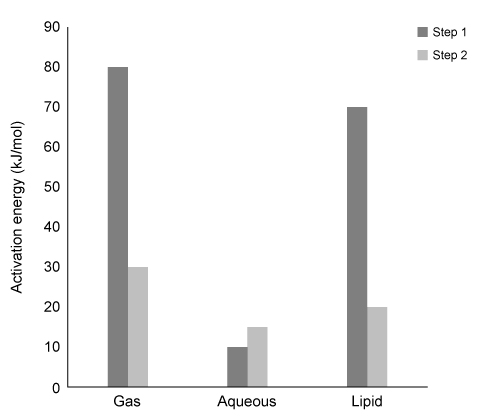 Figure 1 Calculated activation energies for each step of the studied reactions in three environmentsTable 1 Calculated Thermochemical Properties of the Studied Reactions (298.15 K)
 Adapted from Sandhiya L, Kolandaivel P, Senthilkumar K. Oxidation and nitration of tyrosine by ozone and nitrogen dioxide: reaction mechanisms and biological and atmospheric implications. J Phys Chem B. 2014;118(13):3479-90.
-Because step 2 of the reaction in aqueous phase is rate-limiting, the formation of ROI from tyrosine and ozone in step 1 can be assumed to reach a state of equilibrium.
 Tyrosine(aq)+ O3(aq)⇌ ROI(aq) + HO3(aq)Which of the following will occur if the temperature of this system is raised from 298.15 K to 350 K?
Scheme 1 Elementary steps of nitration of tyrosineAirborne protein particles can exist in a variety of environments including the aqueous phase, gaseous phase, or as conglomerates with other biomolecules such as lipids. Because the thermodynamic properties and kinetics of the nitration reaction vary based on the chemical environment in which it occurs, recent studies have focused on understanding the reaction under different conditions.Density functional theory is a powerful computational quantum-mechanical modeling method that can determine the properties of many-electron systems by producing approximate solutions to the Schrödinger equation. Researchers used density functional theory to model the geometries and potential energy surfaces of the reactants, intermediates, and products of the nitration reaction in gaseous, aqueous, and lipid-rich environments. From this modeling, the thermodynamic and kinetic properties were calculated. Figure 1 shows the calculated activation energies Ea in kJ/mol, and Table 1 lists the associated thermochemical properties for both steps of the reaction in all three environments.
Figure 1 Calculated activation energies for each step of the studied reactions in three environmentsTable 1 Calculated Thermochemical Properties of the Studied Reactions (298.15 K)
Adapted from Sandhiya L, Kolandaivel P, Senthilkumar K. Oxidation and nitration of tyrosine by ozone and nitrogen dioxide: reaction mechanisms and biological and atmospheric implications. J Phys Chem B. 2014;118(13):3479-90.
-Because step 2 of the reaction in aqueous phase is rate-limiting, the formation of ROI from tyrosine and ozone in step 1 can be assumed to reach a state of equilibrium. Tyrosine(aq)+ O3(aq)⇌ ROI(aq) + HO3(aq)Which of the following will occur if the temperature of this system is raised from 298.15 K to 350 K? (Multiple Choice)
4.9/5 (71)
(71) Antacids act by functioning chemically as weak Brønsted-Lowry bases that neutralize excess stomach acid. Equations 1 and 2 describe the chemical behavior of the antacid sodium bicarbonate with stomach acid (HCl).NaHCO3(aq) + HCl(aq) → H2CO3(aq) + NaCl(aq)Equation 1H2CO3(aq) → CO2(g) + H2O(l)Equation 2In Equation 1, carbonic acid (H2CO3) and sodium chloride form during a:
(Multiple Choice)
4.9/5 (73)
(73) Passage
Within the renal system, two buffers operate to counter the production of excess H+ from luminal H2CO3. They are located within the tubular lumen, and maintain urinary pH levels between 4.5 and 8.0.The first of these is a phosphate buffer, which serves as the primary buffer for urine because its pKa is very close to extracellular fluid pH of 7.4. The phosphate buffer operates according to Reaction 1. H2PO4− is excreted in urine.
 Reaction 1During acidosis when tubular pH is low, the phosphate buffer system becomes saturated. An ammonia buffer system then becomes the primary buffer, and NH4+ is excreted in urine.
 Reaction 2Titratable acid (TA) is the total acid in urine, and it can be found using Folin's method. Under normal physiological conditions, TA is approximately equal to the amount of phosphate in urine, which is a product of serum phosphate concentration and glomerular filtration rate. This makes TA a good indicator of kidney function.Folin's method involves back titration of a urine sample to a pH of 7.4 using a strong base. In a typical procedure, potassium oxalate is added to remove calcium from the sample prior to titration with 1.0 M NaOH. The titration continues until the solution reaches a pH of 7.4 (measured by a pH meter). The amount of base required for the titration can then be used to calculate the amount of H2PO4− in the urine sample.
-A phosphate buffer system based on Reaction 1 is made that contains 5 M H2PO4− and 0.5 M HPO42−. Will the pH of this system fall within the pH range for urine?
Reaction 1During acidosis when tubular pH is low, the phosphate buffer system becomes saturated. An ammonia buffer system then becomes the primary buffer, and NH4+ is excreted in urine.
Reaction 2Titratable acid (TA) is the total acid in urine, and it can be found using Folin's method. Under normal physiological conditions, TA is approximately equal to the amount of phosphate in urine, which is a product of serum phosphate concentration and glomerular filtration rate. This makes TA a good indicator of kidney function.Folin's method involves back titration of a urine sample to a pH of 7.4 using a strong base. In a typical procedure, potassium oxalate is added to remove calcium from the sample prior to titration with 1.0 M NaOH. The titration continues until the solution reaches a pH of 7.4 (measured by a pH meter). The amount of base required for the titration can then be used to calculate the amount of H2PO4− in the urine sample.
-A phosphate buffer system based on Reaction 1 is made that contains 5 M H2PO4− and 0.5 M HPO42−. Will the pH of this system fall within the pH range for urine? (Multiple Choice)
4.9/5 (84)
(84) Passage
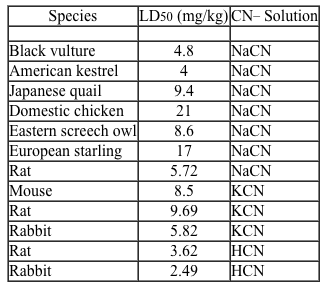
Cyanide (CN−) is a powerful, rapid toxin that binds to the cellular respiratory enzyme cytochrome c oxidase. The resulting enzyme-cyanide complex blocks the transfer of electrons to oxygen in the last step of the electron transport chain. This results in cytotoxic anoxia, causing asphyxiation at the cellular level.Exposure to cyanide can occur from dietary sources, medical treatments, industrial applications, smoke inhalation (structural fires), and intentional use (suicide). While dietary exposure from moderate consumption of naturally occurring plant compounds such as cyanogenic glycosides rarely results in acute adverse effects in humans, chronic effects have been observed from prolonged diets with significant levels of these compounds. In the developed world, risk of significant cyanide exposure is most likely to result from smoke inhalation during building fires or from industrial/occupational exposures.The impact of a given exposure depends on the amount (dose, duration), the chemical composition of the cyanide compound (HCN, NaCN, KCN), and the route of exposure (inhalation, absorption, ingestion). The ionic salts (NaCN, KCN) and free acid (HCN) forms of cyanide each have different acid-base properties that interact differently under the physiological conditions associated with each route of exposure.To better understand the toxicity of different forms of cyanide, animal models have been studied for comparison to known human exposure case studies. Table 1 presents a summary of selected animal toxicity studies that examine exposure via ingestion. The table provides the lethal dose to 50% of the population (LD50) in milligrams of cyanide per kilogram of body weight (mg/kg).Table 1 Compilation of LD50 Cyanide Values in Various Animal Species
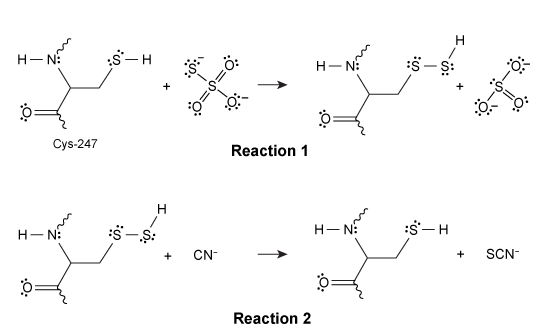
 Based on animal models, one treatment developed for cyanide poisoning involves assisting the rhodanese enzyme in metabolizing CN− to SCN− via an intravenous solution of NaNO2 and Na2S2O3. The Na2S2O3 assists in the formation of a reactive S-SH (persulfide) bond in the enzyme on cysteine-247 (Reaction 1), which then reacts with the cyanide ion to form thiocyanate (Reaction 2).
 Adapted from: Hall AH, Isom GE, Rockwood GA. Toxicology of Cyanides and Cyanogens, Experimental, Applied and Clinical Aspects. John Wiley & Sons; 2015: 1-20; and Egekeze JO, Oehme FW. Cyanides and their toxicity: A literature review. Vet Q. 1980; 2(2): 104-114.
-When Reaction 1 occurs, the atom acting as the reducing agent is the:
Based on animal models, one treatment developed for cyanide poisoning involves assisting the rhodanese enzyme in metabolizing CN− to SCN− via an intravenous solution of NaNO2 and Na2S2O3. The Na2S2O3 assists in the formation of a reactive S-SH (persulfide) bond in the enzyme on cysteine-247 (Reaction 1), which then reacts with the cyanide ion to form thiocyanate (Reaction 2).
Adapted from: Hall AH, Isom GE, Rockwood GA. Toxicology of Cyanides and Cyanogens, Experimental, Applied and Clinical Aspects. John Wiley & Sons; 2015: 1-20; and Egekeze JO, Oehme FW. Cyanides and their toxicity: A literature review. Vet Q. 1980; 2(2): 104-114.
-When Reaction 1 occurs, the atom acting as the reducing agent is the: (Multiple Choice)
4.8/5 (70)
(70) What are the correct formal charges for nitrogen atoms I, II, and III, respectively, in the azide below? 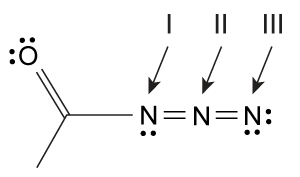
(Multiple Choice)
4.9/5 (76)
(76) Passage
Umami is one of five basic tastes that humans recognize, and it is triggered by L-amino acids as well as some synthetic ingredients and organic acids. Three common umami tastant molecules are shown in Figure 1.
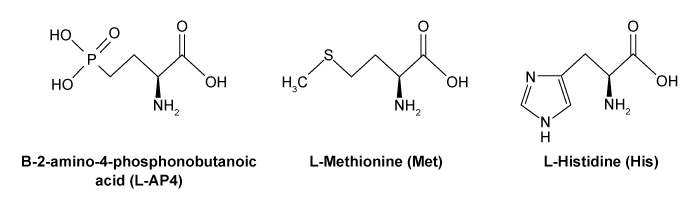 Figure 1 Three common tastant molecules known to trigger the umami taste sensationUmami taste signals are triggered upon binding of tastant molecules to the G protein-coupled receptor (GPCR) heterodimer T1R1-T1R3, which ultimately causes the breakdown of phosphatidylinositol 4,5-bisphosphate (PIP2) into the messenger molecules inositol-1,4,5-trisphosphate (IP3) and diacylglycerol (DAG). IP3 triggers the release of Ca2+ cations and the subsequent gating of the taste-transduction channels (Figure 2).
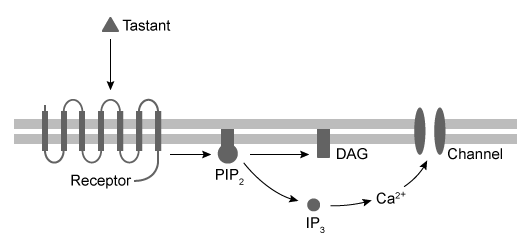 Figure 2 Signal pathway for transduction of umami taste sensationInosine monophosphate (IMP) has been suggested as enhancing (potentiating) the response of T1R1+T1R3 GPCRs to umami tastant molecules. Scientists tested this hypothesis by culturing receptors from human embryonic kidney (HEK) cells containing promiscuous G proteins. The HEK cells were then stimulated with umami tastants in the presence or absence of IMP. In each test, the cells were exposed to the same amounts of amino acid tastant and IMP. The number of cells that responded to each tastant was measured using a calcium indicator dye (FURA-2AM) in conjunction with fluorescence microscopy. By comparing the cellular response ratio of the stimulated to unstimulated HEK cells, the extent of potentiation can be assessed. The results are shown in Figure 3.
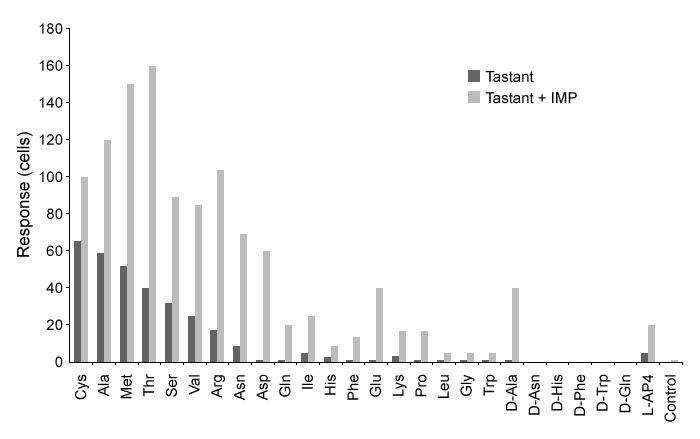 Figure 3 Quantification of amino-acid responses for T1R1+T1R3 with and without IMP
Adapted from Nelson G, Chandrashekar J, Hoon MA, et al. An amino-acid taste receptor. Nature. 2002;416(6877):199-202.
-Which of the following is an acceptable resonance structure for the umami tastant molecule L-histidine shown in Figure 1?
Figure 1 Three common tastant molecules known to trigger the umami taste sensationUmami taste signals are triggered upon binding of tastant molecules to the G protein-coupled receptor (GPCR) heterodimer T1R1-T1R3, which ultimately causes the breakdown of phosphatidylinositol 4,5-bisphosphate (PIP2) into the messenger molecules inositol-1,4,5-trisphosphate (IP3) and diacylglycerol (DAG). IP3 triggers the release of Ca2+ cations and the subsequent gating of the taste-transduction channels (Figure 2).
Figure 2 Signal pathway for transduction of umami taste sensationInosine monophosphate (IMP) has been suggested as enhancing (potentiating) the response of T1R1+T1R3 GPCRs to umami tastant molecules. Scientists tested this hypothesis by culturing receptors from human embryonic kidney (HEK) cells containing promiscuous G proteins. The HEK cells were then stimulated with umami tastants in the presence or absence of IMP. In each test, the cells were exposed to the same amounts of amino acid tastant and IMP. The number of cells that responded to each tastant was measured using a calcium indicator dye (FURA-2AM) in conjunction with fluorescence microscopy. By comparing the cellular response ratio of the stimulated to unstimulated HEK cells, the extent of potentiation can be assessed. The results are shown in Figure 3.
Figure 3 Quantification of amino-acid responses for T1R1+T1R3 with and without IMP
Adapted from Nelson G, Chandrashekar J, Hoon MA, et al. An amino-acid taste receptor. Nature. 2002;416(6877):199-202.
-Which of the following is an acceptable resonance structure for the umami tastant molecule L-histidine shown in Figure 1? (Multiple Choice)
4.8/5 (82)
(82) Passage
Although acetylsalicylic acid (aspirin) is a well-known and widely used analgesic and anti-inflammatory agent, copper(II) acetylsalicylate, a copper complex formed from aspirin and copper, has also been found to exhibit some distinctive and potentially beneficial pharmacological properties. Formation of copper(II) acetylsalicylate is achieved when the conjugate base of aspirin, acetylsalicylate (C9H7O4−), binds to Cu2+ ions in solution, as outlined in Reaction 1.4 NaC9H7O4(aq) + 2 CuSO4(aq) → Cu2(C9H7O4)4(s) + 2 Na2SO4(aq)Reaction 1Using Reaction 1, a researcher synthesized a sample of copper(II) acetylsalicylate for analysis. A small volume of 0.50 M aqueous copper(II) sulfate (molar mass = 159.6) was mixed into 100 mL of filtered, saturated aqueous sodium acetylsalicylate (molar mass = 202.2) at room temperature and slowly stirred. Formation of copper(II) acetylsalicylate (molar mass = 843.7) was immediately observed as a bright blue precipitate. The precipitate was then isolated by filtration and dried, affording the product complex in high yield.
Adapted from: Seguel GV, Rivas BL, Contreras JG. Synthesis and characterization of copper complexes: interaction of metalliccarboxylates with 1,3-thiazole ligand. Journal of the Chilean Chemical Society. 1970; 58(4):1967.
-The aqueous solubility of the NaC9H7O4 salt used for the reaction is very high (≈ 1200 g/L), whereas its conjugate acid, HC9H7O4 (aspirin), is a weak acid with very low solubility (3 g/L). The acid dissociation constant for aspirin is:
(Multiple Choice)
4.8/5 (98)
(98) Passage
In polluted urban environments, airborne proteins can undergo nitration reactions that increase their allergenic potential toward the human respiratory system. For example, upon exposure to ozone (O3) and nitrogen dioxide (NO2) under atmospheric conditions, the amino acid tyrosine is known to undergo a two-step irreversible reaction leading to the formation of nitrotyrosine. The first step involves the formation of a reactive oxygen intermediate (ROI) tyrosyl radical through oxidation of the phenolic site of tyrosine. Nitrotyrosine is then formed in the second step through addition of NO2 by a radical-radical termination reaction. The elementary steps for this reaction are shown in Scheme 1.
Scheme 1 Elementary steps of nitration of tyrosineAirborne protein particles can exist in a variety of environments including the aqueous phase, gaseous phase, or as conglomerates with other biomolecules such as lipids. Because the thermodynamic properties and kinetics of the nitration reaction vary based on the chemical environment in which it occurs, recent studies have focused on understanding the reaction under different conditions.Density functional theory is a powerful computational quantum-mechanical modeling method that can determine the properties of many-electron systems by producing approximate solutions to the Schrödinger equation. Researchers used density functional theory to model the geometries and potential energy surfaces of the reactants, intermediates, and products of the nitration reaction in gaseous, aqueous, and lipid-rich environments. From this modeling, the thermodynamic and kinetic properties were calculated. Figure 1 shows the calculated activation energies Ea in kJ/mol, and Table 1 lists the associated thermochemical properties for both steps of the reaction in all three environments.
Figure 1 Calculated activation energies for each step of the studied reactions in three environmentsTable 1 Calculated Thermochemical Properties of the Studied Reactions (298.15 K)
Adapted from Sandhiya L, Kolandaivel P, Senthilkumar K. Oxidation and nitration of tyrosine by ozone and nitrogen dioxide: reaction mechanisms and biological and atmospheric implications. J Phys Chem B. 2014;118(13):3479-90.
-Given that entropy is negative (disorder decreases) in the reaction, which of the following statements is true regarding the formation of aqueous nitrotyrosine?
Scheme 1 Elementary steps of nitration of tyrosineAirborne protein particles can exist in a variety of environments including the aqueous phase, gaseous phase, or as conglomerates with other biomolecules such as lipids. Because the thermodynamic properties and kinetics of the nitration reaction vary based on the chemical environment in which it occurs, recent studies have focused on understanding the reaction under different conditions.Density functional theory is a powerful computational quantum-mechanical modeling method that can determine the properties of many-electron systems by producing approximate solutions to the Schrödinger equation. Researchers used density functional theory to model the geometries and potential energy surfaces of the reactants, intermediates, and products of the nitration reaction in gaseous, aqueous, and lipid-rich environments. From this modeling, the thermodynamic and kinetic properties were calculated. Figure 1 shows the calculated activation energies Ea in kJ/mol, and Table 1 lists the associated thermochemical properties for both steps of the reaction in all three environments.
Figure 1 Calculated activation energies for each step of the studied reactions in three environmentsTable 1 Calculated Thermochemical Properties of the Studied Reactions (298.15 K)
Adapted from Sandhiya L, Kolandaivel P, Senthilkumar K. Oxidation and nitration of tyrosine by ozone and nitrogen dioxide: reaction mechanisms and biological and atmospheric implications. J Phys Chem B. 2014;118(13):3479-90.
-Given that entropy is negative (disorder decreases) in the reaction, which of the following statements is true regarding the formation of aqueous nitrotyrosine? (Multiple Choice)
4.8/5 (77)
(77) Passage
Combustion occurs when an oxidation-reduction reaction takes place between a reduced fuel source and an oxidizer, most frequently oxygen. The reaction between hydrogen and oxygen forms water (Reaction 1) and is highly exothermic and thermodynamically favorable. At the completion of hydrogen combustion, essentially all H2 molecules have been converted to water. Nevertheless, at room temperature and atmospheric pressure, molecular hydrogen and oxygen can coexist quite stably.2 H2 + O2 → 2 H2OReaction 1A group of researchers designed two prototype internal combustion engines, each of which could inject a hydrogen/oxygen mixture into a 5-mL combustion chamber at a total pressure of 1 atm and could repeat this process for several cycles. In one engine design, a spark was generated to initiate combustion as hydrogen and oxygen were injected. In another method, the combustion chamber was coated with a small amount of platinum powder. Platinum dramatically increases the reaction rate at room temperature without the need for a spark. The platinum itself is not altered by the reaction and can be reused. Researchers measured the maximum power output of both engine designs under identical injection and temperature conditions (Figure 1).
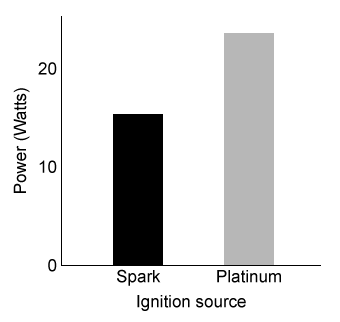 Figure 1 Relative power outputs of hydrogen engines with different ignition sources at 298 KThe power output of an engine is directly related to the rate of combustion. In the presence of platinum, researchers measured the engine's rate of water production at various temperatures and H2/O2 mixture compositions. The results are shown in Figure 2.
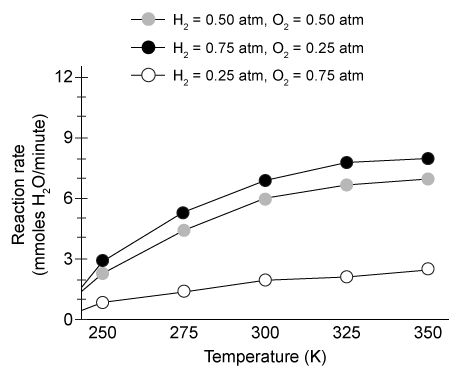 Figure 2 Rate of combustion in platinum-coated engines under various conditions
Adapted from Schultze M, Mantzaras J. Hetero-/homogeneous combustion of hydrogen/air mixtures over platinum: Fuel-lean versus fuel-rich combustion modes doi: 10.1016/j.ijhydene.2013.06.069
-Assuming the combustion of hydrogen behaves like an elementary reaction with respect to its rate, which of the following explains why an increase in the H2/O2 ratio causes an increase in the reaction rate?
Figure 1 Relative power outputs of hydrogen engines with different ignition sources at 298 KThe power output of an engine is directly related to the rate of combustion. In the presence of platinum, researchers measured the engine's rate of water production at various temperatures and H2/O2 mixture compositions. The results are shown in Figure 2.
Figure 2 Rate of combustion in platinum-coated engines under various conditions
Adapted from Schultze M, Mantzaras J. Hetero-/homogeneous combustion of hydrogen/air mixtures over platinum: Fuel-lean versus fuel-rich combustion modes doi: 10.1016/j.ijhydene.2013.06.069
-Assuming the combustion of hydrogen behaves like an elementary reaction with respect to its rate, which of the following explains why an increase in the H2/O2 ratio causes an increase in the reaction rate? (Multiple Choice)
4.9/5 (81)
(81) Passage
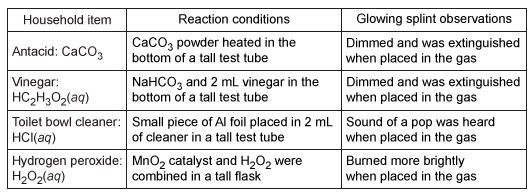
Students were asked to bring items from home to serve as examples for different types of reactions. The instructor provided additional reactants, solvents, heat, or a catalyst to demonstrate reactions with the household items.The students brought aluminum foil, table salt, sugar, baking soda, vinegar, toilet bowl cleaner, hydrogen peroxide, and antacid tablets.Experiment 1Reactions were performed using the household items. The reaction conditions and student observations are recorded in Table 1.Table 1 Reaction Conditions and Visual Observations
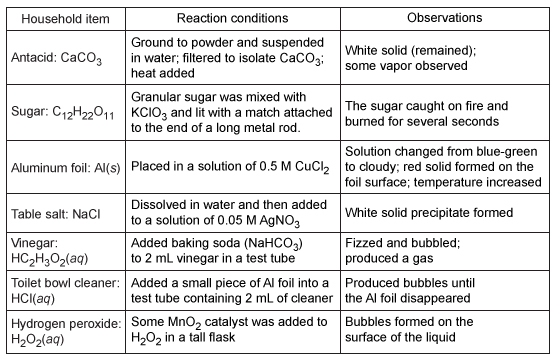 Experiment 2The reactions that were observed to produce gas bubbles in Experiment 1 were repeated, and samples of the gases produced were collected. Each gas sample was tested by holding a burning (glowing) wooden splint within the reaction vessel to determine if the reaction evolved O2, H2, or CO2. A glowing splint placed in O2 will burn more brightly, one placed in H2 will ignite the gas, and one placed in CO2 will be extinguished. The results of the gas tests are recorded in Table 2.Table 2 Glowing Splint Gas Test Observations
 -How will the percent yield of the reaction with table salt and AgNO3 be affected if some of the solid precipitate is lost when it is filtered from the solution?
Experiment 2The reactions that were observed to produce gas bubbles in Experiment 1 were repeated, and samples of the gases produced were collected. Each gas sample was tested by holding a burning (glowing) wooden splint within the reaction vessel to determine if the reaction evolved O2, H2, or CO2. A glowing splint placed in O2 will burn more brightly, one placed in H2 will ignite the gas, and one placed in CO2 will be extinguished. The results of the gas tests are recorded in Table 2.Table 2 Glowing Splint Gas Test Observations
-How will the percent yield of the reaction with table salt and AgNO3 be affected if some of the solid precipitate is lost when it is filtered from the solution? (Multiple Choice)
4.7/5 (91)
(91) Passage
Living organisms that require oxygen to respire can build up hydrogen peroxide (H2O2) as a byproduct of respiration. Because hydrogen peroxide can cause oxidative damage to cells, the amount of H2O2 in cells must be closely regulated. Although H2O2 decomposes spontaneously, a catalyst is needed for the reaction to occur at a sufficiently rapid rate suitable for biological purposes. In biological systems, an enzyme called a catalase accelerates the catalytic decomposition of H2O2 into water and oxygen (Reaction 1).
 Reaction 1In a laboratory setting, several different inorganic compounds can also serve as catalysts for H2O2 decomposition, allowing researchers to compare how different catalysts affect the efficiency of the reaction. To compare Fe(NO3)3 (a metal homogeneous catalyst) and NaI (a halogen homogeneous catalyst), researchers measured the amount of heat evolved after placing each catalyst in a fresh solution of 3% hydrogen peroxide.To perform the measurements, the researchers placed 50 mL of 3% H2O2 in an insulated coffee cup to be used as a calorimeter, as shown in Figure 1. Before adding any catalyst, the initial, baseline temperature of the H2O2 solution was determined by recording the temperature every 30 seconds for 5 minutes. Then 10 mL of 0.10 M Fe(NO3)3(aq) catalyst was added to the H2O2 solution. The temperature was recorded every 30 seconds for another 15 minutes. The experiment was then repeated using 10 mL of 0.50 M sodium iodide in 0.01 M NaOH as the catalyst. The results for each reaction are shown in Figure 2.
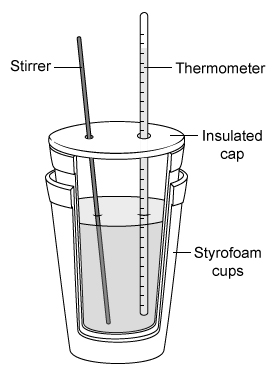 Figure 1 Coffee cup calorimeter
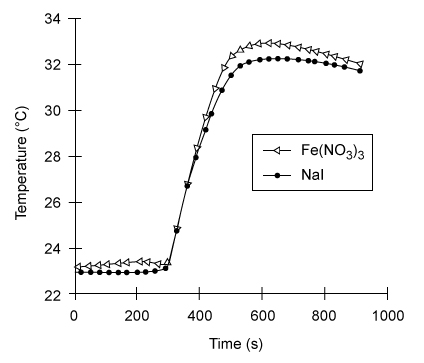 Figure 2 Temperature vs. time measurements for reactions catalyzed by Fe(NO3)3 and NaI
Adapted from: C. Marzzacco, "The effect of a change in catalyst on the enthalpy of decomposition of hydrogen peroxide." Chem13 News Magazine. ©2008 University of Waterloo.
-How is the activation energy for the decomposition of H2O2 affected by the addition of NaI to the coffee cup?
Reaction 1In a laboratory setting, several different inorganic compounds can also serve as catalysts for H2O2 decomposition, allowing researchers to compare how different catalysts affect the efficiency of the reaction. To compare Fe(NO3)3 (a metal homogeneous catalyst) and NaI (a halogen homogeneous catalyst), researchers measured the amount of heat evolved after placing each catalyst in a fresh solution of 3% hydrogen peroxide.To perform the measurements, the researchers placed 50 mL of 3% H2O2 in an insulated coffee cup to be used as a calorimeter, as shown in Figure 1. Before adding any catalyst, the initial, baseline temperature of the H2O2 solution was determined by recording the temperature every 30 seconds for 5 minutes. Then 10 mL of 0.10 M Fe(NO3)3(aq) catalyst was added to the H2O2 solution. The temperature was recorded every 30 seconds for another 15 minutes. The experiment was then repeated using 10 mL of 0.50 M sodium iodide in 0.01 M NaOH as the catalyst. The results for each reaction are shown in Figure 2.
Figure 1 Coffee cup calorimeter
Figure 2 Temperature vs. time measurements for reactions catalyzed by Fe(NO3)3 and NaI
Adapted from: C. Marzzacco, "The effect of a change in catalyst on the enthalpy of decomposition of hydrogen peroxide." Chem13 News Magazine. ©2008 University of Waterloo.
-How is the activation energy for the decomposition of H2O2 affected by the addition of NaI to the coffee cup? (Multiple Choice)
4.9/5 (88)
(88) Ozone (O3) in the atmosphere protects against harmful UV radiation. The overall reaction for ozone formation is3O2 → 2O3and proceeds in two steps. Step 1 is initiated when molecular oxygen (O2) absorbs UV light and splits into two oxygen atoms:O2→ 2OWhich of the following second steps would yield the net reaction for ozone formation?
(Multiple Choice)
4.9/5 (76)
(76) Passage
Hyperbaric oxygenation therapy involves placing a patient in a chamber with oxygen-rich air at greater than atmospheric pressure. Normal air has approximately 78% N2, 21% O2, and trace amounts of other gases. The pressure within the hyperbaric chamber is typically measured in terms of ATA, or atmospheres absolute (1 ATA is the average atmospheric pressure at sea level, or 1 atm). A hyperbaric chamber set at 2.5 ATA would be the average atmospheric pressure at sea level (1 ATA) plus the additional pressure applied to the chamber (1.5 ATA).There are two main types of hyperbaric chambers: monoplace chambers and multiplace chambers. Monoplace chambers accommodate a single person. The air in these chambers is 100% oxygen and can be raised to a maximum pressure of 3 ATA. Monoplace chambers are used as therapy for conditions where oxygen supply has been depleted, such as carbon monoxide poisoning. They are also used when a higher concentration of oxygen in plasma is needed, such as in wound healing.Multiplace chambers are large enough to house at least four people. The air in these chambers is typically a mixture of oxygen and nitrogen, but the patient breathes pure oxygen through a mask. Some multiplace chambers can endure maximum pressures of 6 ATA and are typically used to eliminate intravascular air bubbles that can occur from decompression sickness or embolisms. The high pressure from the multiplace chamber results in a decrease in volume of any air pockets within the body, including the sinuses, inner ear, and unwanted air bubbles in the arteries or veins.Patients report that their ears "pop" during the pressurization process, similar to being on an airplane in flight. In addition, they report that although there is an initial sense of temperature increasing, the chamber's temperature stays relatively stable during both the pressurization and the depressurization processes.
-Suppose that a multiplace chamber has three times the volume of a monoplace chamber, and both are pressurized to 1.5 ATA with 100% O2 at 29 °C. Compared to that of the monoplace chamber, the number of moles of oxygen in the multiplace chamber would be:
(Multiple Choice)
4.9/5 (73)
(73) Which of the following statements describe a characteristic of an ideal gas?There are no attractive or repulsive forces between the gas molecules.The size (molecular volume) of the individual gas molecules is negligible.Collisions between the gas molecules are completely elastic.
(Multiple Choice)
4.7/5 (73)
(73) The first step of a nitration reaction involves using a mixture of sulfuric acid and nitric acid to form an NO2+ electrophile, as shown below.  In the forward reaction of the equilibrium, which of the following molecules acts as a Brønsted-Lowry base?
 (Multiple Choice)
5.0/5 (79)
(79) Which diagram below correctly represents the lowest-energy electron configuration of an oxygen atom?
(Multiple Choice)
4.9/5 (89)
(89) 
Filters
- Essay(0)
- Multiple Choice(0)
- Short Answer(0)
- True False(0)
- Matching(0)