



 Chat with AI
Exam 5: General Chemistry

Exam 1: Behavioral Sciences343 Questions
Exam 2: Biochemistry307 Questions
Exam 3: Biology319 Questions
Exam 4: Critical Analysis & Reasoning Skills358 Questions
Exam 5: General Chemistry317 Questions
Exam 6: Organic Chemistry191 Questions
Exam 7: Physics200 Questions
Select questions type


Passage
Nuclear medicine uses radiopharmaceuticals for disease treatment and as tracers in medical imaging studies. Yttrium-90 (90Y) is a radiopharmaceutical agent used to treat overgrown joint lining known as pigmented villonodular synovitis, as well as some forms of liver cancer. It has a half-life of about 64 hours.Although the relatively short half-life of 90Y is optimal for use in medical applications, transportation and storage of the radiopharmaceutical are not feasible. As a result, strontium-90 (90Sr), with a half-life of 28.8 years, is the most common source of 90Y. 90Sr is created by a nuclear fission process that begins with uranium-235 (235U) in a nuclear reactor as shown in Reaction 1.235U → 90Sr + ZReaction 1Fission of 235U produces 90Sr as well as additional fission products (Z) including, but not limited to, technetium-99 (99Tc), iodine-129 (129I), and zirconium-93 (93Zr). Figure 1 shows the distribution of fission products.
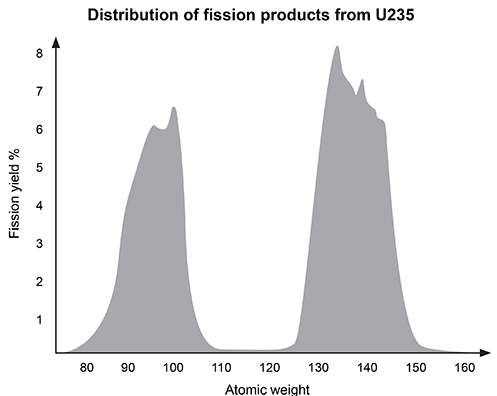 Figure 1 Distribution of 235U fission products by atomic weightTo create the final 90Y required for nuclear medicine studies, 90Sr decay is carried out in a controlled 90Y generator. 90Y is then separated from residual 90Sr for use in clinical applications.
Adapted from Wheeler CE. Comments on vaccines, August 1987. J Am Acad Dermatol. 1988;18(1 Pt 2):232-4.
-The type of uranium required for Reaction 1 can be formed by the emission of an alpha particle from which of the following nuclei?
Figure 1 Distribution of 235U fission products by atomic weightTo create the final 90Y required for nuclear medicine studies, 90Sr decay is carried out in a controlled 90Y generator. 90Y is then separated from residual 90Sr for use in clinical applications.
Adapted from Wheeler CE. Comments on vaccines, August 1987. J Am Acad Dermatol. 1988;18(1 Pt 2):232-4.
-The type of uranium required for Reaction 1 can be formed by the emission of an alpha particle from which of the following nuclei? (Multiple Choice)
4.8/5  (71)
(71) Fructose 6-phosphate (Fru-6-P) breaks down in water as shown below with ΔG° = −15 kJ/mol.Fru-6-P + H2O → fructose + PiIn evaluating the equilibrium concentrations of each species, which expression gives the molar concentration of fructose if [Fru-6-P] = x mol/L and [Pi] = 1.0 mol/L? (Note: Use RT = 2.5 kJ/mol.)
(Multiple Choice)
4.8/5 (71)
(71) Passage
Catabolism is an oxidative process in which electrons are transferred from lipids, proteins, and carbohydrates to generate high-energy electron carriers from nicotinamide adenine dinucleotide (NADH/NAD+) and flavin adenine dinucleotide (FADH2/FAD). Both are used in the electron transport chain (ETC) as electron providers in a series of reactions. The transfer of electrons provides energy that drives oxidative phosphorylation and the production of ATP. Reduction of NAD+ proceeds according to the following half-reaction:
 Reaction 1Reactions in the ETC occur in four protein complexes (I-IV) located in the inner mitochondrial membrane. Here high-energy electrons are shuttled from complexes I, II, and III to complex IV, where O2 serves as the final electron acceptor. The net result of NADH oxidation is described by Reaction 2.
 NADH+H++12O2→NAD++H2OReaction 2At complexes I, III, and IV, hydrogen ions move from the mitochondrial matrix to the intermembrane space and create the electrochemical gradient, or proton motive force (pmf), that drives ATP synthesis. Each NADH molecule drives the net pumping of 10 protons across the membrane, as per Reaction 3.
 NADH+11H++12O2→NAD++10H++H2OReaction 3
Adapted from Garrett R, Grisham CM, Sabat M. Biochemistry. Cengage Learning; 2011.
-The reduction half-reaction for oxygen is
 What is the overall reduction potential for the ETC?
Reaction 1Reactions in the ETC occur in four protein complexes (I-IV) located in the inner mitochondrial membrane. Here high-energy electrons are shuttled from complexes I, II, and III to complex IV, where O2 serves as the final electron acceptor. The net result of NADH oxidation is described by Reaction 2.
NADH+H++12O2→NAD++H2OReaction 2At complexes I, III, and IV, hydrogen ions move from the mitochondrial matrix to the intermembrane space and create the electrochemical gradient, or proton motive force (pmf), that drives ATP synthesis. Each NADH molecule drives the net pumping of 10 protons across the membrane, as per Reaction 3.
NADH+11H++12O2→NAD++10H++H2OReaction 3
Adapted from Garrett R, Grisham CM, Sabat M. Biochemistry. Cengage Learning; 2011.
-The reduction half-reaction for oxygen is What is the overall reduction potential for the ETC? (Multiple Choice)
4.8/5 (79)
(79) Passage
Amino acids and copper both serve vital roles in many biological processes of living organisms. Beyond their separate biological roles, however, chemists have also discovered that amino acids are able to function as chelates with Cu2+ ions to form blue complexes with potential medicinal applications. One such complex, copper(II) glycinate, has shown to be effective against some oral diseases. The reaction to form copper(II) glycinate is shown in Figure 1.
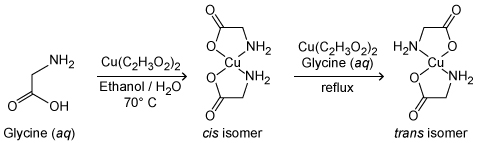 Figure 1 Synthesis of two isomers of copper(II) glycinateTwo different isomers can form depending on the reaction conditions. Mixing hot aqueous glycine (70 °C) with a hot solution of copper(II) acetate dissolved in 50% aqueous ethanol, followed by cooling the mixture on ice, yields a precipitate of only the cis isomer. If a suspension of the cis isomer is held at boiling for an hour or longer in a solution of glycine and copper(II) acetate, the trans isomer is obtained.Because of the geometric differences between the two isomers, the stretching vibrations of the central Cu-N and Cu-O bonds in each isomer are different. Symmetric and asymmetric bond stretching give four possible vibrational modes for each isomer, as shown in Figure 2.
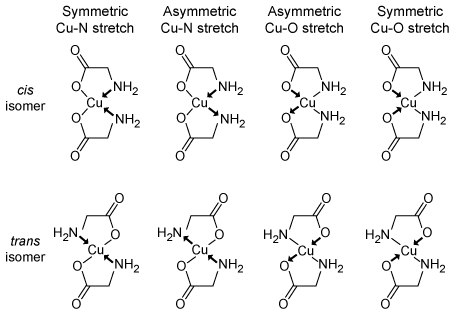 Figure 2 Vibrational modes of the coordinate bonds in copper(II) glycinateIf the stretching of the bonds during vibration causes a transient, unequal distribution of electron density between the atoms within the bond, an oscillating dipole will form. Bonds with dipoles that are not cancelled out by another dipole in the molecule will absorb infrared light at particular frequencies (often expressed in wave numbers) and are designated as IR-active. As a result, the vibrational differences between the two isomers can be analyzed by far-infrared (far-IR) spectroscopy, as shown in Figure 3.
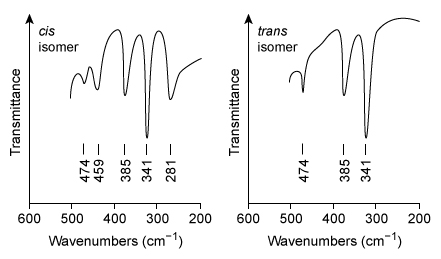 Figure 3 Far-IR spectra of the cis and trans isomers of copper(II) glycinateBoth isomers show a skeletal absorbance (unrelated to coordinate bond vibration) near 385 cm−1. Additional absorbance bands are seen that specifically relate to the vibrational modes of the bonds in each isomer.
-How many vibrational modes of the coordinate bonds from each isomer of copper(II) glycinate are observable by far-IR spectroscopic analysis? (Note: Exclude skeletal vibrational modes unrelated to the coordinate bonds.)
Figure 1 Synthesis of two isomers of copper(II) glycinateTwo different isomers can form depending on the reaction conditions. Mixing hot aqueous glycine (70 °C) with a hot solution of copper(II) acetate dissolved in 50% aqueous ethanol, followed by cooling the mixture on ice, yields a precipitate of only the cis isomer. If a suspension of the cis isomer is held at boiling for an hour or longer in a solution of glycine and copper(II) acetate, the trans isomer is obtained.Because of the geometric differences between the two isomers, the stretching vibrations of the central Cu-N and Cu-O bonds in each isomer are different. Symmetric and asymmetric bond stretching give four possible vibrational modes for each isomer, as shown in Figure 2.
Figure 2 Vibrational modes of the coordinate bonds in copper(II) glycinateIf the stretching of the bonds during vibration causes a transient, unequal distribution of electron density between the atoms within the bond, an oscillating dipole will form. Bonds with dipoles that are not cancelled out by another dipole in the molecule will absorb infrared light at particular frequencies (often expressed in wave numbers) and are designated as IR-active. As a result, the vibrational differences between the two isomers can be analyzed by far-infrared (far-IR) spectroscopy, as shown in Figure 3.
Figure 3 Far-IR spectra of the cis and trans isomers of copper(II) glycinateBoth isomers show a skeletal absorbance (unrelated to coordinate bond vibration) near 385 cm−1. Additional absorbance bands are seen that specifically relate to the vibrational modes of the bonds in each isomer.
-How many vibrational modes of the coordinate bonds from each isomer of copper(II) glycinate are observable by far-IR spectroscopic analysis? (Note: Exclude skeletal vibrational modes unrelated to the coordinate bonds.) (Multiple Choice)
4.8/5 (76)
(76) Liquid nitrogen is used in cryosurgery for wart removal (N2 liquefies at −196 °C and freezes at −210 °C). Which temperature range coincides with the condensation of N2 gas?
(Multiple Choice)
5.0/5 (96)
(96) Passage
Sulfur is the 10th most abundant element on Earth and is an essential element in biological systems. Sulfur can form a variety of chemical compounds and will react with nearly every element except Au, Pt, Ir, Te, and the noble gases. A list of several common inorganic compounds of sulfur is given in Table 1.Table 1 Selected Common Inorganic Sulfur Compounds
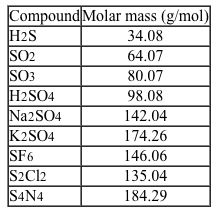 Reduction of elemental sulfur by bacteria during anaerobic digestion produces the toxic, foul-smelling gas H2S. Oxidation of elemental sulfur via combustion or volcanic processes yields gases of SO2 and SO3. When dissolved in water, both SO2 and SO3 produce acidic solutions, and SO3 reacts with water to form the acid H2SO4. Neutralization of H2SO4 can provide a variety of salts, including Na2SO4.Elemental sulfur can also react with halogen gases to form sulfur halides such as the industrially important insulator gas SF6 and the synthetic reagent S2Cl2. S2Cl2 facilitates the formation of other sulfur compounds. For example, reacting S2Cl2 with NH3 produces the sulfur pnictide S4N4.
-Which of the compounds shown below depicts a valid Lewis structure for sulfur dioxide? (Note: Assume that the bonding of each atom involves only s and p orbitals and follows the octet rule.)
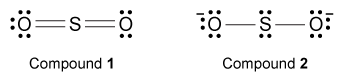
Reduction of elemental sulfur by bacteria during anaerobic digestion produces the toxic, foul-smelling gas H2S. Oxidation of elemental sulfur via combustion or volcanic processes yields gases of SO2 and SO3. When dissolved in water, both SO2 and SO3 produce acidic solutions, and SO3 reacts with water to form the acid H2SO4. Neutralization of H2SO4 can provide a variety of salts, including Na2SO4.Elemental sulfur can also react with halogen gases to form sulfur halides such as the industrially important insulator gas SF6 and the synthetic reagent S2Cl2. S2Cl2 facilitates the formation of other sulfur compounds. For example, reacting S2Cl2 with NH3 produces the sulfur pnictide S4N4.
-Which of the compounds shown below depicts a valid Lewis structure for sulfur dioxide? (Note: Assume that the bonding of each atom involves only s and p orbitals and follows the octet rule.) (Multiple Choice)
4.8/5 (82)
(82) Passage
Students were asked to bring items from home to serve as examples for different types of reactions. The instructor provided additional reactants, solvents, heat, or a catalyst to demonstrate reactions with the household items.The students brought aluminum foil, table salt, sugar, baking soda, vinegar, toilet bowl cleaner, hydrogen peroxide, and antacid tablets.Experiment 1Reactions were performed using the household items. The reaction conditions and student observations are recorded in Table 1.Table 1 Reaction Conditions and Visual Observations
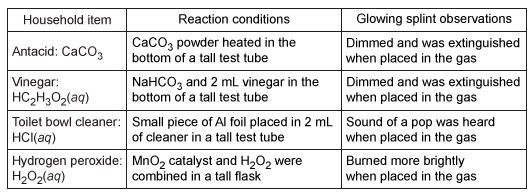
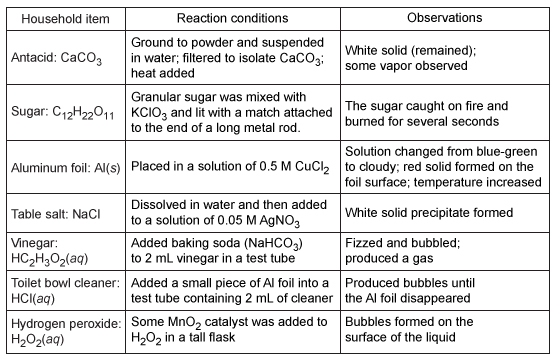 Experiment 2The reactions that were observed to produce gas bubbles in Experiment 1 were repeated, and samples of the gases produced were collected. Each gas sample was tested by holding a burning (glowing) wooden splint within the reaction vessel to determine if the reaction evolved O2, H2, or CO2. A glowing splint placed in O2 will burn more brightly, one placed in H2 will ignite the gas, and one placed in CO2 will be extinguished. The results of the gas tests are recorded in Table 2.Table 2 Glowing Splint Gas Test Observations
 -The reaction between the toilet bowl cleaner and the aluminum foil forms aqueous AlCl3 in addition to the gas that is produced. Which of the following best explains this outcome of the reaction?
Experiment 2The reactions that were observed to produce gas bubbles in Experiment 1 were repeated, and samples of the gases produced were collected. Each gas sample was tested by holding a burning (glowing) wooden splint within the reaction vessel to determine if the reaction evolved O2, H2, or CO2. A glowing splint placed in O2 will burn more brightly, one placed in H2 will ignite the gas, and one placed in CO2 will be extinguished. The results of the gas tests are recorded in Table 2.Table 2 Glowing Splint Gas Test Observations
-The reaction between the toilet bowl cleaner and the aluminum foil forms aqueous AlCl3 in addition to the gas that is produced. Which of the following best explains this outcome of the reaction? (Multiple Choice)
4.7/5 (80)
(80) Passage
Combustion occurs when an oxidation-reduction reaction takes place between a reduced fuel source and an oxidizer, most frequently oxygen. The reaction between hydrogen and oxygen forms water (Reaction 1) and is highly exothermic and thermodynamically favorable. At the completion of hydrogen combustion, essentially all H2 molecules have been converted to water. Nevertheless, at room temperature and atmospheric pressure, molecular hydrogen and oxygen can coexist quite stably.2 H2 + O2 → 2 H2OReaction 1A group of researchers designed two prototype internal combustion engines, each of which could inject a hydrogen/oxygen mixture into a 5-mL combustion chamber at a total pressure of 1 atm and could repeat this process for several cycles. In one engine design, a spark was generated to initiate combustion as hydrogen and oxygen were injected. In another method, the combustion chamber was coated with a small amount of platinum powder. Platinum dramatically increases the reaction rate at room temperature without the need for a spark. The platinum itself is not altered by the reaction and can be reused. Researchers measured the maximum power output of both engine designs under identical injection and temperature conditions (Figure 1).
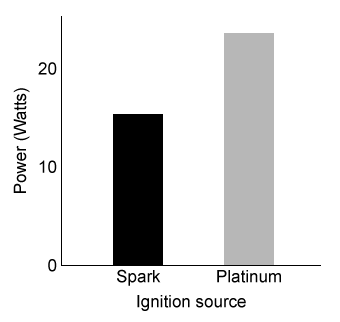 Figure 1 Relative power outputs of hydrogen engines with different ignition sources at 298 KThe power output of an engine is directly related to the rate of combustion. In the presence of platinum, researchers measured the engine's rate of water production at various temperatures and H2/O2 mixture compositions. The results are shown in Figure 2.
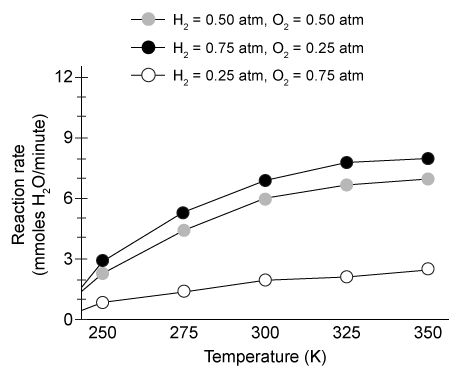 Figure 2 Rate of combustion in platinum-coated engines under various conditions
Adapted from Schultze M, Mantzaras J. Hetero-/homogeneous combustion of hydrogen/air mixtures over platinum: Fuel-lean versus fuel-rich combustion modes doi: 10.1016/j.ijhydene.2013.06.069
-When the platinum-based engine is run continuously at 300 K for 1 hour with 0.5 atm of H2 and 0.5 atm of O2 injected for each reaction, approximately what mass of water will be produced?
Figure 1 Relative power outputs of hydrogen engines with different ignition sources at 298 KThe power output of an engine is directly related to the rate of combustion. In the presence of platinum, researchers measured the engine's rate of water production at various temperatures and H2/O2 mixture compositions. The results are shown in Figure 2.
Figure 2 Rate of combustion in platinum-coated engines under various conditions
Adapted from Schultze M, Mantzaras J. Hetero-/homogeneous combustion of hydrogen/air mixtures over platinum: Fuel-lean versus fuel-rich combustion modes doi: 10.1016/j.ijhydene.2013.06.069
-When the platinum-based engine is run continuously at 300 K for 1 hour with 0.5 atm of H2 and 0.5 atm of O2 injected for each reaction, approximately what mass of water will be produced? (Multiple Choice)
4.8/5 (81)
(81) Passage
Magnetic resonance imaging (MRI) interprets the nuclear relaxation or relaxivity of hydrogen nuclei in resident water molecules. Hydrogen nuclei in water have two magnetic spin states: alpha and beta. In the presence of an applied magnetic field, these spins will align with the field in an "excited" state and then relax back to the "ground" state, producing a signal with intensity proportional to relaxivity. Frequently, an MRI contrast agent is used to increase the relaxation time in coordinated molecules, resulting in a more intense signal.Commonly used contrast agents include gadolinium-based agents. Depending on its environment, gadolinium (Gd) can have eight or nine sites in its coordination sphere, allowing Gd3+ to interact with eight water molecules as in Gd(H2O)83+. The electronic configuration of gadolinium is shown in Figure 1.
 Figure 1 Electronic configuration of gadoliniumGd3+ alone is toxic to cells because its ionic radius is similar to that of Ca2+, allowing Gd3+ to displace Ca2+ in biologically important settings. Therefore, Gd3+ must be coordinated to an organic ligand such as 1,4,7,10-tetraazacyclododecane-1,4,7,10-tetraacetic acid (DOTA) to allow it to pass through the body safely. When chelated, DOTA displaces the water around gadolinium and leaves only one coordination site for a water molecule (Figure 2).
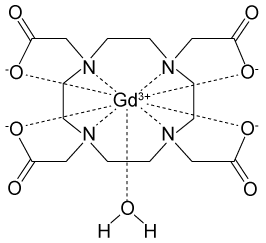 Figure 2 Gd-DOTA with a water coordinated to Gd3+Zinc ions (Zn2+) are required to store insulin and are co-released when insulin is secreted by the pancreas. To detect zinc ions in the body, researchers have designed a variation of Gd-DOTA called Gd-daa3 with two diaminoacetate (daa) arms that preferentially bind to Zn2+ ions (Figure 3). When Zn2+ is absent, these arms coordinate to Gd3+ and create a nine-coordinate complex that prohibits water from binding to Gd3+. Binding of diaminoacetate arms to Zn2+ frees Gd3+ to coordinate with water molecules. This configuration results in increased signal intensity in the parts of the cell where Zn2+ is located.
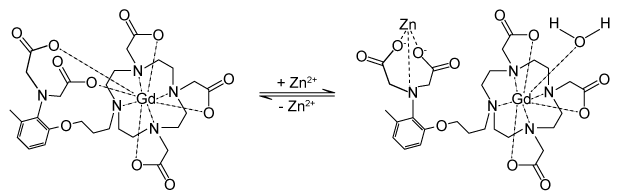 Figure 3 Gd-daa3 when Zn2+ is present
Adapted from Louie A. MRI biosensors: a short primer. J Magn Reson Imaging. 2013;38(3):530-9.
-Which of the following accurately describes the magnetic properties of Gd3+ ions?
Figure 1 Electronic configuration of gadoliniumGd3+ alone is toxic to cells because its ionic radius is similar to that of Ca2+, allowing Gd3+ to displace Ca2+ in biologically important settings. Therefore, Gd3+ must be coordinated to an organic ligand such as 1,4,7,10-tetraazacyclododecane-1,4,7,10-tetraacetic acid (DOTA) to allow it to pass through the body safely. When chelated, DOTA displaces the water around gadolinium and leaves only one coordination site for a water molecule (Figure 2).
Figure 2 Gd-DOTA with a water coordinated to Gd3+Zinc ions (Zn2+) are required to store insulin and are co-released when insulin is secreted by the pancreas. To detect zinc ions in the body, researchers have designed a variation of Gd-DOTA called Gd-daa3 with two diaminoacetate (daa) arms that preferentially bind to Zn2+ ions (Figure 3). When Zn2+ is absent, these arms coordinate to Gd3+ and create a nine-coordinate complex that prohibits water from binding to Gd3+. Binding of diaminoacetate arms to Zn2+ frees Gd3+ to coordinate with water molecules. This configuration results in increased signal intensity in the parts of the cell where Zn2+ is located.
Figure 3 Gd-daa3 when Zn2+ is present
Adapted from Louie A. MRI biosensors: a short primer. J Magn Reson Imaging. 2013;38(3):530-9.
-Which of the following accurately describes the magnetic properties of Gd3+ ions? (Multiple Choice)
4.8/5 (80)
(80) Passage
Although acetylsalicylic acid (aspirin) is a well-known and widely used analgesic and anti-inflammatory agent, copper(II) acetylsalicylate, a copper complex formed from aspirin and copper, has also been found to exhibit some distinctive and potentially beneficial pharmacological properties. Formation of copper(II) acetylsalicylate is achieved when the conjugate base of aspirin, acetylsalicylate (C9H7O4−), binds to Cu2+ ions in solution, as outlined in Reaction 1.4 NaC9H7O4(aq) + 2 CuSO4(aq) → Cu2(C9H7O4)4(s) + 2 Na2SO4(aq)Reaction 1Using Reaction 1, a researcher synthesized a sample of copper(II) acetylsalicylate for analysis. A small volume of 0.50 M aqueous copper(II) sulfate (molar mass = 159.6) was mixed into 100 mL of filtered, saturated aqueous sodium acetylsalicylate (molar mass = 202.2) at room temperature and slowly stirred. Formation of copper(II) acetylsalicylate (molar mass = 843.7) was immediately observed as a bright blue precipitate. The precipitate was then isolated by filtration and dried, affording the product complex in high yield.
Adapted from: Seguel GV, Rivas BL, Contreras JG. Synthesis and characterization of copper complexes: interaction of metalliccarboxylates with 1,3-thiazole ligand. Journal of the Chilean Chemical Society. 1970; 58(4):1967.
-The copper(II) acetylsalicylate product immediately precipitates from the reaction solution because:
(Multiple Choice)
4.9/5 (82)
(82) Which of the following molecular geometries could describe a compound with a central atom that is dsp3 hybridized?
(Multiple Choice)
4.8/5 (79)
(79) Passage
Umami is one of five basic tastes that humans recognize, and it is triggered by L-amino acids as well as some synthetic ingredients and organic acids. Three common umami tastant molecules are shown in Figure 1.
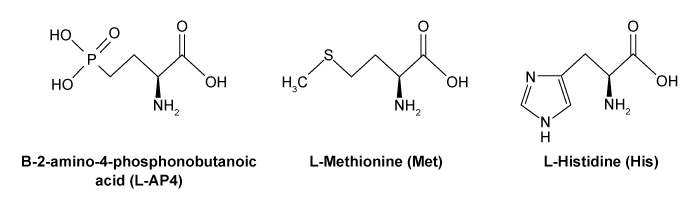 Figure 1 Three common tastant molecules known to trigger the umami taste sensationUmami taste signals are triggered upon binding of tastant molecules to the G protein-coupled receptor (GPCR) heterodimer T1R1-T1R3, which ultimately causes the breakdown of phosphatidylinositol 4,5-bisphosphate (PIP2) into the messenger molecules inositol-1,4,5-trisphosphate (IP3) and diacylglycerol (DAG). IP3 triggers the release of Ca2+ cations and the subsequent gating of the taste-transduction channels (Figure 2).
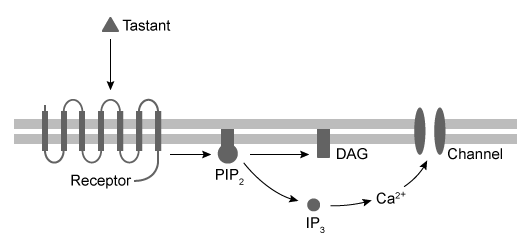 Figure 2 Signal pathway for transduction of umami taste sensationInosine monophosphate (IMP) has been suggested as enhancing (potentiating) the response of T1R1+T1R3 GPCRs to umami tastant molecules. Scientists tested this hypothesis by culturing receptors from human embryonic kidney (HEK) cells containing promiscuous G proteins. The HEK cells were then stimulated with umami tastants in the presence or absence of IMP. In each test, the cells were exposed to the same amounts of amino acid tastant and IMP. The number of cells that responded to each tastant was measured using a calcium indicator dye (FURA-2AM) in conjunction with fluorescence microscopy. By comparing the cellular response ratio of the stimulated to unstimulated HEK cells, the extent of potentiation can be assessed. The results are shown in Figure 3.
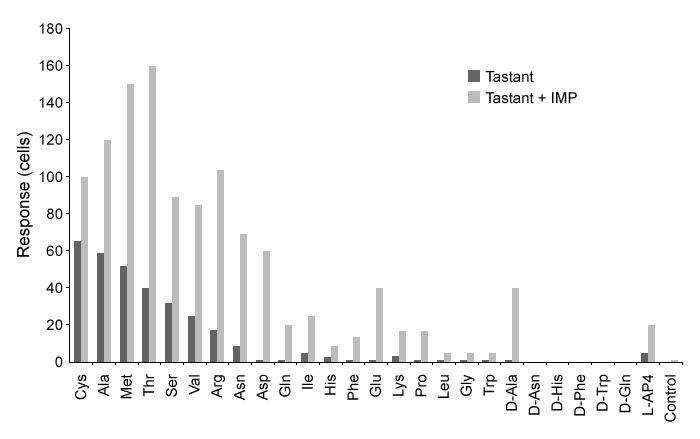 Figure 3 Quantification of amino-acid responses for T1R1+T1R3 with and without IMP
Adapted from Nelson G, Chandrashekar J, Hoon MA, et al. An amino-acid taste receptor. Nature. 2002;416(6877):199-202.
-What are the shapes of the groups bonded to the central atoms 1, 2, and 3, respectively in the tastant molecule L-AP4 shown?
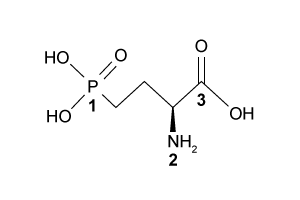
Figure 1 Three common tastant molecules known to trigger the umami taste sensationUmami taste signals are triggered upon binding of tastant molecules to the G protein-coupled receptor (GPCR) heterodimer T1R1-T1R3, which ultimately causes the breakdown of phosphatidylinositol 4,5-bisphosphate (PIP2) into the messenger molecules inositol-1,4,5-trisphosphate (IP3) and diacylglycerol (DAG). IP3 triggers the release of Ca2+ cations and the subsequent gating of the taste-transduction channels (Figure 2).
Figure 2 Signal pathway for transduction of umami taste sensationInosine monophosphate (IMP) has been suggested as enhancing (potentiating) the response of T1R1+T1R3 GPCRs to umami tastant molecules. Scientists tested this hypothesis by culturing receptors from human embryonic kidney (HEK) cells containing promiscuous G proteins. The HEK cells were then stimulated with umami tastants in the presence or absence of IMP. In each test, the cells were exposed to the same amounts of amino acid tastant and IMP. The number of cells that responded to each tastant was measured using a calcium indicator dye (FURA-2AM) in conjunction with fluorescence microscopy. By comparing the cellular response ratio of the stimulated to unstimulated HEK cells, the extent of potentiation can be assessed. The results are shown in Figure 3.
Figure 3 Quantification of amino-acid responses for T1R1+T1R3 with and without IMP
Adapted from Nelson G, Chandrashekar J, Hoon MA, et al. An amino-acid taste receptor. Nature. 2002;416(6877):199-202.
-What are the shapes of the groups bonded to the central atoms 1, 2, and 3, respectively in the tastant molecule L-AP4 shown? (Multiple Choice)
4.7/5 (87)
(87) What are the products of the alpha (α) and beta (β−) decays, respectively, in the nuclear decay chain below? 
(Multiple Choice)
4.8/5 (68)
(68) If a naturally occurring sample of an unidentified element is found to contain three isotopes (A, B, and C) and consists of 90.5% isotope A (mass number 20), 0.3% isotope B (mass number 21), and 9.2% isotope C (mass number 22), the atomic weight of the element measured from the sample will be:
(Multiple Choice)
4.7/5 (77)
(77) Passage
Students conducted an experiment to determine the changes in enthalpy ΔH°, entropy ΔS°, and Gibbs free energy ΔG° resulting from the dissociation of acetic acid (CH3COOH) in water. The students first determined the acid dissociation constant Ka for the reaction by measuring the pH of a 1 M acetic acid solution at various temperatures over a narrow range of less than 10 °C.To perform the pH measurements, the acetic acid solution was initially cooled to 0 °C using an ice bath and then warmed with gentle heating to room temperature with continuous stirring. The pH was recorded at intervals of 1 °C. From the pH data, the value of Ka at each temperature T was calculated. The experimental results over the selected temperature range are shown in Table 1.Table 1 Student Data for the pH and Ka of Acetic Acid with Increasing Temperature
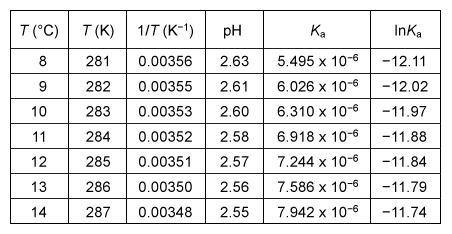 To evaluate ΔH° and ΔS°, the students constructed a van 't Hoff plot (Figure 1), which is a graph of the natural log of the dissociation constant (ln Ka) vs. the reciprocal absolute temperature (1/T).
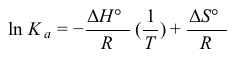
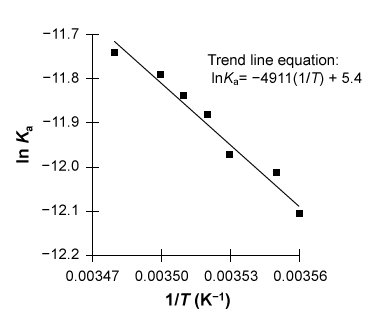 Figure 1 Linear van 't Hoff plot relating the dissociation constant Ka of acetic acid to temperature TThe relationship between Ka, T, ΔH°, and ΔS° in the van 't Hoff plot was then described using a linear fit of the data following the form of Equation 1, in which R is the gas constant (8.3 J∙mol−1∙K−1).
 Adapted from: C. Rezsnyak "Determination of Thermodynamic Values (S°, H°, and G°) from the Dissociation of a Weak Acid" World Journal of Chemical Education. ©2017 Science and Education Publishing.
-According to the experimental results in the passage, the dissociation of acetic acid is:spontaneous at all temperatures.nonspontaneous at low temperatures.spontaneous at high temperatures.
To evaluate ΔH° and ΔS°, the students constructed a van 't Hoff plot (Figure 1), which is a graph of the natural log of the dissociation constant (ln Ka) vs. the reciprocal absolute temperature (1/T).
Figure 1 Linear van 't Hoff plot relating the dissociation constant Ka of acetic acid to temperature TThe relationship between Ka, T, ΔH°, and ΔS° in the van 't Hoff plot was then described using a linear fit of the data following the form of Equation 1, in which R is the gas constant (8.3 J∙mol−1∙K−1).
Adapted from: C. Rezsnyak "Determination of Thermodynamic Values (S°, H°, and G°) from the Dissociation of a Weak Acid" World Journal of Chemical Education. ©2017 Science and Education Publishing.
-According to the experimental results in the passage, the dissociation of acetic acid is:spontaneous at all temperatures.nonspontaneous at low temperatures.spontaneous at high temperatures. (Multiple Choice)
4.7/5 (87)
(87) Passage
The tendency of a chemical species to undergo reduction during an electrochemical reaction is indicated by the standard potential E° for the reaction. As represented generally by Reaction 1, E° measures the potential Z at which element X with oxidation number N accepts N electrons and is reduced to its elemental state.X(N) + Ne− → X(0), E° = Z voltsReaction 1In a galvanic cell, E° > 0 indicates a spontaneous reaction. Therefore, chemical species with higher positive E° values are reduced more easily than those with lower E° values.Using E° as a basis of comparison, the relative thermodynamic stabilities of different chemical species involving the same element at different oxidation states can be presented graphically using a Frost diagram. For a series of compounds containing element X, a Frost diagram plots the value of NE° for each compound against the corresponding oxidation number N of element X within the species. Frost diagrams for several species containing manganese or chlorine are shown in Figure 1.
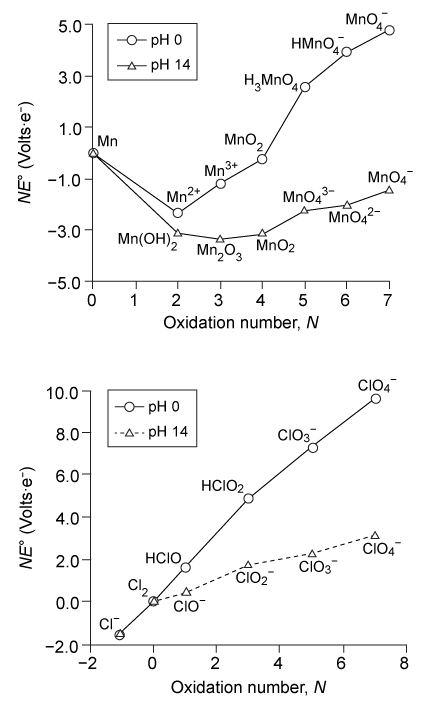 Figure 1 Frost diagrams for manganese and chlorineOn a Frost diagram, NE° is proportional to the standard Gibbs free energy ΔG° according to the relationshipΔG° = −FNE° = −nFE°Equation 1where n is the number of moles of electrons transferred during the electrochemical process and F is the Faraday constant. Free energy considerations also show that a species is prone to disproportionation if its position on the Frost diagram lies above a line connecting the points of two adjacent species, as seen for species B in Figure 2.
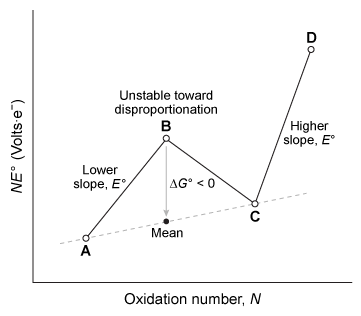 Figure 2 General Frost diagram for an element forming species A, B, C, and D.The slope of a line segment joining two species on a Frost diagram is equal to the standard reduction potential for the couple. A greater slope indicates a higher corresponding reduction potential. As a result, in Figure 2, the reduction potential for B to A is lower than that for D to C.
-Suppose an experiment is to be performed utilizing a reaction that reduces ClO4− to ClO3−. Which experimental approach can be expected to make the reduction of ClO4− more favorable during the reaction?
Figure 1 Frost diagrams for manganese and chlorineOn a Frost diagram, NE° is proportional to the standard Gibbs free energy ΔG° according to the relationshipΔG° = −FNE° = −nFE°Equation 1where n is the number of moles of electrons transferred during the electrochemical process and F is the Faraday constant. Free energy considerations also show that a species is prone to disproportionation if its position on the Frost diagram lies above a line connecting the points of two adjacent species, as seen for species B in Figure 2.
Figure 2 General Frost diagram for an element forming species A, B, C, and D.The slope of a line segment joining two species on a Frost diagram is equal to the standard reduction potential for the couple. A greater slope indicates a higher corresponding reduction potential. As a result, in Figure 2, the reduction potential for B to A is lower than that for D to C.
-Suppose an experiment is to be performed utilizing a reaction that reduces ClO4− to ClO3−. Which experimental approach can be expected to make the reduction of ClO4− more favorable during the reaction? (Multiple Choice)
4.8/5 (77)
(77) Passage
Oxytocin is a naturally occurring peptide hormone that is used clinically to prevent postpartum hemorrhage, one of the leading causes of maternal mortality globally. Because oxytocin is heat and light sensitive, it requires refrigeration at temperatures below 8 °C. However, in underdeveloped regions with hot climates (such as sub-Saharan Africa), refrigeration is often unavailable for pharmaceutical storage and transport.In an effort to improve the availability of oxytocin in regions with limited refrigeration, researchers conducted two experiments to investigate the use of buffers and divalent alkaline-earth metal salt additives as a means to produce an aqueous oxytocin formulation that is stable when stored at temperatures up to 50 °C.Experiment 1To evaluate effects from buffer concentration, two sets of solutions were prepared containing 0.3 mg/mL oxytocin monoacetate salt in 5, 10, and 50 mM citrate buffer solution made from a mixture of citric acid (a weak acid) and sodium citrate (a salt of the conjugate base). An unbuffered aqueous solution served as a control sample. Using 1.0 M NaOH, the buffered solutions were adjusted to pH 4.5 (the pH at which oxytocin is more stable) and then stored at 5 °C (set 1) and 50 °C (set 2) for 4 weeks in a dark area. After storage, the amount of undegraded oxytocin in each sample was determined (Figure 1) using reverse-phase, high-performance liquid chromatography (RP-HPLC).
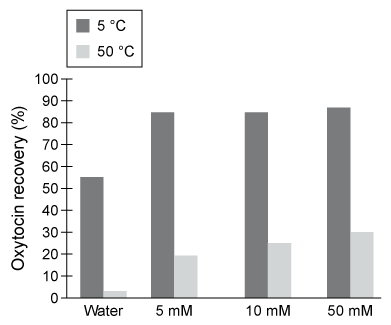 Figure 1 Oxytocin recovery in a citrate buffer (pH 4.5) and water (pH 6.8)Experiment 2To examine the effect of divalent alkaline-earth metal cation additives, Experiment 1 was repeated, but the solutions were modified to contain 0.3 mg/mL of oxytocin with 5, 10, or 50 mM of a divalent cation (from a chloride salt) dissolved in 10 mM citrate buffer. The results are shown in Figure 2.
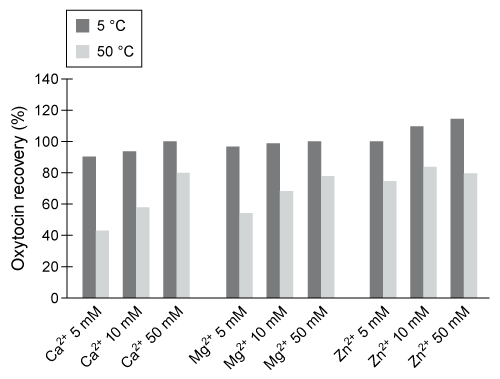 Figure 2 Oxytocin in 10 mM citrate buffer with added Ca2+, Mg2+, or Zn2+ salts
-Which of the following experimental changes will decrease the percent recovery of oxytocin in Experiment 1?
Figure 1 Oxytocin recovery in a citrate buffer (pH 4.5) and water (pH 6.8)Experiment 2To examine the effect of divalent alkaline-earth metal cation additives, Experiment 1 was repeated, but the solutions were modified to contain 0.3 mg/mL of oxytocin with 5, 10, or 50 mM of a divalent cation (from a chloride salt) dissolved in 10 mM citrate buffer. The results are shown in Figure 2.
Figure 2 Oxytocin in 10 mM citrate buffer with added Ca2+, Mg2+, or Zn2+ salts
-Which of the following experimental changes will decrease the percent recovery of oxytocin in Experiment 1? (Multiple Choice)
4.7/5 (88)
(88) The overall reaction for the electrolysis of molten sodium chloride,  2 NaCll →electric current 2 Nal+Cl2gcan be expressed as two separate, simultaneous redox processes (Reactions 1 and 2):
 2 Cl-→ Cl2g+2 e-Reaction 1
 2 Na++2 e-→2 NalReaction 2What is the amount of electric charge required to produce 0.80 mol of Na(l) during the electrolysis?
2 NaCll →electric current 2 Nal+Cl2gcan be expressed as two separate, simultaneous redox processes (Reactions 1 and 2):
2 Cl-→ Cl2g+2 e-Reaction 1
2 Na++2 e-→2 NalReaction 2What is the amount of electric charge required to produce 0.80 mol of Na(l) during the electrolysis? (Multiple Choice)
4.8/5 (72)
(72) Which of the following reactions requires the smallest amount of energy to remove a valence electron (e−)?
(Multiple Choice)
4.7/5 (91)
(91) Passage
Students conducted an experiment to determine the changes in enthalpy ΔH°, entropy ΔS°, and Gibbs free energy ΔG° resulting from the dissociation of acetic acid (CH3COOH) in water. The students first determined the acid dissociation constant Ka for the reaction by measuring the pH of a 1 M acetic acid solution at various temperatures over a narrow range of less than 10 °C.To perform the pH measurements, the acetic acid solution was initially cooled to 0 °C using an ice bath and then warmed with gentle heating to room temperature with continuous stirring. The pH was recorded at intervals of 1 °C. From the pH data, the value of Ka at each temperature T was calculated. The experimental results over the selected temperature range are shown in Table 1.Table 1 Student Data for the pH and Ka of Acetic Acid with Increasing Temperature
To evaluate ΔH° and ΔS°, the students constructed a van 't Hoff plot (Figure 1), which is a graph of the natural log of the dissociation constant (ln Ka) vs. the reciprocal absolute temperature (1/T).
Figure 1 Linear van 't Hoff plot relating the dissociation constant Ka of acetic acid to temperature TThe relationship between Ka, T, ΔH°, and ΔS° in the van 't Hoff plot was then described using a linear fit of the data following the form of Equation 1, in which R is the gas constant (8.3 J∙mol−1∙K−1).
Adapted from: C. Rezsnyak "Determination of Thermodynamic Values (S°, H°, and G°) from the Dissociation of a Weak Acid" World Journal of Chemical Education. ©2017 Science and Education Publishing.
-Would changes in the van 't Hoff plot be observed if the reaction rate were increased by adding a catalyst during the experiment?
To evaluate ΔH° and ΔS°, the students constructed a van 't Hoff plot (Figure 1), which is a graph of the natural log of the dissociation constant (ln Ka) vs. the reciprocal absolute temperature (1/T).
Figure 1 Linear van 't Hoff plot relating the dissociation constant Ka of acetic acid to temperature TThe relationship between Ka, T, ΔH°, and ΔS° in the van 't Hoff plot was then described using a linear fit of the data following the form of Equation 1, in which R is the gas constant (8.3 J∙mol−1∙K−1).
Adapted from: C. Rezsnyak "Determination of Thermodynamic Values (S°, H°, and G°) from the Dissociation of a Weak Acid" World Journal of Chemical Education. ©2017 Science and Education Publishing.
-Would changes in the van 't Hoff plot be observed if the reaction rate were increased by adding a catalyst during the experiment? (Multiple Choice)
4.8/5 (86)
(86) 
Filters
- Essay(0)
- Multiple Choice(0)
- Short Answer(0)
- True False(0)
- Matching(0)