Multiple Choice
Passage
Umami is one of five basic tastes that humans recognize, and it is triggered by L-amino acids as well as some synthetic ingredients and organic acids. Three common umami tastant molecules are shown in Figure 1.
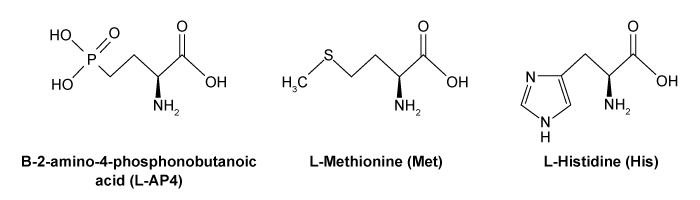 Figure 1 Three common tastant molecules known to trigger the umami taste sensationUmami taste signals are triggered upon binding of tastant molecules to the G protein-coupled receptor (GPCR) heterodimer T1R1-T1R3, which ultimately causes the breakdown of phosphatidylinositol 4,5-bisphosphate (PIP2) into the messenger molecules inositol-1,4,5-trisphosphate (IP3) and diacylglycerol (DAG) . IP3 triggers the release of Ca2+ cations and the subsequent gating of the taste-transduction channels (Figure 2) .
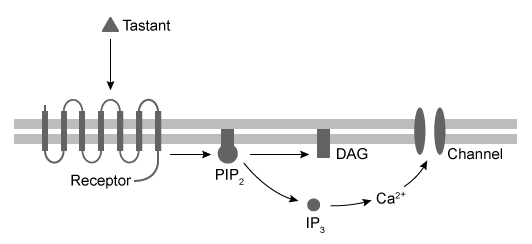 Figure 2 Signal pathway for transduction of umami taste sensationInosine monophosphate (IMP) has been suggested as enhancing (potentiating) the response of T1R1+T1R3 GPCRs to umami tastant molecules. Scientists tested this hypothesis by culturing receptors from human embryonic kidney (HEK) cells containing promiscuous G proteins. The HEK cells were then stimulated with umami tastants in the presence or absence of IMP. In each test, the cells were exposed to the same amounts of amino acid tastant and IMP. The number of cells that responded to each tastant was measured using a calcium indicator dye (FURA-2AM) in conjunction with fluorescence microscopy. By comparing the cellular response ratio of the stimulated to unstimulated HEK cells, the extent of potentiation can be assessed. The results are shown in Figure 3.
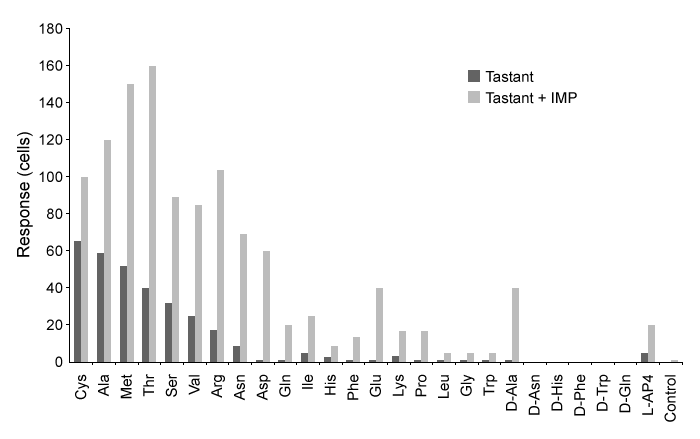 Figure 3 Quantification of amino-acid responses for T1R1+T1R3 with and without IMP
Adapted from Nelson G, Chandrashekar J, Hoon MA, et al. An amino-acid taste receptor. Nature. 2002;416(6877) :199-202.
-Which of the following best explains the results regarding D-amino acids in Figure 3?
A) D-amino acids are not as abundant in HEK cells as L-amino acids.
B) D-amino acids do not fluoresce upon addition of FURA-2AM dye.
C) D-amino acids do not trigger the formation of DAG.
D) Most D-amino acids do not effectively bind to the GPCR heterodimer T1R1+T1R3.
Correct Answer:

Verified
Correct Answer:
Verified
Q82: Passage<br>Copper plays a vital role as a
Q83: Oxalate anions, C<sub>2</sub>O<sub>4</sub><sup>2−</sup>, added to a solution
Q84: Passage<br>The alkaline-earth metals are a highly reactive
Q85: The effective nuclear charge experienced by the
Q86: Passage<br>A group of students were given water
Q88: Passage<br>Sulfur is the 10th most abundant element
Q89: Which of the following molecules has the
Q90: Passage<br>Dmitri Mendeleev is credited with grouping the
Q91: Passage<br>Magnetic resonance imaging (MRI) interprets the nuclear
Q92: The Nernst equation states: <img src="https://d2lvgg3v3hfg70.cloudfront.net/MD0008/.jpg" alt="The