



 Chat with AI
Exam 30: Orbitals and Organic Chemistry: Pericyclic Reactions

Exam 1: Structure and Bonding29 Questions
Exam 2: Polar Covalent Bonds;acids and Bases50 Questions
Exam 3: Organic Compounds: Alkanes and Their Stereochemistry37 Questions
Exam 4: Organic Compounds: Cycloalkanes and Their Stereochemistry37 Questions
Exam 5: Stereochemistry at Tetrahedral Centers43 Questions
Exam 6: An Overview of Organic Reactions42 Questions
Exam 6: Par 12 Questions
Exam 7: Alkenes: Structure and Reactivity37 Questions
Exam 8: Alkenes: Reactions and Synthesis42 Questions
Exam 9: Alkynes: an Introduction to Organic Synthesis31 Questions
Exam 10: Organohalides31 Questions
Exam 11: Reactions of Alkyl Halides: Nucleophilic Substitutions and Eliminations34 Questions
Exam 11: Par 22 Questions
Exam 12: Structure Determination: Mass Spectrometry and Infrared Spectroscopy42 Questions
Exam 13: Structure Determination: Nuclear Magnetic Resonance Spectroscopy46 Questions
Exam 14: Conjugated Compounds and Ultraviolet Spectroscopy40 Questions
Exam 14: Par 32 Questions
Exam 15: Benzene and Aromaticity47 Questions
Exam 16: Chemistry of Benzene: Electrophilic Aromatic Substitution30 Questions
Exam 17: Alcohols and Phenols44 Questions
Exam 18: Ethers and Epoxides;thiols and Sulfides33 Questions
Exam 19: Aldehydes and Ketones: Nucleophilic Addition Reactions48 Questions
Exam 19: Par 42 Questions
Exam 20: Carboxylic Acids and Nitriles32 Questions
Exam 21: Carboxylic Acid Derivatives: Nucleophilic Acyl Substitution Reactions44 Questions
Exam 22: Carbonyl Alpha-Substitution Reactions33 Questions
Exam 23: Carbonyl Condensation Reactions36 Questions
Exam 23: Par 52 Questions
Exam 24: Amines and Heterocycles41 Questions
Exam 25: Biomolecules: Carbohydrates63 Questions
Exam 26: Biomolecules: Amino Acids,peptides,and Proteins45 Questions
Exam 27: Par 72 Questions
Exam 27: Biomolecules: Lipids54 Questions
Exam 28: Biomolecules: Nucleic Acids44 Questions
Exam 29: The Organic Chemistry of Metabolic Pathways48 Questions
Exam 30: Orbitals and Organic Chemistry: Pericyclic Reactions44 Questions
Exam 31: Synthetic Polymers33 Questions
Exam 30: Par 12 Questions
Select questions type


Exhibit 30-9
Vitamin D3,cholecalciferol,is synthesized under the skin by the photochemical pericyclic process shown below.Answer the following question(s) about these reactions. 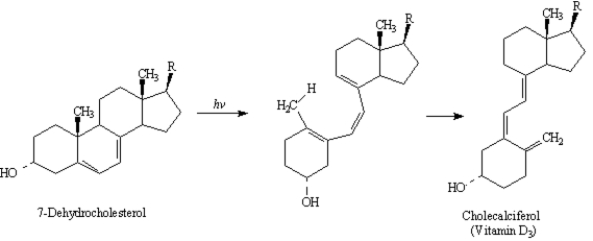 -Refer to Exhibit 30-9.The second step in this process is a(n):
 (Multiple Choice)
4.8/5  (87)
(87) Exhibit 30-1
To answer the following question(s),consider the π molecular orbitals of a conjugated diene shown below:  -Refer to Exhibit 30-1.Which molecular orbital of a conjugated diene contains two nodes between nuclei?
 (Multiple Choice)
4.9/5 (83)
(83) There are three major classes of pericyclic reactions.Which of the following types of reactions is not an example of a pericyclic process?
(Multiple Choice)
4.7/5 (74)
(74) Exhibit 30-4
Consider the reaction below to answer the following question(s):  -Refer to Exhibit 30-4.What type of pericyclic reaction is involved in this transformation?
 (Multiple Choice)
4.8/5 (73)
(73) Exhibit 30-1
To answer the following question(s),consider the π molecular orbitals of a conjugated diene shown below:
-Refer to Exhibit 30-1.Which molecular orbital of a ground-state conjugated diene is the highest occupied molecular orbital (HOMO)?
-Refer to Exhibit 30-1.Which molecular orbital of a ground-state conjugated diene is the highest occupied molecular orbital (HOMO)? (Multiple Choice)
4.8/5 (77)
(77) Exhibit 30-1
To answer the following question(s),consider the π molecular orbitals of a conjugated diene shown below:
-Draw the product(s) you would expect to obtain from photochemical cyclization of (2Z,4E)-hexadiene. 
-Draw the product(s) you would expect to obtain from photochemical cyclization of (2Z,4E)-hexadiene. (Essay)
4.8/5 (69)
(69) Exhibit 30-6
Consider the reaction sequence below to answer the following question(s):  -Refer to Exhibit 30-6.Explain the stereochemistry of product C.
 (Essay)
4.9/5 (91)
(91) Predict the product (including stereochemistry) when the following substance reacts under thermal conditions. 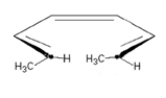
(Essay)
5.0/5 (84)
(84) 
Exhibit 30-5
To answer the following question(s),consider the reaction below:  -Refer to Exhibit 30-5.How many pairs of electrons are involved in this pericyclic reaction?
 (Multiple Choice)
4.9/5 (73)
(73) 
Consider the reaction given below. 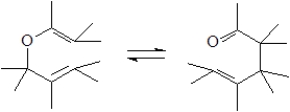 Which of the following is correct?
 (Multiple Choice)
4.7/5 (92)
(92) Exhibit 30-4
Consider the reaction below to answer the following question(s):
-Refer to Exhibit 30-4.Would you expect this reaction to occur under photochemical or thermal conditions?
-Refer to Exhibit 30-4.Would you expect this reaction to occur under photochemical or thermal conditions? (Essay)
5.0/5 (74)
(74) 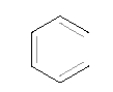
Exhibit 30-5
To answer the following question(s),consider the reaction below:
-Refer to Exhibit 30-5.What type of pericyclic reaction is involved in this transformation?
-Refer to Exhibit 30-5.What type of pericyclic reaction is involved in this transformation? (Multiple Choice)
4.9/5 (95)
(95) Consider the following MO diagram for a conjugated triene. 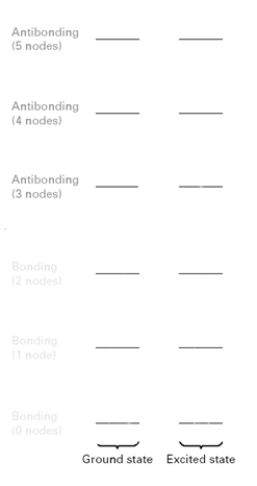 When irradiated with light of the appropriate wavelength,how many electrons will be in bonding MO's?
 (Multiple Choice)
4.7/5 (83)
(83) Exhibit 30-7
Consider the Sommelet-Hauser rearrangement below to answer the following question(s): 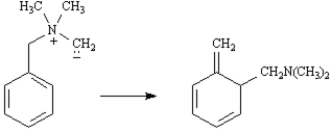 -Refer to Exhibit 30-7.Would you expect the Sommelet-Hauser rearrangement to be antarafacial or suprafacial? Explain.
 (Essay)
4.8/5 (70)
(70) For an odd number of electron pairs (double bonds),for cycloadditions reactions which of the following rules is correct?:
(Multiple Choice)
4.8/5 (75)
(75) Draw the structure of the product when the following substance reacts with maleic anhydride.Classify the reaction according to the number of π electrons that interact.Atoms other than carbon and hydrogen are labeled. 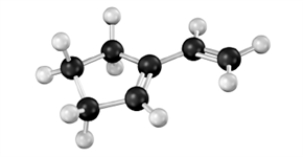
(Essay)
4.9/5 (90)
(90) Exhibit 30-6
Consider the reaction sequence below to answer the following question(s):
-Refer to Exhibit 30-6.Explain the stereochemistry of product B.
-Refer to Exhibit 30-6.Explain the stereochemistry of product B. (Essay)
4.9/5 (84)
(84) 
Filters
- Essay(0)
- Multiple Choice(0)
- Short Answer(0)
- True False(0)
- Matching(0)