



 Chat with AI
Exam 19: The Cardiovascular System: Blood Vessels

Exam 1: The Human Body: an Orientation100 Questions
Exam 2: Chemistry Comes Alive120 Questions
Exam 3: Cells: the Living Units119 Questions
Exam 4: Tissue: the Living Fabric97 Questions
Exam 5: The Integumentary System107 Questions
Exam 6: Bones and Skeletal Tissues94 Questions
Exam 7: The Skeleton102 Questions
Exam 8: Joints105 Questions
Exam 9: Muscles and Muscle Tissue109 Questions
Exam 10: The Muscular System109 Questions
Exam 11: Fundamentals of the Nervous System and Nervous Tissue95 Questions
Exam 12: The Central Nervous System132 Questions
Exam 13: The Peripheral Nervous System and Reflex Activity97 Questions
Exam 14: The Autonomic Nervous System96 Questions
Exam 15: The Special Senses127 Questions
Exam 16: The Endocrine System119 Questions
Exam 17: Blood99 Questions
Exam 18: The Cardiovascular System: the Heart94 Questions
Exam 19: The Cardiovascular System: Blood Vessels107 Questions
Exam 20: The Lymphatic System and Lymphoid Organs and Tissues95 Questions
Exam 21: The Immune System: Innate and Adaptive Body Defensives118 Questions
Exam 22: The Respiratory System120 Questions
Exam 23: The Digestive System145 Questions
Exam 24: Nutrition, Metabolism, and Body Temperature Regulation114 Questions
Exam 25: The Urinary System116 Questions
Exam 26: Fluid, Electrolyte, and Acid-Base Balance94 Questions
Exam 27: The Reproductive System126 Questions
Exam 28: Pregnancy and Human Development97 Questions
Exam 29: Heredity90 Questions
Select questions type


Mrs. Gray, a 50- year- old mother of seven children, is complaining of dull, aching pains in her legs. She reports that they have been getting progressively worse since the birth of her last child. During her physical examination, numerous varicosities are seen in both legs. How are varicosities recognized? What veins are most likely involved? What pathologic changes have occurred in these veins, and what is the most likely cause in this patient's case?
(Essay)
4.8/5  (82)
(82) The left subclavian artery is the major branch of the aortic arch.
(Short Answer)
4.8/5 (88)
(88) Hypotension is generally considered systolic blood pressure that is below 100 mm Hg.
(True/False)
5.0/5 (87)
(87) Which of the following would not result in the dilation of the feeder arterioles and opening of the precapillary sphincters in systemic capillary beds?
(Multiple Choice)
4.8/5 (87)
(87) The carotid sinus reflex protects the blood supply to the brain, whereas the aortic reflex is more concerned with maintaining adequate blood pressure in the systemic circuit as a whole.
(True/False)
4.9/5 (83)
(83) Whereas diffusion is more important for solute exchange between plasma and interstitial fluid, bulk flow is more important for regulation of the relative volumes of blood and interstitial fluid.
(True/False)
4.9/5 (84)
(84) Describe the effect of hypovolemic shock on the blood vessels and the heart.
(Essay)
4.8/5 (82)
(82) Which of the following is not true regarding fenestrated capillaries?
(Multiple Choice)
4.8/5 (80)
(80) If blood pressure is almost normal in a person who has lost blood, does that mean the tissues are receiving adequate blood flow?
(Multiple Choice)
4.8/5 (76)
(76) Mr. Wilson is a 45- year- old stockbroker with essential hypertension. He is African American, obese, and he smokes 2- 3 packs of cigarettes daily. What risk factors for hypertension are typified by Mr. Wilson? What steps should be taken to treat Mr. Wilson, and what lifestyle changes should he make? What complications are likely if corrective steps are not taken?
(Essay)
5.0/5 (81)
(81) Define vasoconstriction and vasodilation. What is the mechanism of regulation?
(Essay)
4.9/5 (81)
(81) A pregnant patient comes into a clinic and asks about a small painless dark compressible bulge that is becoming more apparent on her leg. What is it and what caused it?
(Essay)
4.9/5 (76)
(76) 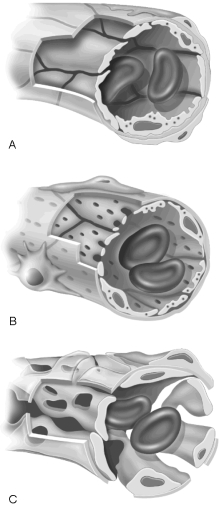 Figure 19.1Using Figure 19.1, match the following:
-Blood islands are embryonic cells from which germ cell layer?
Figure 19.1Using Figure 19.1, match the following:
-Blood islands are embryonic cells from which germ cell layer? (Short Answer)
4.9/5 (84)
(84) Which of the following statements regarding the hepatic portal system is false?
(Multiple Choice)
4.8/5 (75)
(75) Which tunic of an artery is most responsible for maintaining blood pressure and continuous blood circulation?
(Multiple Choice)
5.0/5 (88)
(88) Every minute, about 1.5 ml of fluid leaks out of the capillaries.
(True/False)
4.8/5 (83)
(83) An obstruction in the superior vena cava would decrease the flow of blood from the head and neck to the heart.
(True/False)
4.8/5 (91)
(91) 
Filters
- Essay(0)
- Multiple Choice(0)
- Short Answer(0)
- True False(0)
- Matching(0)