



 Chat with AI
Exam 12: The Central Nervous System

Exam 1: The Human Body: an Orientation100 Questions
Exam 2: Chemistry Comes Alive120 Questions
Exam 3: Cells: the Living Units119 Questions
Exam 4: Tissue: the Living Fabric97 Questions
Exam 5: The Integumentary System107 Questions
Exam 6: Bones and Skeletal Tissues94 Questions
Exam 7: The Skeleton102 Questions
Exam 8: Joints105 Questions
Exam 9: Muscles and Muscle Tissue109 Questions
Exam 10: The Muscular System109 Questions
Exam 11: Fundamentals of the Nervous System and Nervous Tissue95 Questions
Exam 12: The Central Nervous System132 Questions
Exam 13: The Peripheral Nervous System and Reflex Activity97 Questions
Exam 14: The Autonomic Nervous System96 Questions
Exam 15: The Special Senses127 Questions
Exam 16: The Endocrine System119 Questions
Exam 17: Blood99 Questions
Exam 18: The Cardiovascular System: the Heart94 Questions
Exam 19: The Cardiovascular System: Blood Vessels107 Questions
Exam 20: The Lymphatic System and Lymphoid Organs and Tissues95 Questions
Exam 21: The Immune System: Innate and Adaptive Body Defensives118 Questions
Exam 22: The Respiratory System120 Questions
Exam 23: The Digestive System145 Questions
Exam 24: Nutrition, Metabolism, and Body Temperature Regulation114 Questions
Exam 25: The Urinary System116 Questions
Exam 26: Fluid, Electrolyte, and Acid-Base Balance94 Questions
Exam 27: The Reproductive System126 Questions
Exam 28: Pregnancy and Human Development97 Questions
Exam 29: Heredity90 Questions
Select questions type


An individual who could trace a picture of a bicycle with his or her finger but could not recognize it as a bicycle is most likely to have sustained damage to the _.

Free
(Multiple Choice)
4.8/5  (88)
(88) Correct Answer: Verified
A
Which white matter tracts connect the cerebrum to the lower brain areas?
Free
(Short Answer)
4.9/5 (70)
(70) Correct Answer:Verified
Verifiedprojection fibers
 Figure 12.1Using Fig. 12.1, Match the following:
-Thalamus
Which of the following is (are) involved with motor activity (either initiation or coordination)?
(Multiple Choice)
4.8/5 (88)
(88) Loss of ability to perform skilled motor activities such as piano playing, with no paralysis or weakness in specific muscles, might suggest damage to the _ .
(Multiple Choice)
4.7/5 (82)
(82) 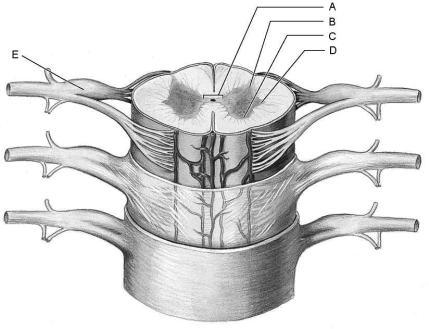 Figure 12.3Using Figure 12.3, match the following:
-Multipolar neurons are common here.
Figure 12.3Using Figure 12.3, match the following:
-Multipolar neurons are common here. (Short Answer)
4.8/5 (90)
(90) 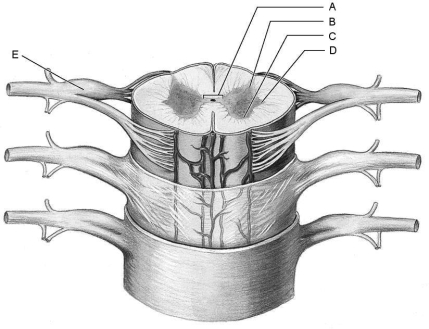 Figure 12.3Using Figure 12.3, match the following:
-Site containing central canal.
Figure 12.3Using Figure 12.3, match the following:
-Site containing central canal. (Short Answer)
4.9/5 (72)
(72) Ridges of tissue on the surface of the cerebral hemispheres are called .
(Multiple Choice)
5.0/5 (83)
(83) Figure 12.3Using Figure 12.3, match the following:
-The corpora quadrigemina are found in the .
Figure 12.3Using Figure 12.3, match the following:
-The corpora quadrigemina are found in the . (Short Answer)
4.9/5 (77)
(77) The area of the cortex that is responsible for sensations of the full bladder and the feeling that your lungs will burst when you hold your breath too long is the .
(Multiple Choice)
4.8/5 (85)
(85) Figure 12.3Using Figure 12.3, match the following:
-What is the limbic system?
Figure 12.3Using Figure 12.3, match the following:
-What is the limbic system? (Essay)
4.8/5 (76)
(76) Meningitis is the most accurate term for inflammation of neurons.
(True/False)
4.9/5 (89)
(89) Which of the following structures is probably not directly involved in memory?
(Multiple Choice)
4.9/5 (90)
(90) A disturbance of posture, muscle tremors at rest, and uncontrolled muscle contraction are all symptoms of damage to the basal nuclei.
(True/False)
4.9/5 (76)
(76) 
Filters
- Essay(0)
- Multiple Choice(0)
- Short Answer(0)
- True False(0)
- Matching(0)