



 Chat with AI
Exam 5: The Integumentary System

Exam 1: The Human Body: an Orientation100 Questions
Exam 2: Chemistry Comes Alive120 Questions
Exam 3: Cells: the Living Units119 Questions
Exam 4: Tissue: the Living Fabric97 Questions
Exam 5: The Integumentary System107 Questions
Exam 6: Bones and Skeletal Tissues94 Questions
Exam 7: The Skeleton102 Questions
Exam 8: Joints105 Questions
Exam 9: Muscles and Muscle Tissue109 Questions
Exam 10: The Muscular System109 Questions
Exam 11: Fundamentals of the Nervous System and Nervous Tissue95 Questions
Exam 12: The Central Nervous System132 Questions
Exam 13: The Peripheral Nervous System and Reflex Activity97 Questions
Exam 14: The Autonomic Nervous System96 Questions
Exam 15: The Special Senses127 Questions
Exam 16: The Endocrine System119 Questions
Exam 17: Blood99 Questions
Exam 18: The Cardiovascular System: the Heart94 Questions
Exam 19: The Cardiovascular System: Blood Vessels107 Questions
Exam 20: The Lymphatic System and Lymphoid Organs and Tissues95 Questions
Exam 21: The Immune System: Innate and Adaptive Body Defensives118 Questions
Exam 22: The Respiratory System120 Questions
Exam 23: The Digestive System145 Questions
Exam 24: Nutrition, Metabolism, and Body Temperature Regulation114 Questions
Exam 25: The Urinary System116 Questions
Exam 26: Fluid, Electrolyte, and Acid-Base Balance94 Questions
Exam 27: The Reproductive System126 Questions
Exam 28: Pregnancy and Human Development97 Questions
Exam 29: Heredity90 Questions
Select questions type


When an individual is exposed to extremely low air temperatures, the dermal blood vessels will dilate so that blood and heat will be dissipated.

Free
(True/False)
4.8/5  (67)
(67) Correct Answer: Verified
False
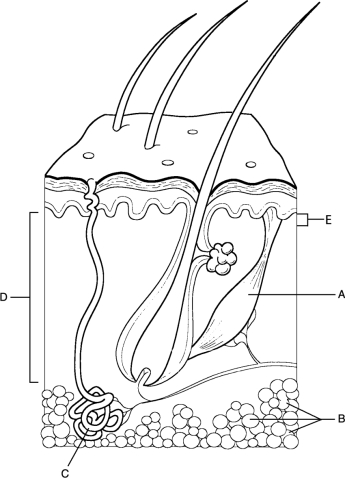 Figure 5.1Using Figure 5.1, match the following:
-Pulls the hair follicle into an upright position.
Figure 5.1Using Figure 5.1, match the following:
-Pulls the hair follicle into an upright position.Free
(Short Answer)
4.8/5 (81)
(81) Correct Answer:Verified
VerifiedA
Melanocytes and keratinocytes work together in protecting the skin from UV damage when keratinocytes .
(Multiple Choice)
4.8/5 (103)
(103) The integumentary system is protected by the action of cells that arise from bone marrow and migrate to the epidermis. Which of the following cells serve this function?
(Multiple Choice)
4.9/5 (67)
(67) Why are the apocrine sweat glands fairly unimportant in thermal regulation?
(Essay)
4.8/5 (93)
(93) Robert, a surfer, has a mole that has changed its shape and size. His doctor, applying the ABCD(E) rule, diagnosed a melanoma. What do the letters ABCD(E) represent?
(Essay)
4.8/5 (94)
(94) Billions of consumer dollars are spent for deodorants and antiperspirants each year. Explain the production of body odors frequently associated with axillary skin.
(Essay)
5.0/5 (83)
(83) There are several reasons other than genetics for hair loss. Identify some of these other factors.
(Essay)
4.7/5 (83)
(83) Which statement correctly explains why hair appears the way it does?
(Multiple Choice)
4.9/5 (60)
(60) The stratum corneum (outermost layer of skin) is a zone of approximately four layers of viable cells that are able to synthesize proteins that keep the outer layer of skin smooth and soft.
(True/False)
4.9/5 (76)
(76) In addition to protection (physical and chemical barrier), the skin serves other functions. Which of the following is another vital function of the skin?
(Multiple Choice)
4.9/5 (97)
(97) 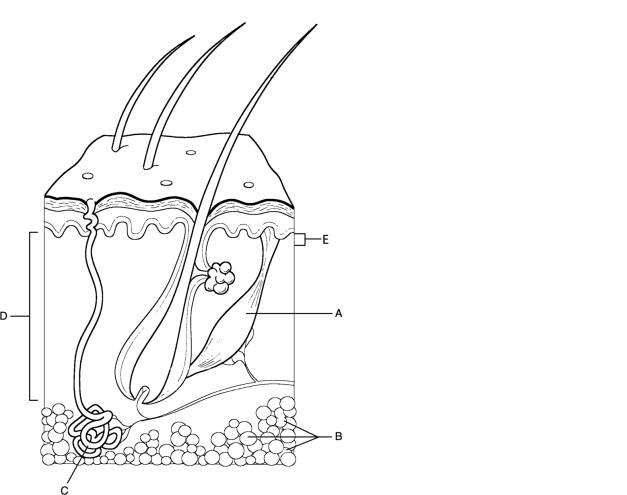 Figure 5.1Using Figure 5.1, match the following:
-How are burns commonly classified? Give an example.
Figure 5.1Using Figure 5.1, match the following:
-How are burns commonly classified? Give an example. (Essay)
4.8/5 (78)
(78) John, a younger teenager, notices that he is experiencing a lot of pimples and blackheads, which frequently become infected. What is causing this problem?
(Essay)
4.9/5 (83)
(83) The protein found in large amounts in the outermost layer of epidermal cells is collagen.
(True/False)
4.8/5 (87)
(87) Sudoriferous (sweat) glands are categorized as two distinct types. Which of the following are the two types of sweat glands?
(Multiple Choice)
4.9/5 (85)
(85) 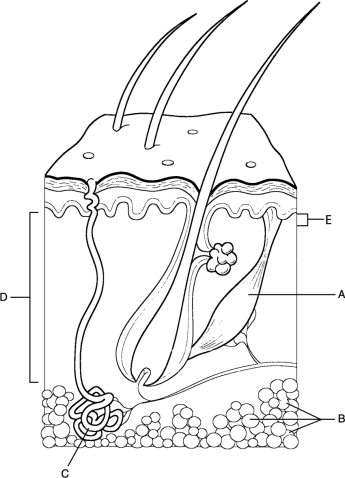 Figure 5.1Using Figure 5.1, match the following:
-Region that thickens markedly when one gains weight.
Figure 5.1Using Figure 5.1, match the following:
-Region that thickens markedly when one gains weight. (Short Answer)
4.8/5 (80)
(80) 
Filters
- Essay(0)
- Multiple Choice(0)
- Short Answer(0)
- True False(0)
- Matching(0)