



 Chat with AI
Exam 5: The Integumentary System

Exam 1: The Human Body: an Orientation100 Questions
Exam 2: Chemistry Comes Alive120 Questions
Exam 3: Cells: the Living Units119 Questions
Exam 4: Tissue: the Living Fabric97 Questions
Exam 5: The Integumentary System107 Questions
Exam 6: Bones and Skeletal Tissues94 Questions
Exam 7: The Skeleton102 Questions
Exam 8: Joints105 Questions
Exam 9: Muscles and Muscle Tissue109 Questions
Exam 10: The Muscular System109 Questions
Exam 11: Fundamentals of the Nervous System and Nervous Tissue95 Questions
Exam 12: The Central Nervous System132 Questions
Exam 13: The Peripheral Nervous System and Reflex Activity97 Questions
Exam 14: The Autonomic Nervous System96 Questions
Exam 15: The Special Senses127 Questions
Exam 16: The Endocrine System119 Questions
Exam 17: Blood99 Questions
Exam 18: The Cardiovascular System: the Heart94 Questions
Exam 19: The Cardiovascular System: Blood Vessels107 Questions
Exam 20: The Lymphatic System and Lymphoid Organs and Tissues95 Questions
Exam 21: The Immune System: Innate and Adaptive Body Defensives118 Questions
Exam 22: The Respiratory System120 Questions
Exam 23: The Digestive System145 Questions
Exam 24: Nutrition, Metabolism, and Body Temperature Regulation114 Questions
Exam 25: The Urinary System116 Questions
Exam 26: Fluid, Electrolyte, and Acid-Base Balance94 Questions
Exam 27: The Reproductive System126 Questions
Exam 28: Pregnancy and Human Development97 Questions
Exam 29: Heredity90 Questions
Select questions type


What is the most important role of the arrector pili muscles in humans?
(Multiple Choice)
4.9/5  (73)
(73) During the regressive phase of hair growth, the matrix is inactive and the follicle atrophies.
(True/False)
4.7/5 (85)
(85) The layer of the epidermis immediately under the stratum lucidum in thick skin is the
stratum _ .
(Short Answer)
4.8/5 (81)
(81) The Waldorf family was caught in a fire but escaped. Unfortunately, the father and daughter suffered burns. The father had second- degree burns on his entire chest, abdomen, and both arms, and third- degree burns on his entire left lower extremity. The daughter suffered first- degree burns on her whole head and neck and second- degree burns throughout both lower extremities.
a. What percentage of the father's body was covered by burns?
b. What percentage of the daughter's body received first- degree burns?
c. What part of the daughter's body has both the dermis and epidermis involved?
d. The father experiences a good deal of pain in the area of the chest and abdomen, but little pain in the leg. Why?
(Essay)
4.9/5 (67)
(67) Why should incisions be made parallel to cleavage lines produced by collagen fiber bundles rather than perpendicular to the lines?
(Essay)
4.8/5 (76)
(76) 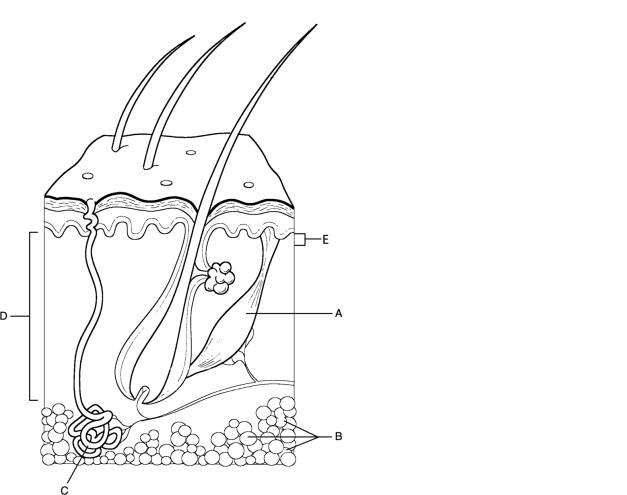 Figure 5.1Using Figure 5.1, match the following:
-What complications might be anticipated from the loss of large areas of skin surfaces?
Figure 5.1Using Figure 5.1, match the following:
-What complications might be anticipated from the loss of large areas of skin surfaces? (Essay)
4.9/5 (71)
(71) 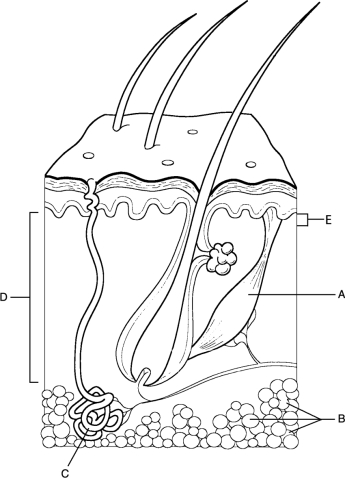 Figure 5.1Using Figure 5.1, match the following:
-Pigment- producing cells in the epidermis are .
Figure 5.1Using Figure 5.1, match the following:
-Pigment- producing cells in the epidermis are . (Short Answer)
4.8/5 (80)
(80) Explain why soap that has an alkaline base may not be healthy for some patients to use daily.
(Essay)
5.0/5 (78)
(78) Burns that result in injury to the epidermis and the upper regions of the dermis is called a burn.
(Short Answer)
4.9/5 (67)
(67) Which of the following is a skin sensory receptor for touch?
(Multiple Choice)
4.9/5 (65)
(65) The dermis has two major layers. Which layer constitutes 80% of the dermis and is responsible for the tension lines in the skin?
(Multiple Choice)
4.9/5 (74)
(74) 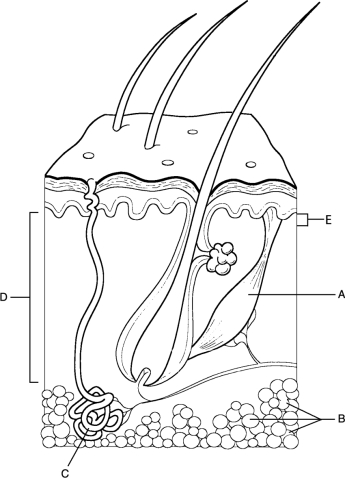 Figure 5.1Using Figure 5.1, match the following:
-Why is skin not considered an absolute heat barrier for the body?
Figure 5.1Using Figure 5.1, match the following:
-Why is skin not considered an absolute heat barrier for the body? (Essay)
4.9/5 (71)
(71) Apocrine glands, which begin to function at puberty under hormonal influence, seem to play little role in thermoregulation. Where would we find these glands in the human body?
(Multiple Choice)
4.7/5 (74)
(74) What is the function of skin dermal folds and deep skin creases?
(Short Answer)
4.9/5 (69)
(69) 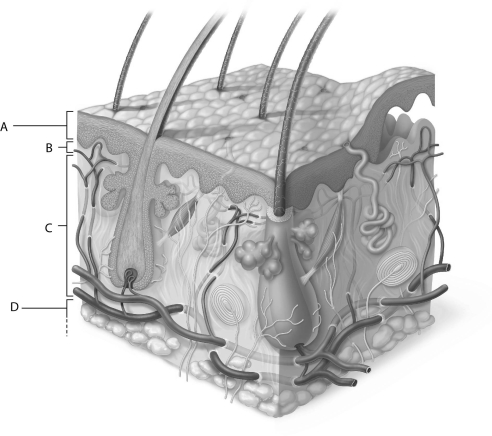 Figure 5.2Using Figure 5.2, match the following:
-Papillary layer of the dermis
Figure 5.2Using Figure 5.2, match the following:
-Papillary layer of the dermis (Short Answer)
4.8/5 (81)
(81) What is the first threat to life from a massive third- degree burn?
(Multiple Choice)
4.8/5 (77)
(77) The sebaceous glands are simple alveolar glands that secrete a substance known as sebum. The secretion of sebum is stimulated .
(Multiple Choice)
4.8/5 (79)
(79) 
Filters
- Essay(0)
- Multiple Choice(0)
- Short Answer(0)
- True False(0)
- Matching(0)