



 Chat with AI
Exam 5: The Integumentary System

Exam 1: The Human Body: an Orientation100 Questions
Exam 2: Chemistry Comes Alive120 Questions
Exam 3: Cells: the Living Units119 Questions
Exam 4: Tissue: the Living Fabric97 Questions
Exam 5: The Integumentary System107 Questions
Exam 6: Bones and Skeletal Tissues94 Questions
Exam 7: The Skeleton102 Questions
Exam 8: Joints105 Questions
Exam 9: Muscles and Muscle Tissue109 Questions
Exam 10: The Muscular System109 Questions
Exam 11: Fundamentals of the Nervous System and Nervous Tissue95 Questions
Exam 12: The Central Nervous System132 Questions
Exam 13: The Peripheral Nervous System and Reflex Activity97 Questions
Exam 14: The Autonomic Nervous System96 Questions
Exam 15: The Special Senses127 Questions
Exam 16: The Endocrine System119 Questions
Exam 17: Blood99 Questions
Exam 18: The Cardiovascular System: the Heart94 Questions
Exam 19: The Cardiovascular System: Blood Vessels107 Questions
Exam 20: The Lymphatic System and Lymphoid Organs and Tissues95 Questions
Exam 21: The Immune System: Innate and Adaptive Body Defensives118 Questions
Exam 22: The Respiratory System120 Questions
Exam 23: The Digestive System145 Questions
Exam 24: Nutrition, Metabolism, and Body Temperature Regulation114 Questions
Exam 25: The Urinary System116 Questions
Exam 26: Fluid, Electrolyte, and Acid-Base Balance94 Questions
Exam 27: The Reproductive System126 Questions
Exam 28: Pregnancy and Human Development97 Questions
Exam 29: Heredity90 Questions
Select questions type


The papillary layer of the dermis is connective tissue heavily invested with blood vessels. The superficial surface has structures called:
(Multiple Choice)
4.9/5  (88)
(88) Regardless of race, all human beings have about the same number of melanocytes.
(True/False)
4.8/5 (80)
(80) Betty, an 83 year old woman, is bedfast due to a severely broken hip. Unfortunately, she has developed a decubitus ulcer. What is a decubitus ulcer and what may have caused it to occur?
(Essay)
4.7/5 (77)
(77) Changes in the color of skin are often an indication of a homeostatic imbalance. Which of the following changes would suggest that a patient is suffering from Addison's disease?
(Multiple Choice)
4.8/5 (99)
(99) The temperature yesterday was an uncomfortable 98°F. You unwisely chose to play tennis at noon, counting on your body's internal defenses to protect you against heat exhaustion. How did your body respond to this distress?
(Essay)
4.8/5 (83)
(83) 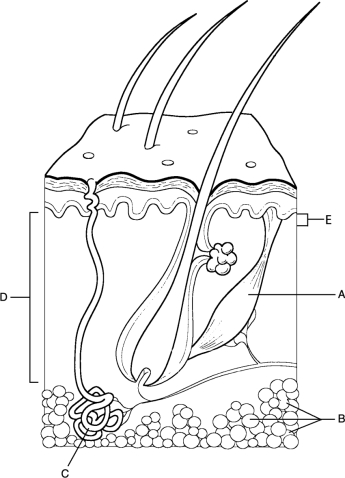 Figure 5.1Using Figure 5.1, match the following:
-Where capillary loops are found.
Figure 5.1Using Figure 5.1, match the following:
-Where capillary loops are found. (Short Answer)
4.8/5 (78)
(78) Balding men have tried all kinds of remedies, including hair transplants, to restore their lost locks. Explain the cause of male pattern baldness.
(Essay)
5.0/5 (78)
(78) When a patient is said to have "third- degree burns," this indicates that the patient has burns that cover approximately one- third or more of the body.
(True/False)
4.9/5 (101)
(101) The reason that the nail bed appears pink is the presence of a large number of melanocytes in the underlying dermis.
(True/False)
4.7/5 (75)
(75) 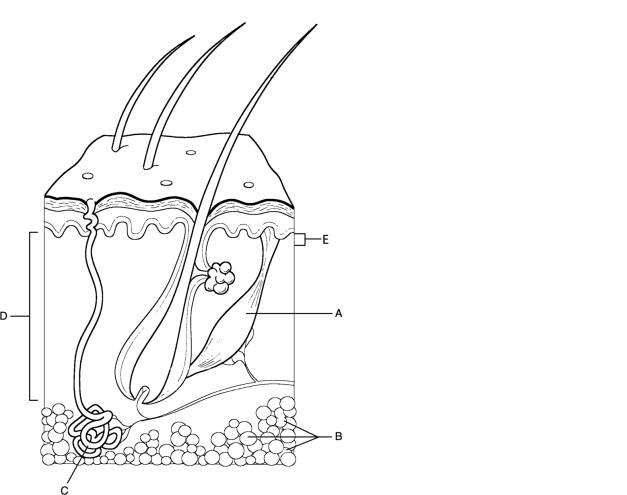 Figure 5.1Using Figure 5.1, match the following:
-Why is profuse sweating on a hot day good, and yet a potential problem?
Figure 5.1Using Figure 5.1, match the following:
-Why is profuse sweating on a hot day good, and yet a potential problem? (Essay)
5.0/5 (77)
(77) 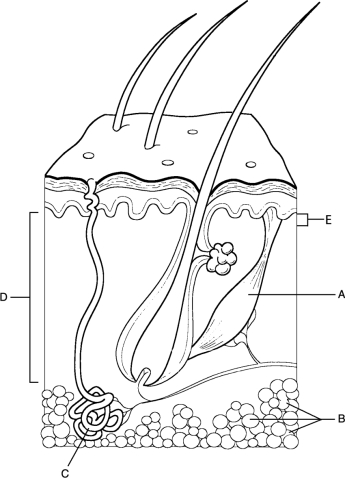 Figure 5.1Using Figure 5.1, match the following:
-Responsible for shock absorption and located in the hypodermis.
Figure 5.1Using Figure 5.1, match the following:
-Responsible for shock absorption and located in the hypodermis. (Short Answer)
4.8/5 (79)
(79) Figure 5.1Using Figure 5.1, match the following:
-Site of the dermal ridges that produce epidermal ridges on the epidermal surfaces of the fingers.
Figure 5.1Using Figure 5.1, match the following:
-Site of the dermal ridges that produce epidermal ridges on the epidermal surfaces of the fingers. (Short Answer)
4.9/5 (84)
(84) Which of the following cutaneous receptors is specialized for the reception of touch or light pressure?
(Multiple Choice)
4.9/5 (75)
(75) 
Filters
- Essay(0)
- Multiple Choice(0)
- Short Answer(0)
- True False(0)
- Matching(0)