



 Chat with AI
Exam 28: Pregnancy and Human Development

Exam 1: The Human Body: an Orientation100 Questions
Exam 2: Chemistry Comes Alive120 Questions
Exam 3: Cells: the Living Units119 Questions
Exam 4: Tissue: the Living Fabric97 Questions
Exam 5: The Integumentary System107 Questions
Exam 6: Bones and Skeletal Tissues94 Questions
Exam 7: The Skeleton102 Questions
Exam 8: Joints105 Questions
Exam 9: Muscles and Muscle Tissue109 Questions
Exam 10: The Muscular System109 Questions
Exam 11: Fundamentals of the Nervous System and Nervous Tissue95 Questions
Exam 12: The Central Nervous System132 Questions
Exam 13: The Peripheral Nervous System and Reflex Activity97 Questions
Exam 14: The Autonomic Nervous System96 Questions
Exam 15: The Special Senses127 Questions
Exam 16: The Endocrine System119 Questions
Exam 17: Blood99 Questions
Exam 18: The Cardiovascular System: the Heart94 Questions
Exam 19: The Cardiovascular System: Blood Vessels107 Questions
Exam 20: The Lymphatic System and Lymphoid Organs and Tissues95 Questions
Exam 21: The Immune System: Innate and Adaptive Body Defensives118 Questions
Exam 22: The Respiratory System120 Questions
Exam 23: The Digestive System145 Questions
Exam 24: Nutrition, Metabolism, and Body Temperature Regulation114 Questions
Exam 25: The Urinary System116 Questions
Exam 26: Fluid, Electrolyte, and Acid-Base Balance94 Questions
Exam 27: The Reproductive System126 Questions
Exam 28: Pregnancy and Human Development97 Questions
Exam 29: Heredity90 Questions
Select questions type


A 28- year- old woman has been in the first stage of labor for several hours. Her uterine contractions are weak, and her labor is not progressing normally. Because the woman insists upon a vaginal delivery, the physician orders that pitocin (a synthetic oxytocin) be infused. What will be the effect of pitocin? What is the normal mechanism by which oxytocin acts to promote birth?

Free
(Essay)
4.8/5  (71)
(71) Correct Answer: Verified
Pitocin will act on the placenta, stimulating production and release of prostaglandins. The pitocin and prostaglandins are powerful uterine muscle stimulants. Oxytocin normally causes frequent and vigorous contractions of the uterine wall.
The _ cells of the blastocyst will take part in placental formation.
Free
(Short Answer)
5.0/5 (71)
(71) Correct Answer:Verified
Verifiedtrophoblast
Neural tissue is formed by the _.
Free
(Multiple Choice)
4.9/5 (76)
(76) Correct Answer:Verified
VerifiedB
A blastocyst is a hollow ball of cells, while the morula is a solid ball of cells.
(True/False)
4.8/5 (86)
(86) A pregnancy test involves antibodies that detect GH levels in a woman's blood or urine.
(True/False)
4.8/5 (77)
(77) 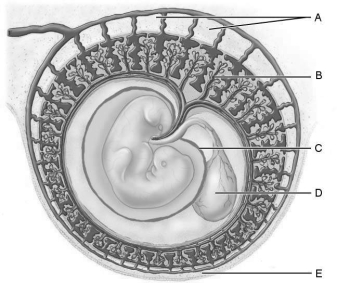 Figure 28.2Using Figure 28.2, match the following:
-The first "milk" the mother produces is called .
Figure 28.2Using Figure 28.2, match the following:
-The first "milk" the mother produces is called . (Short Answer)
4.9/5 (70)
(70) An episiotomy is an incision made to widen the vaginal orifice, aiding fetal expulsion.
(True/False)
4.8/5 (80)
(80) Proteases and acrosin are enzymes. How do they function in reproduction?
(Multiple Choice)
4.8/5 (73)
(73) A 30- year- old woman is admitted to the emergency room. Her husband, who rode in the ambulance with her, said that she had suddenly complained of severe pain in the right iliac region of her abdomen and then had collapsed. Upon examination, she was shown to have signs of internal hemorrhage and her abdominal muscles were rigid. Her menstrual history revealed that she had missed her last menstrual period. A diagnosis of ruptured tubal, or ectopic, pregnancy was made and surgery scheduled. What is an ectopic pregnancy, and why is it problematic?
(Essay)
4.9/5 (75)
(75) Cleavage as part of embryonic development is distinctive because it involves .
(Multiple Choice)
4.9/5 (78)
(78) Conceptus is a term used to describe the developing human offspring.
(True/False)
5.0/5 (70)
(70) Figure 28.2Using Figure 28.2, match the following:
-Site of early blood cell production, and forms part of the gut (digestive tube).
Figure 28.2Using Figure 28.2, match the following:
-Site of early blood cell production, and forms part of the gut (digestive tube). (Short Answer)
5.0/5 (79)
(79) The lactation nurse visits a first- time mother six hours after her delivery of a healthy 8- pound boy. The patient is giving the baby boy a bottle of sugar water. She tells the lactation nurse that she does not seem to be producing milk. What should the nurse say to the patient?
(Essay)
4.9/5 (87)
(87) is a tissue with star- shaped cells that are free to migrate widely throughout the embryo.
(Short Answer)
4.9/5 (81)
(81) A pregnant woman urinates more often than usual because the uterus compresses the bladder, and she must also dispose of fetal metabolic wastes.
(True/False)
4.7/5 (88)
(88) Select the correct statement about the special fetal blood vessels.
(Multiple Choice)
4.9/5 (67)
(67) Which of the following is not usually considered a teratogen?
(Multiple Choice)
4.9/5 (78)
(78) 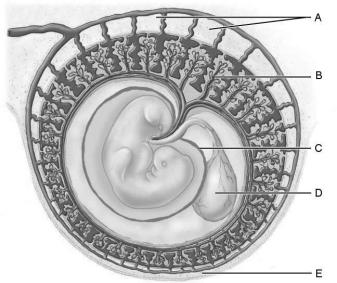 Figure 28.2Using Figure 28.2, match the following:
-Extraembryonic membrane that develops from the trophoblast and some extraembryonic mesoderm, and forms part of the placenta.
Figure 28.2Using Figure 28.2, match the following:
-Extraembryonic membrane that develops from the trophoblast and some extraembryonic mesoderm, and forms part of the placenta. (Short Answer)
4.9/5 (75)
(75) 
Filters
- Essay(0)
- Multiple Choice(0)
- Short Answer(0)
- True False(0)
- Matching(0)