



 Chat with AI
Exam 28: Pregnancy and Human Development

Exam 1: The Human Body: an Orientation100 Questions
Exam 2: Chemistry Comes Alive120 Questions
Exam 3: Cells: the Living Units119 Questions
Exam 4: Tissue: the Living Fabric97 Questions
Exam 5: The Integumentary System107 Questions
Exam 6: Bones and Skeletal Tissues94 Questions
Exam 7: The Skeleton102 Questions
Exam 8: Joints105 Questions
Exam 9: Muscles and Muscle Tissue109 Questions
Exam 10: The Muscular System109 Questions
Exam 11: Fundamentals of the Nervous System and Nervous Tissue95 Questions
Exam 12: The Central Nervous System132 Questions
Exam 13: The Peripheral Nervous System and Reflex Activity97 Questions
Exam 14: The Autonomic Nervous System96 Questions
Exam 15: The Special Senses127 Questions
Exam 16: The Endocrine System119 Questions
Exam 17: Blood99 Questions
Exam 18: The Cardiovascular System: the Heart94 Questions
Exam 19: The Cardiovascular System: Blood Vessels107 Questions
Exam 20: The Lymphatic System and Lymphoid Organs and Tissues95 Questions
Exam 21: The Immune System: Innate and Adaptive Body Defensives118 Questions
Exam 22: The Respiratory System120 Questions
Exam 23: The Digestive System145 Questions
Exam 24: Nutrition, Metabolism, and Body Temperature Regulation114 Questions
Exam 25: The Urinary System116 Questions
Exam 26: Fluid, Electrolyte, and Acid-Base Balance94 Questions
Exam 27: The Reproductive System126 Questions
Exam 28: Pregnancy and Human Development97 Questions
Exam 29: Heredity90 Questions
Select questions type


Which of the following is true in reference to what may pass through the placental barriers?
(Multiple Choice)
4.7/5  (73)
(73) Which body system of a pregnant woman undergoes the most dramatic physiological changes during pregnancy?
(Multiple Choice)
5.0/5 (77)
(77) What destroys the sperm receptors on the surface of the oocyte?
(Multiple Choice)
4.8/5 (80)
(80) Briefly describe the events leading to the implantation of the blastocyst in the uterus, including how it is nourished.
(Essay)
4.7/5 (79)
(79) The period from fertilization through week eight is called the embryonic period.
(True/False)
4.8/5 (89)
(89) Which of the following events does not occur during the first 8 weeks of development?
(Multiple Choice)
4.8/5 (90)
(90) Briefly describe the physiological changes occurring in the mother during pregnancy.
(Essay)
4.8/5 (78)
(78) 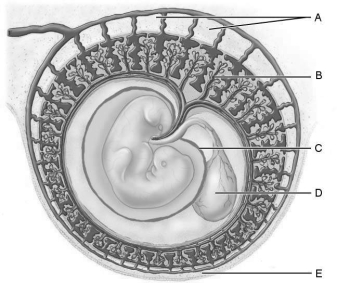 Figure 28.2Using Figure 28.2, match the following:
-Which cells invade the endometrium, digesting the uterine cells they contact, so that implantation of the blastocyst can occur?
Figure 28.2Using Figure 28.2, match the following:
-Which cells invade the endometrium, digesting the uterine cells they contact, so that implantation of the blastocyst can occur? (Short Answer)
4.7/5 (93)
(93) Milk ejection or letdown reflex is stimulated by which of the following hormones associated with pregnancy?
(Multiple Choice)
4.8/5 (67)
(67) A 19- year- old, single, sexually active college student, who has not used birth control on a regular basis, is in her first trimester of pregnancy. She is at the OB/GYN clinic for her first prenatal visit. In assessing her nutrition, the nurse discovers that the patient drinks heavily on a regular basis. She also states she does not like milk. What information should the nurse give the patient regarding nutrition?
(Essay)
4.9/5 (79)
(79) Surfactant production in premature infants is rarely a factor in providing normal respiratory activity.
(True/False)
4.9/5 (89)
(89) 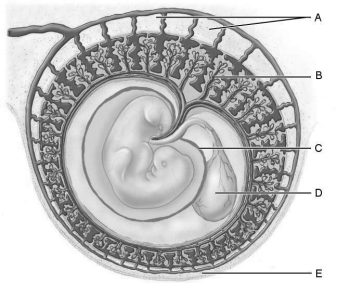 Figure 28.2Using Figure 28.2, match the following:
-The part of the endometrium that surrounds the uterine cavity face of the implanted embryo.
Figure 28.2Using Figure 28.2, match the following:
-The part of the endometrium that surrounds the uterine cavity face of the implanted embryo. (Short Answer)
4.8/5 (76)
(76) 
Filters
- Essay(0)
- Multiple Choice(0)
- Short Answer(0)
- True False(0)
- Matching(0)