



 Chat with AI
Exam 23: The Digestive System

Exam 1: The Human Body: an Orientation100 Questions
Exam 2: Chemistry Comes Alive120 Questions
Exam 3: Cells: the Living Units119 Questions
Exam 4: Tissue: the Living Fabric97 Questions
Exam 5: The Integumentary System107 Questions
Exam 6: Bones and Skeletal Tissues94 Questions
Exam 7: The Skeleton102 Questions
Exam 8: Joints105 Questions
Exam 9: Muscles and Muscle Tissue109 Questions
Exam 10: The Muscular System109 Questions
Exam 11: Fundamentals of the Nervous System and Nervous Tissue95 Questions
Exam 12: The Central Nervous System132 Questions
Exam 13: The Peripheral Nervous System and Reflex Activity97 Questions
Exam 14: The Autonomic Nervous System96 Questions
Exam 15: The Special Senses127 Questions
Exam 16: The Endocrine System119 Questions
Exam 17: Blood99 Questions
Exam 18: The Cardiovascular System: the Heart94 Questions
Exam 19: The Cardiovascular System: Blood Vessels107 Questions
Exam 20: The Lymphatic System and Lymphoid Organs and Tissues95 Questions
Exam 21: The Immune System: Innate and Adaptive Body Defensives118 Questions
Exam 22: The Respiratory System120 Questions
Exam 23: The Digestive System145 Questions
Exam 24: Nutrition, Metabolism, and Body Temperature Regulation114 Questions
Exam 25: The Urinary System116 Questions
Exam 26: Fluid, Electrolyte, and Acid-Base Balance94 Questions
Exam 27: The Reproductive System126 Questions
Exam 28: Pregnancy and Human Development97 Questions
Exam 29: Heredity90 Questions
Select questions type


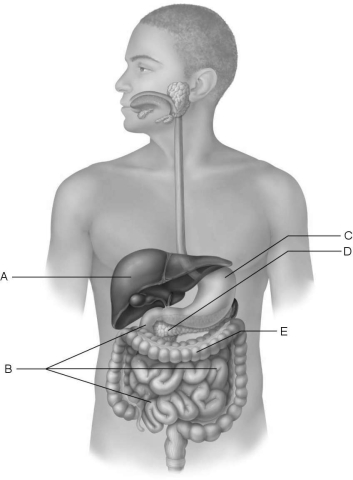 Figure 23.3Using Figure 23.3, match the following:
-Main function is to filter and process the nutrient- rich blood delivered to it.
Figure 23.3Using Figure 23.3, match the following:
-Main function is to filter and process the nutrient- rich blood delivered to it.
Free
(Short Answer)
5.0/5  (76)
(76) Correct Answer: Verified
A
How is salivation controlled?
Free
(Essay)
4.9/5 (85)
(85) Correct Answer:Verified
VerifiedWhen we ingest food, chemoreceptors and pressoreceptors in the mouth send signals to the salivatory nuclei in the brain stem. The parasympathetic nervous system activity increases and motor fibers trigger the increase in serous, enzyme- rich saliva.
 Figure 23.2Using Figure 23.2, match the following:
-Structures that increase the absorptive area of the small intestine.
Figure 23.2Using Figure 23.2, match the following:
-Structures that increase the absorptive area of the small intestine.Free
(Short Answer)
4.9/5 (102)
(102) Correct Answer:Verified
VerifiedA
The intrinsic ability of visceral smooth muscle to exhibit the stress- relaxation response is termed plasticity.
(True/False)
4.8/5 (92)
(92) 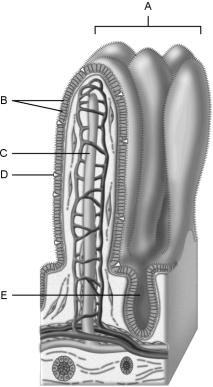 Figure 23.2Using Figure 23.2, match the following:
-Paneth cells are found here.
Figure 23.2Using Figure 23.2, match the following:
-Paneth cells are found here. (Short Answer)
4.9/5 (83)
(83) If an incision has to be made in the small intestine to remove an obstruction, the first layer of tissue to be cut is the .
(Multiple Choice)
4.8/5 (82)
(82) Select the correct statement about the regulation of gastric secretion.
(Multiple Choice)
4.9/5 (78)
(78) Name the three pairs of major salivary glands. Describe their relative locations and their microscopic differences.
(Essay)
5.0/5 (80)
(80)  Figure 23.1Using Figure 23.1, match the following:
-Continuation of the mesentery.
Figure 23.1Using Figure 23.1, match the following:
-Continuation of the mesentery. (Short Answer)
4.9/5 (81)
(81) A woman is brought to an emergency room complaining of severe pain in her left iliac region. She claims previous episodes and says that the condition is worse when she is constipated, and is relieved by defecation. A large, tender mass is palpated in the left iliac fossa and a barium study reveals a large number of diverticula in her descending and sigmoid colon. What are diverticula, and what is believed to promote their formation? Does this woman have diverticulitis or diverticulosis? Explain.
(Essay)
4.8/5 (74)
(74) Peyer's patches are found in the submucosa of the distal end of the small intestine.
(True/False)
4.7/5 (79)
(79) The capillaries that nourish the epithelium and absorb digested nutrients lie in the .
(Multiple Choice)
4.9/5 (73)
(73)  Figure 23.3Using Figure 23.3, match the following:
-Increases surface area for absorption via villi and microvilli.
Figure 23.3Using Figure 23.3, match the following:
-Increases surface area for absorption via villi and microvilli. (Short Answer)
4.7/5 (91)
(91) The dental formula for an adult is 2- 1- 2- 3. What does the 1 stand for?
(Multiple Choice)
4.8/5 (78)
(78) The stomach's contractile rhythm is set by pacemaker cells found in the spinal cord.
(True/False)
4.9/5 (80)
(80) Which of the following is not characteristic of the large intestine? It .
(Multiple Choice)
4.8/5 (84)
(84) A baby is admitted to the hospital with a history of projectile vomiting after each feeding. On examination, it is found that the sphincter controlling food passage from the stomach to the duodenum is thickened and does not open readily. Because of the baby's loss of gastric juice, his blood probably indicates .
(Multiple Choice)
4.8/5 (74)
(74)  Figure 23.3Using Figure 23.3, match the following:
-Contains the brush border enzymes that complete digestion of carbohydrates and proteins.
Figure 23.3Using Figure 23.3, match the following:
-Contains the brush border enzymes that complete digestion of carbohydrates and proteins. (Short Answer)
5.0/5 (92)
(92) 
Filters
- Essay(0)
- Multiple Choice(0)
- Short Answer(0)
- True False(0)
- Matching(0)