



 Chat with AI
Exam 23: The Digestive System

Exam 1: The Human Body: an Orientation100 Questions
Exam 2: Chemistry Comes Alive120 Questions
Exam 3: Cells: the Living Units119 Questions
Exam 4: Tissue: the Living Fabric97 Questions
Exam 5: The Integumentary System107 Questions
Exam 6: Bones and Skeletal Tissues94 Questions
Exam 7: The Skeleton102 Questions
Exam 8: Joints105 Questions
Exam 9: Muscles and Muscle Tissue109 Questions
Exam 10: The Muscular System109 Questions
Exam 11: Fundamentals of the Nervous System and Nervous Tissue95 Questions
Exam 12: The Central Nervous System132 Questions
Exam 13: The Peripheral Nervous System and Reflex Activity97 Questions
Exam 14: The Autonomic Nervous System96 Questions
Exam 15: The Special Senses127 Questions
Exam 16: The Endocrine System119 Questions
Exam 17: Blood99 Questions
Exam 18: The Cardiovascular System: the Heart94 Questions
Exam 19: The Cardiovascular System: Blood Vessels107 Questions
Exam 20: The Lymphatic System and Lymphoid Organs and Tissues95 Questions
Exam 21: The Immune System: Innate and Adaptive Body Defensives118 Questions
Exam 22: The Respiratory System120 Questions
Exam 23: The Digestive System145 Questions
Exam 24: Nutrition, Metabolism, and Body Temperature Regulation114 Questions
Exam 25: The Urinary System116 Questions
Exam 26: Fluid, Electrolyte, and Acid-Base Balance94 Questions
Exam 27: The Reproductive System126 Questions
Exam 28: Pregnancy and Human Development97 Questions
Exam 29: Heredity90 Questions
Select questions type


Short- chain triglycerides found in foods such as butterfat molecules in milk are split by a specific enzyme in preparation for absorption. Which of the following enzymes is responsible?
(Multiple Choice)
4.9/5  (86)
(86) The circular folds of the small intestine enhance absorption by causing the chyme to spiral, rather than to move in a straight line, as it passes through the small intestine.
(True/False)
4.8/5 (76)
(76) 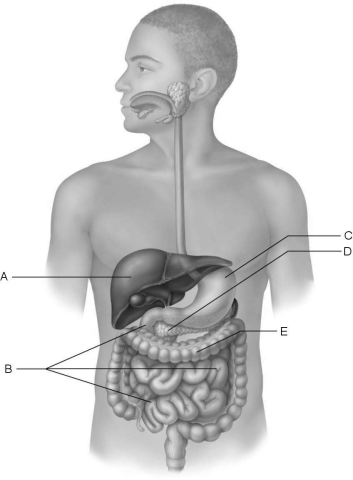 Figure 23.3Using Figure 23.3, match the following:
-Why is it necessary for the stomach contents to be so acidic? How does the stomach protect itself from digestion?
Figure 23.3Using Figure 23.3, match the following:
-Why is it necessary for the stomach contents to be so acidic? How does the stomach protect itself from digestion? (Essay)
4.8/5 (86)
(86) A patient has esophageal cancer and must have a feeding tube inserted. The nurse tells the patient that the tube will be inserted surgically into the duodenum. The patient's wife asks why the tube will not be inserted into the stomach. What should the nurse say?
(Essay)
4.8/5 (91)
(91) 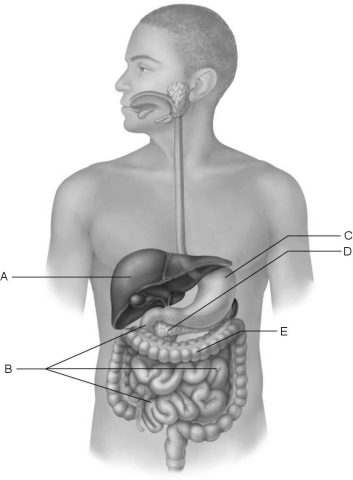 Figure 23.3Using Figure 23.3, match the following:
-Produces a mucoid barrier to prevent self- digestion.
Figure 23.3Using Figure 23.3, match the following:
-Produces a mucoid barrier to prevent self- digestion. (Short Answer)
4.9/5 (75)
(75) 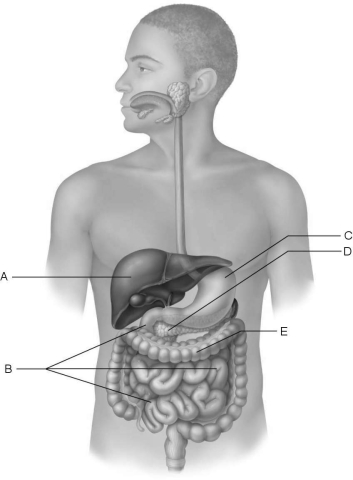 Figure 23.3Using Figure 23.3, match the following:
-Receives blood via the hepatic portal system.
Figure 23.3Using Figure 23.3, match the following:
-Receives blood via the hepatic portal system. (Short Answer)
4.8/5 (65)
(65) 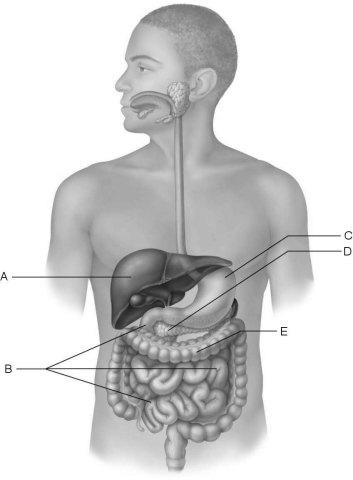 Figure 23.3Using Figure 23.3, match the following:
-Only digestive structure with three muscle layers.
Figure 23.3Using Figure 23.3, match the following:
-Only digestive structure with three muscle layers. (Short Answer)
4.8/5 (84)
(84)  Figure 23.1Using Figure 23.1, match the following:
-Smooth muscle layer.
Figure 23.1Using Figure 23.1, match the following:
-Smooth muscle layer. (Short Answer)
4.8/5 (72)
(72) A 45- year- old patient was admitted to the hospital with a diagnosis of cirrhosis of the liver. He is thin and malnourished. His abdomen is very large due to an accumulation of fluid in the abdominal cavity. His lower extremities are very swollen. Explain why these changes have occurred.
(Essay)
4.8/5 (89)
(89) 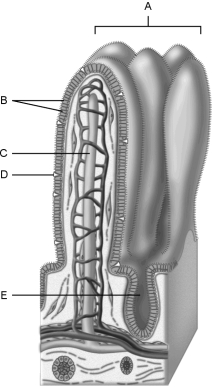 Figure 23.2Using Figure 23.2, match the following:
-Absorptive cells that line the intestinal tract.
Figure 23.2Using Figure 23.2, match the following:
-Absorptive cells that line the intestinal tract. (Short Answer)
4.7/5 (91)
(91) You have just eaten a meal high in complex carbohydrates. Which of the following enzymes will help to digest the meal?
(Multiple Choice)
4.9/5 (68)
(68) How are most nutrients absorbed through the mucosa of the intestinal villa?
(Multiple Choice)
4.9/5 (75)
(75) The contains lobules with sinusoids (lined with macrophages) that lead to a central venous structure.
(Multiple Choice)
4.8/5 (68)
(68) 
Filters
- Essay(0)
- Multiple Choice(0)
- Short Answer(0)
- True False(0)
- Matching(0)