



 Chat with AI
Exam 22: The Respiratory System

Exam 1: The Human Body: an Orientation100 Questions
Exam 2: Chemistry Comes Alive120 Questions
Exam 3: Cells: the Living Units119 Questions
Exam 4: Tissue: the Living Fabric97 Questions
Exam 5: The Integumentary System107 Questions
Exam 6: Bones and Skeletal Tissues94 Questions
Exam 7: The Skeleton102 Questions
Exam 8: Joints105 Questions
Exam 9: Muscles and Muscle Tissue109 Questions
Exam 10: The Muscular System109 Questions
Exam 11: Fundamentals of the Nervous System and Nervous Tissue95 Questions
Exam 12: The Central Nervous System132 Questions
Exam 13: The Peripheral Nervous System and Reflex Activity97 Questions
Exam 14: The Autonomic Nervous System96 Questions
Exam 15: The Special Senses127 Questions
Exam 16: The Endocrine System119 Questions
Exam 17: Blood99 Questions
Exam 18: The Cardiovascular System: the Heart94 Questions
Exam 19: The Cardiovascular System: Blood Vessels107 Questions
Exam 20: The Lymphatic System and Lymphoid Organs and Tissues95 Questions
Exam 21: The Immune System: Innate and Adaptive Body Defensives118 Questions
Exam 22: The Respiratory System120 Questions
Exam 23: The Digestive System145 Questions
Exam 24: Nutrition, Metabolism, and Body Temperature Regulation114 Questions
Exam 25: The Urinary System116 Questions
Exam 26: Fluid, Electrolyte, and Acid-Base Balance94 Questions
Exam 27: The Reproductive System126 Questions
Exam 28: Pregnancy and Human Development97 Questions
Exam 29: Heredity90 Questions
Select questions type


The law that applies to the amount of CO2 you could dissolve in a Pepsi is called _ law.

Free
(Short Answer)
4.8/5  (78)
(78) Correct Answer: Verified
Henry's
A smoker sees his doctor because he had a persistent cough for months and is short of breath after very little exertion. What diagnosis will the doctor make and what can the person expect if he does not quit smoking?
Free
(Essay)
4.8/5 (77)
(77) Correct Answer:Verified
VerifiedThe person is suffering from chronic bronchitis, which causes the dyspnea and coughing. If he does not stop smoking, he can expect frequent pulmonary infections, more coughing, and progressively worse dyspnea (all symptoms of chronic obstructive pulmonary disease). Ultimately, he can expect to develop hypoxemia, CO2 retention, and respiratory acidosis. He may develop emphysema or lung cancer.
Which of the following does not influence hemoglobin saturation?
Free
(Multiple Choice)
4.9/5 (77)
(77) Correct Answer:Verified
VerifiedD
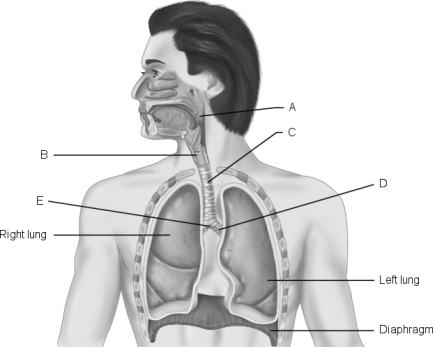 Figure 22.1Using Figure 22.1, match the following:
-Terminal bronchioles are lined with epithelium.
Figure 22.1Using Figure 22.1, match the following:
-Terminal bronchioles are lined with epithelium. (Short Answer)
5.0/5 (84)
(84) The walls of the alveoli are composed of two types of cells, type I and type II. The function of type II is to .
(Multiple Choice)
4.9/5 (79)
(79) The major nonelastic source of resistance to air flow in the respiratory passageways is .
(Multiple Choice)
5.0/5 (76)
(76) A disorder characterized by permanent enlargement of the alveoli accompanied by destruction of the alveolar walls is .
(Short Answer)
4.7/5 (79)
(79) Select the correct statement about oxygen transport in blood.
(Multiple Choice)
4.8/5 (88)
(88) Surfactant helps to prevent the alveoli from collapsing by .
(Multiple Choice)
4.8/5 (72)
(72) Because the lungs are filled with fluid during fetal life, which of the following statements is true regarding respiratory exchange?
(Multiple Choice)
4.9/5 (78)
(78) Most inspired particles such as dust fail to reach the lungs because of the _ .
(Multiple Choice)
4.8/5 (85)
(85) During normal quiet breathing, approximately 750 ml of air moves into and out of the lungs with each breath.
(True/False)
4.9/5 (75)
(75) Select the correct statement about the neural mechanisms of respiratory control.
(Multiple Choice)
4.8/5 (79)
(79) Dalton's law states that the total pressure exerted by a mixture of gases is the sum of the pressures exerted independently by each gas in the mixture.
(True/False)
4.8/5 (81)
(81) The alveolar ventilation rate is the best index of effective ventilation.
(True/False)
4.8/5 (69)
(69) 
Filters
- Essay(0)
- Multiple Choice(0)
- Short Answer(0)
- True False(0)
- Matching(0)