



 Chat with AI
Exam 22: The Respiratory System

Exam 1: The Human Body: an Orientation100 Questions
Exam 2: Chemistry Comes Alive120 Questions
Exam 3: Cells: the Living Units119 Questions
Exam 4: Tissue: the Living Fabric97 Questions
Exam 5: The Integumentary System107 Questions
Exam 6: Bones and Skeletal Tissues94 Questions
Exam 7: The Skeleton102 Questions
Exam 8: Joints105 Questions
Exam 9: Muscles and Muscle Tissue109 Questions
Exam 10: The Muscular System109 Questions
Exam 11: Fundamentals of the Nervous System and Nervous Tissue95 Questions
Exam 12: The Central Nervous System132 Questions
Exam 13: The Peripheral Nervous System and Reflex Activity97 Questions
Exam 14: The Autonomic Nervous System96 Questions
Exam 15: The Special Senses127 Questions
Exam 16: The Endocrine System119 Questions
Exam 17: Blood99 Questions
Exam 18: The Cardiovascular System: the Heart94 Questions
Exam 19: The Cardiovascular System: Blood Vessels107 Questions
Exam 20: The Lymphatic System and Lymphoid Organs and Tissues95 Questions
Exam 21: The Immune System: Innate and Adaptive Body Defensives118 Questions
Exam 22: The Respiratory System120 Questions
Exam 23: The Digestive System145 Questions
Exam 24: Nutrition, Metabolism, and Body Temperature Regulation114 Questions
Exam 25: The Urinary System116 Questions
Exam 26: Fluid, Electrolyte, and Acid-Base Balance94 Questions
Exam 27: The Reproductive System126 Questions
Exam 28: Pregnancy and Human Development97 Questions
Exam 29: Heredity90 Questions
Select questions type


The Hering- Breuer reflex is a potentially dangerous response that may cause overinflation of the lung.
(True/False)
4.9/5  (92)
(92) The Bohr effect refers to the unloading of in a RBC due to declining pH.
(Short Answer)
4.8/5 (79)
(79) Which of the choices below describes the forces that act to pull the lungs away from the thorax wall and thus collapse the lungs?
(Multiple Choice)
4.9/5 (84)
(84) Briefly differentiate between atmospheric pressure, intrapulmonary pressure, and intrapleural pressure. Which of these is always negative in a healthy individual during normal breathing? What happens if intrapleural pressure becomes equal to atmospheric pressure?
(Essay)
4.8/5 (75)
(75) Unlike inspiration, expiration is a passive act because no muscular contractions are involved. Expiration, however, depends on two factors. Which of the choices below lists those two factors?
(Multiple Choice)
4.8/5 (72)
(72) John has undergone surgery and has developed pneumonia. He also has a history of emphysema. Which symptoms and signs would the nurse expect to find?
(Essay)
4.9/5 (91)
(91) Smoking diminishes ciliary action and eventually destroys the cilia.
(True/False)
4.9/5 (79)
(79) In chronic bronchitis, mucus production is decreased and this leads to the inflammation and fibrosis of the mucosal lining of the bronchial tree.
(True/False)
5.0/5 (61)
(61) Ventilation perfusion coupling means that more blood flows past functional alveoli than past nonfunctional alveoli.
(True/False)
4.8/5 (84)
(84) 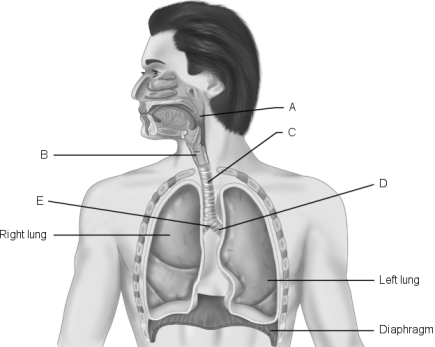 Figure 22.1Using Figure 22.1, match the following:
-Carina of trachea.
Figure 22.1Using Figure 22.1, match the following:
-Carina of trachea. (Short Answer)
5.0/5 (91)
(91) The largest amount of carbon dioxide is transported in the bloodstream in the form of carbonic anhydrase.
(True/False)
4.9/5 (95)
(95)  Figure 22.1Using Figure 22.1, match the following:
-Larynx.
The statement, "in a mixture of gases, the total pressure is the sum of the individual partial pressures of gases in the mixture" paraphrases .
(Multiple Choice)
4.9/5 (83)
(83) The most powerful respiratory stimulus for breathing in a healthy person is .
(Multiple Choice)
4.9/5 (71)
(71) A premature baby usually has difficulty breathing. However, the respiratory system is developed enough for survival by _.
(Multiple Choice)
4.8/5 (83)
(83) 
Filters
- Essay(0)
- Multiple Choice(0)
- Short Answer(0)
- True False(0)
- Matching(0)