



 Chat with AI
Exam 22: The Respiratory System

Exam 1: The Human Body: an Orientation100 Questions
Exam 2: Chemistry Comes Alive120 Questions
Exam 3: Cells: the Living Units119 Questions
Exam 4: Tissue: the Living Fabric97 Questions
Exam 5: The Integumentary System107 Questions
Exam 6: Bones and Skeletal Tissues94 Questions
Exam 7: The Skeleton102 Questions
Exam 8: Joints105 Questions
Exam 9: Muscles and Muscle Tissue109 Questions
Exam 10: The Muscular System109 Questions
Exam 11: Fundamentals of the Nervous System and Nervous Tissue95 Questions
Exam 12: The Central Nervous System132 Questions
Exam 13: The Peripheral Nervous System and Reflex Activity97 Questions
Exam 14: The Autonomic Nervous System96 Questions
Exam 15: The Special Senses127 Questions
Exam 16: The Endocrine System119 Questions
Exam 17: Blood99 Questions
Exam 18: The Cardiovascular System: the Heart94 Questions
Exam 19: The Cardiovascular System: Blood Vessels107 Questions
Exam 20: The Lymphatic System and Lymphoid Organs and Tissues95 Questions
Exam 21: The Immune System: Innate and Adaptive Body Defensives118 Questions
Exam 22: The Respiratory System120 Questions
Exam 23: The Digestive System145 Questions
Exam 24: Nutrition, Metabolism, and Body Temperature Regulation114 Questions
Exam 25: The Urinary System116 Questions
Exam 26: Fluid, Electrolyte, and Acid-Base Balance94 Questions
Exam 27: The Reproductive System126 Questions
Exam 28: Pregnancy and Human Development97 Questions
Exam 29: Heredity90 Questions
Select questions type


Changes in arterial pH can modify respiration rate and rhythm even when carbon dioxide and oxygen levels are normal.
(True/False)
4.9/5  (73)
(73) The cartilaginous flap that closes the trachea during swallowing is called the _.
(Short Answer)
4.9/5 (81)
(81)  Figure 22.2Using Figure 22.2, match the following:
-Tidal volume.
Figure 22.2Using Figure 22.2, match the following:
-Tidal volume. (Short Answer)
4.9/5 (72)
(72) Which of the choices below determines the direction of respiratory gas movement?
(Multiple Choice)
4.8/5 (78)
(78) If a baby is born at 28 weeks' gestation, what major problem will the doctors look for?
(Essay)
4.8/5 (89)
(89)  Figure 22.2Using Figure 22.2, match the following:
-Inspiratory reserve volume.
Figure 22.2Using Figure 22.2, match the following:
-Inspiratory reserve volume. (Short Answer)
4.9/5 (74)
(74) 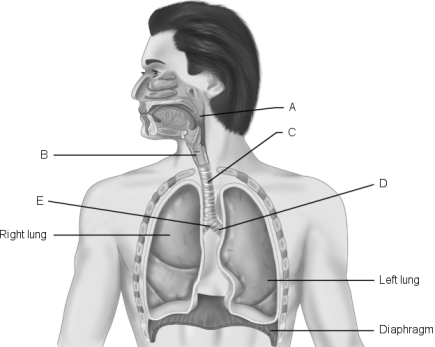 Figure 22.1Using Figure 22.1, match the following:
-Pharynx.
Factors that influence the rate and depth of breathing include .
(Multiple Choice)
4.7/5 (70)
(70) With the Bohr effect, more oxygen is released because a(n) .
(Multiple Choice)
4.8/5 (74)
(74) For gas exchange to be efficient, the respiratory membrane must be .
(Multiple Choice)
4.9/5 (89)
(89) The erythrocyte count increases after a while when an individual goes from a low to a high altitude because the .
(Multiple Choice)
4.9/5 (88)
(88) The amount of air that can be inspired above the tidal volume is called _.
(Multiple Choice)
4.8/5 (68)
(68) The partial pressure gradient for oxygen (in the body) is much steeper than that for carbon dioxide. Explain how equal amounts of these two gases can be exchanged (in a given time interval) in the lungs and at the tissues.
(Essay)
4.8/5 (78)
(78) The average individual has 500 ml of residual volume in his lungs.
(True/False)
4.7/5 (91)
(91)  Figure 22.1Using Figure 22.1, match the following:
-The archway in the back of the throat is called the .
Figure 22.1Using Figure 22.1, match the following:
-The archway in the back of the throat is called the . (Short Answer)
4.9/5 (68)
(68) Nasal conchae mainly work on inhalation to warm and moisten air. They serve minor functions for exhalation.
(True/False)
4.9/5 (86)
(86) As carbon dioxide enters systemic blood, it causes more oxygen to dissociate from hemoglobin (the Haldane effect), which in turn allows more CO2 to combine with hemoglobin and more bicarbonate ions to be generated (the Bohr effect).
(True/False)
4.9/5 (84)
(84) 
Filters
- Essay(0)
- Multiple Choice(0)
- Short Answer(0)
- True False(0)
- Matching(0)