



 Chat with AI
Exam 22: The Respiratory System

Exam 1: The Human Body: an Orientation100 Questions
Exam 2: Chemistry Comes Alive120 Questions
Exam 3: Cells: the Living Units119 Questions
Exam 4: Tissue: the Living Fabric97 Questions
Exam 5: The Integumentary System107 Questions
Exam 6: Bones and Skeletal Tissues94 Questions
Exam 7: The Skeleton102 Questions
Exam 8: Joints105 Questions
Exam 9: Muscles and Muscle Tissue109 Questions
Exam 10: The Muscular System109 Questions
Exam 11: Fundamentals of the Nervous System and Nervous Tissue95 Questions
Exam 12: The Central Nervous System132 Questions
Exam 13: The Peripheral Nervous System and Reflex Activity97 Questions
Exam 14: The Autonomic Nervous System96 Questions
Exam 15: The Special Senses127 Questions
Exam 16: The Endocrine System119 Questions
Exam 17: Blood99 Questions
Exam 18: The Cardiovascular System: the Heart94 Questions
Exam 19: The Cardiovascular System: Blood Vessels107 Questions
Exam 20: The Lymphatic System and Lymphoid Organs and Tissues95 Questions
Exam 21: The Immune System: Innate and Adaptive Body Defensives118 Questions
Exam 22: The Respiratory System120 Questions
Exam 23: The Digestive System145 Questions
Exam 24: Nutrition, Metabolism, and Body Temperature Regulation114 Questions
Exam 25: The Urinary System116 Questions
Exam 26: Fluid, Electrolyte, and Acid-Base Balance94 Questions
Exam 27: The Reproductive System126 Questions
Exam 28: Pregnancy and Human Development97 Questions
Exam 29: Heredity90 Questions
Select questions type


Atelectasis (lung collapse) renders the lung useless for ventilation.
(True/False)
4.9/5  (83)
(83) Intrapleural pressure is normally about 4 mm Hg less than the pressure in the alveoli.
(True/False)
4.9/5 (81)
(81) After a long scuba diving session on a Caribbean reef, Carl boards a plane to Dallas. He begins to feel pain in his elbow on the flight back to Dallas. What is happening to him?
(Essay)
4.7/5 (94)
(94) 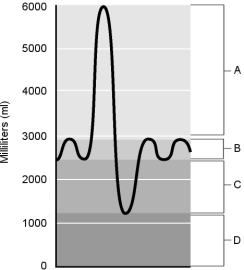 Figure 22.2Using Figure 22.2, match the following:
-Expiratory reserve volume.
Figure 22.2Using Figure 22.2, match the following:
-Expiratory reserve volume. (Short Answer)
4.9/5 (82)
(82) 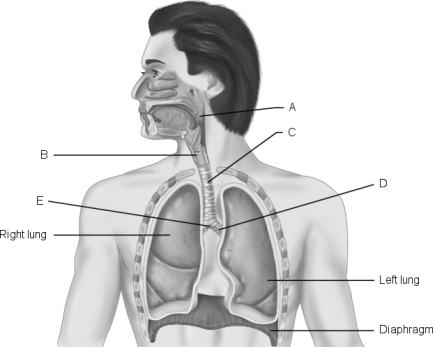 Figure 22.1Using Figure 22.1, match the following:
-Trachea.
Timothy has been having difficulty breathing since he had pneumonia last month. Recently he had severe pain in his chest and back, and his breathing was extremely irregular. The doctor at the emergency room told him that one of the lobes of his lung had collapsed. How could this happen?
(Essay)
4.8/5 (73)
(73) Which of the following incorrectly describes mechanisms of CO2 transport?
(Multiple Choice)
4.9/5 (81)
(81) The factors responsible for holding the lungs to the thorax wall are .
(Multiple Choice)
4.9/5 (81)
(81) Figure 22.2Using Figure 22.2, match the following:
-Air that does not participate in the exchange of gases.
Figure 22.2Using Figure 22.2, match the following:
-Air that does not participate in the exchange of gases. (Short Answer)
4.8/5 (90)
(90) 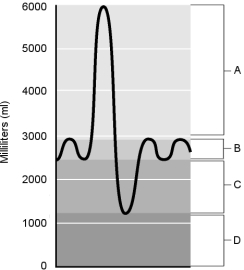 Figure 22.2Using Figure 22.2, match the following:
-Residual volume.
Figure 22.2Using Figure 22.2, match the following:
-Residual volume. (Short Answer)
4.8/5 (80)
(80) A patient was admitted to the hospital with chronic obstructive pulmonary disease. His PO2 was 55 and PCO2 was 65. A new resident orders 54% oxygen via the venturi mask. One hour later, after the oxygen was placed, the nurse finds the patient with no respiration or pulse. She calls for a Code Blue and begins cardiopulmonary resuscitation (CPR). Explain why the patient stopped breathing.
(Essay)
4.7/5 (76)
(76) Increased temperature results in decreased O2 unloading from hemoglobin.
(True/False)
4.8/5 (86)
(86) The functions of the nasal conchae are to enhance the air turbulence in the cavity and to increase the mucosal surface area exposed to the air.
(True/False)
4.8/5 (73)
(73) Which of the following maintains the patency (openness) of the trachea?
(Multiple Choice)
4.8/5 (90)
(90) 
Filters
- Essay(0)
- Multiple Choice(0)
- Short Answer(0)
- True False(0)
- Matching(0)