



 Chat with AI
Exam 22: The Respiratory System

Exam 1: The Human Body: an Orientation100 Questions
Exam 2: Chemistry Comes Alive120 Questions
Exam 3: Cells: the Living Units119 Questions
Exam 4: Tissue: the Living Fabric97 Questions
Exam 5: The Integumentary System107 Questions
Exam 6: Bones and Skeletal Tissues94 Questions
Exam 7: The Skeleton102 Questions
Exam 8: Joints105 Questions
Exam 9: Muscles and Muscle Tissue109 Questions
Exam 10: The Muscular System109 Questions
Exam 11: Fundamentals of the Nervous System and Nervous Tissue95 Questions
Exam 12: The Central Nervous System132 Questions
Exam 13: The Peripheral Nervous System and Reflex Activity97 Questions
Exam 14: The Autonomic Nervous System96 Questions
Exam 15: The Special Senses127 Questions
Exam 16: The Endocrine System119 Questions
Exam 17: Blood99 Questions
Exam 18: The Cardiovascular System: the Heart94 Questions
Exam 19: The Cardiovascular System: Blood Vessels107 Questions
Exam 20: The Lymphatic System and Lymphoid Organs and Tissues95 Questions
Exam 21: The Immune System: Innate and Adaptive Body Defensives118 Questions
Exam 22: The Respiratory System120 Questions
Exam 23: The Digestive System145 Questions
Exam 24: Nutrition, Metabolism, and Body Temperature Regulation114 Questions
Exam 25: The Urinary System116 Questions
Exam 26: Fluid, Electrolyte, and Acid-Base Balance94 Questions
Exam 27: The Reproductive System126 Questions
Exam 28: Pregnancy and Human Development97 Questions
Exam 29: Heredity90 Questions
Select questions type


The lungs are perfused by two circulations: the pulmonary and the bronchial. The pulmonary circulation is for oxygenation of blood. The bronchial circulation supplies blood to the lung structures (tissue).
(True/False)
4.9/5  (68)
(68) 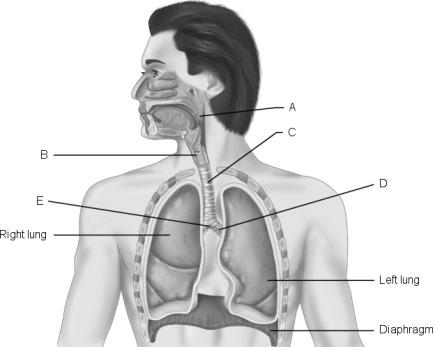 Figure 22.1Using Figure 22.1, match the following:
-Main (primary) bronchus.
Figure 22.1Using Figure 22.1, match the following:
-Main (primary) bronchus. (Short Answer)
4.8/5 (79)
(79) The relationship between gas pressure and gas volume is described by .
(Multiple Choice)
5.0/5 (76)
(76) Jane had been suffering through a severe cold and was complaining of a frontal headache and a dull, aching pain at the side of her face. What regions are likely to become sites of secondary infection following nasal infection?
(Essay)
4.9/5 (77)
(77) Under certain conditions, the vocal folds act as a sphincter that prevents air passage.
(True/False)
4.8/5 (87)
(87) Which of the following counteracts the movement of bicarbonate ions from the RBC?
(Multiple Choice)
4.7/5 (94)
(94) How will the lungs compensate for an acute rise in the partial pressure of CO2 in arterial blood?
(Short Answer)
4.8/5 (78)
(78) Complete the following statement using the choices below. Air moves out of the lungs when the pressure inside the lungs is .
(Multiple Choice)
4.8/5 (79)
(79) A patient with tuberculosis is often noncompliant with treatment. Explain why this may happen.
(Essay)
4.9/5 (77)
(77) Which of the disorders below is characterized by destruction of the walls of the alveoli producing abnormally large air spaces that remain filled with air during exhalation?
(Multiple Choice)
4.8/5 (83)
(83) Which of the following is not an event necessary to supply the body with O2 and dispose of CO2?
(Multiple Choice)
4.8/5 (70)
(70) Strong emotions and pain acting through the limbic system activate sympathetic centers in the hypothalamus, thus modulating respiratory rate and depth by sending signals to the respiratory centers.
(True/False)
4.8/5 (82)
(82) Define anatomical dead space. What is the relationship between anatomical and alveolar dead space? Which value is likely to increase during lung pathology?
(Essay)
4.8/5 (68)
(68) Oxygen and carbon dioxide are exchanged in the lungs and through all cell membranes by
)
(Multiple Choice)
4.9/5 (96)
(96) 
Filters
- Essay(0)
- Multiple Choice(0)
- Short Answer(0)
- True False(0)
- Matching(0)