



 Chat with AI
Exam 16: The Endocrine System

Exam 1: The Human Body: an Orientation100 Questions
Exam 2: Chemistry Comes Alive120 Questions
Exam 3: Cells: the Living Units119 Questions
Exam 4: Tissue: the Living Fabric97 Questions
Exam 5: The Integumentary System107 Questions
Exam 6: Bones and Skeletal Tissues94 Questions
Exam 7: The Skeleton102 Questions
Exam 8: Joints105 Questions
Exam 9: Muscles and Muscle Tissue109 Questions
Exam 10: The Muscular System109 Questions
Exam 11: Fundamentals of the Nervous System and Nervous Tissue95 Questions
Exam 12: The Central Nervous System132 Questions
Exam 13: The Peripheral Nervous System and Reflex Activity97 Questions
Exam 14: The Autonomic Nervous System96 Questions
Exam 15: The Special Senses127 Questions
Exam 16: The Endocrine System119 Questions
Exam 17: Blood99 Questions
Exam 18: The Cardiovascular System: the Heart94 Questions
Exam 19: The Cardiovascular System: Blood Vessels107 Questions
Exam 20: The Lymphatic System and Lymphoid Organs and Tissues95 Questions
Exam 21: The Immune System: Innate and Adaptive Body Defensives118 Questions
Exam 22: The Respiratory System120 Questions
Exam 23: The Digestive System145 Questions
Exam 24: Nutrition, Metabolism, and Body Temperature Regulation114 Questions
Exam 25: The Urinary System116 Questions
Exam 26: Fluid, Electrolyte, and Acid-Base Balance94 Questions
Exam 27: The Reproductive System126 Questions
Exam 28: Pregnancy and Human Development97 Questions
Exam 29: Heredity90 Questions
Select questions type


As a result of stress the adenohypophysis releases , which stimulates release of hormones from the adrenal cortex that retain sodium and water, increase blood sugar, and begin breaking down fats.

Free
(Short Answer)
4.9/5  (71)
(71) Correct Answer: Verified
ACTH
The gland is especially large in early childhood, then declines in size and function with age.
Free
(Short Answer)
4.9/5 (73)
(73) Correct Answer:Verified
Verifiedthymus
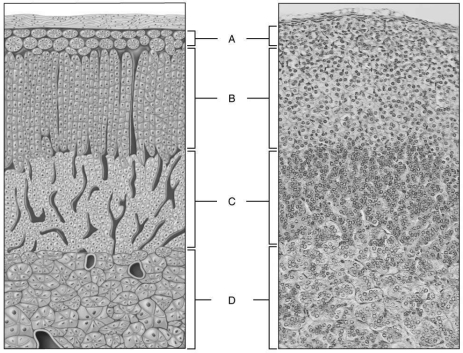 Figure 16.3Using Figure 16.3, match the following:
-Produces glucocorticoids.
Figure 16.3Using Figure 16.3, match the following:
-Produces glucocorticoids.Free
(Short Answer)
4.9/5 (68)
(68) Correct Answer:Verified
VerifiedB
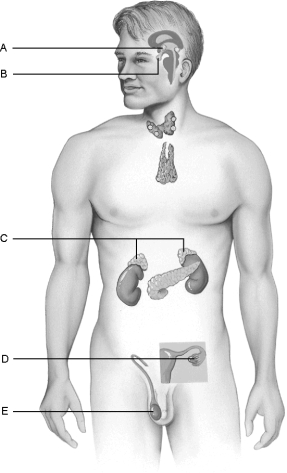 Figure 16.1Using Figure 16.1, match the following:
-Produces the hormones that direct the production of the secondary male sex characteristics.
Figure 16.1Using Figure 16.1, match the following:
-Produces the hormones that direct the production of the secondary male sex characteristics. (Short Answer)
4.8/5 (79)
(79) Which of the following is not a cardinal sign of diabetes mellitus?
(Multiple Choice)
4.9/5 (92)
(92) Chemical substances secreted by cells into the extracellular fluids and that regulate the metabolic function of other cells in the body are called .
(Multiple Choice)
4.9/5 (79)
(79) Cells that respond to peptide hormones usually do so through a sequence of biochemical reactions involving receptor and kinase activation. In order for cells to respond, it is necessary for first and second messengers to communicate. This is possible because .
(Multiple Choice)
4.8/5 (89)
(89) Type 2 diabetics may reflect declining receptor sensitivity to insulin rather than decreased insulin production.
(True/False)
4.8/5 (73)
(73) 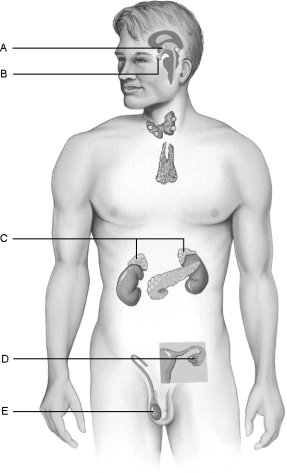 Figure 16.1Using Figure 16.1, match the following:
-Produce steroid hormones and glucocorticoids and mineralocorticoids.
Figure 16.1Using Figure 16.1, match the following:
-Produce steroid hormones and glucocorticoids and mineralocorticoids. (Short Answer)
4.8/5 (90)
(90) It was often rumored that one of our deceased presidents was suffering from Addison's disease (inadequate synthesis of mineralocorticoids and glucocorticoids). What symptoms may have led to the diagnosis of this condition?
(Essay)
4.9/5 (77)
(77) Thyroid hormone production requires the presence of iodine and calcium.
(True/False)
4.7/5 (85)
(85) Which of the following is not a type of hormone interaction?
(Multiple Choice)
4.9/5 (94)
(94) Figure 16.1Using Figure 16.1, match the following:
-A person who drinks a lot of alcoholic beverages must urinate frequently. Why?
Figure 16.1Using Figure 16.1, match the following:
-A person who drinks a lot of alcoholic beverages must urinate frequently. Why? (Short Answer)
4.8/5 (90)
(90) 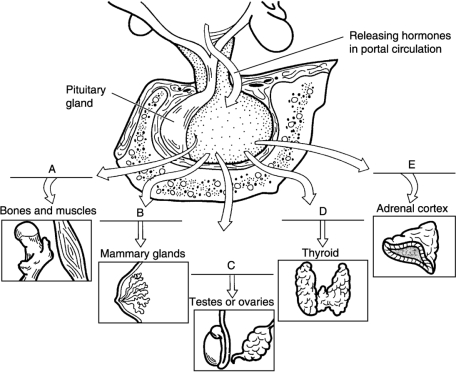 Figure 16.2Using Figure 16.2, match the following hypothalamic hormones with the pituitary hormone targets:
-Thyroid stimulating hormone
Figure 16.2Using Figure 16.2, match the following hypothalamic hormones with the pituitary hormone targets:
-Thyroid stimulating hormone (Short Answer)
4.9/5 (88)
(88) Thyroid hormone (a small iodinated amine) enters target cells in a manner similar to _ _.
(Multiple Choice)
4.9/5 (65)
(65) 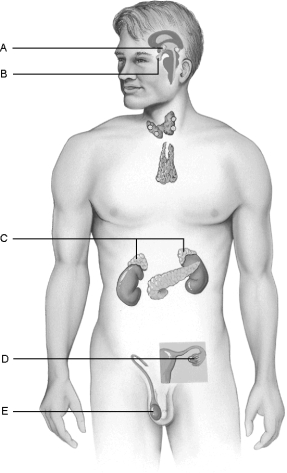 Figure 16.1Using Figure 16.1, match the following:
-Growth hormones act indirectly to make the epiphyseal plate cartilage grow. What then acts directly to make it grow?
Figure 16.1Using Figure 16.1, match the following:
-Growth hormones act indirectly to make the epiphyseal plate cartilage grow. What then acts directly to make it grow? (Essay)
5.0/5 (88)
(88) The antagonistic hormones that regulate the blood calcium level are calcitonin- parathormone.
(True/False)
4.9/5 (83)
(83) 
Filters
- Essay(0)
- Multiple Choice(0)
- Short Answer(0)
- True False(0)
- Matching(0)