



 Chat with AI
Exam 16: The Endocrine System

Exam 1: The Human Body: an Orientation100 Questions
Exam 2: Chemistry Comes Alive120 Questions
Exam 3: Cells: the Living Units119 Questions
Exam 4: Tissue: the Living Fabric97 Questions
Exam 5: The Integumentary System107 Questions
Exam 6: Bones and Skeletal Tissues94 Questions
Exam 7: The Skeleton102 Questions
Exam 8: Joints105 Questions
Exam 9: Muscles and Muscle Tissue109 Questions
Exam 10: The Muscular System109 Questions
Exam 11: Fundamentals of the Nervous System and Nervous Tissue95 Questions
Exam 12: The Central Nervous System132 Questions
Exam 13: The Peripheral Nervous System and Reflex Activity97 Questions
Exam 14: The Autonomic Nervous System96 Questions
Exam 15: The Special Senses127 Questions
Exam 16: The Endocrine System119 Questions
Exam 17: Blood99 Questions
Exam 18: The Cardiovascular System: the Heart94 Questions
Exam 19: The Cardiovascular System: Blood Vessels107 Questions
Exam 20: The Lymphatic System and Lymphoid Organs and Tissues95 Questions
Exam 21: The Immune System: Innate and Adaptive Body Defensives118 Questions
Exam 22: The Respiratory System120 Questions
Exam 23: The Digestive System145 Questions
Exam 24: Nutrition, Metabolism, and Body Temperature Regulation114 Questions
Exam 25: The Urinary System116 Questions
Exam 26: Fluid, Electrolyte, and Acid-Base Balance94 Questions
Exam 27: The Reproductive System126 Questions
Exam 28: Pregnancy and Human Development97 Questions
Exam 29: Heredity90 Questions
Select questions type


Hormones often cause a cell to elicit multiple responses; this is because .
(Multiple Choice)
4.8/5  (81)
(81)  Figure 16.2Using Figure 16.2, match the following hypothalamic hormones with the pituitary hormone targets:
-The gland may influence our day/night cycles and even regulate the onset of sexual maturity.
Figure 16.2Using Figure 16.2, match the following hypothalamic hormones with the pituitary hormone targets:
-The gland may influence our day/night cycles and even regulate the onset of sexual maturity. (Short Answer)
4.7/5 (66)
(66) Why should the hypothalamus instead of the adenohypophysis be called the "master endocrine gland"?
(Essay)
4.9/5 (73)
(73) 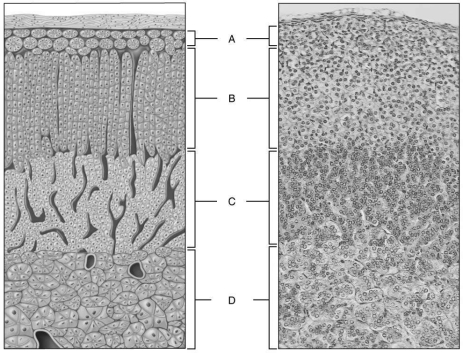 Figure 16.3Using Figure 16.3, match the following:
-Hormones mimic sympathetic nervous system neurotransmitters.
Figure 16.3Using Figure 16.3, match the following:
-Hormones mimic sympathetic nervous system neurotransmitters. (Short Answer)
4.9/5 (90)
(90) Which of the following is not a change typically produced by a hormonal stimulus?
(Multiple Choice)
4.9/5 (81)
(81) Which of the following is not a change that may be caused by hormonal stimulus?
(Multiple Choice)
4.9/5 (71)
(71) Mineralocorticoid is to aldosterone as glucocorticoid is to .
(Multiple Choice)
4.8/5 (77)
(77) The neurohypophysis or posterior lobe of the pituitary gland is not a true endocrine gland because
)
(Multiple Choice)
4.9/5 (85)
(85) Which hormone has only one known effect: to stimulate milk production by the breasts?
(Short Answer)
4.8/5 (85)
(85)  Figure 16.2Using Figure 16.2, match the following hypothalamic hormones with the pituitary hormone targets:
-Growth hormone
Figure 16.2Using Figure 16.2, match the following hypothalamic hormones with the pituitary hormone targets:
-Growth hormone (Short Answer)
4.9/5 (82)
(82) When it becomes necessary to enlist the fight- or- flight response, a hormone that is released during the alarm phase of the general adaptation syndrome is .
(Multiple Choice)
4.7/5 (73)
(73) Several hormones are synthesized in the hypothalamus and transported to the anterior pituitary gland. The mechanism of transportation from hypothalamus to anterior pituitary gland is through the .
(Multiple Choice)
4.9/5 (62)
(62)  Figure 16.2Using Figure 16.2, match the following hypothalamic hormones with the pituitary hormone targets:
-What is the difference between autocrines and paracrines?
Figure 16.2Using Figure 16.2, match the following hypothalamic hormones with the pituitary hormone targets:
-What is the difference between autocrines and paracrines? (Essay)
4.8/5 (81)
(81) Basal metabolism declines with age. What factors contribute to that decline?
(Essay)
4.9/5 (80)
(80) Aldosterone is the most potent mineralocorticoid produced in the adrenals but the least abundant.
(True/False)
4.8/5 (89)
(89)  Figure 16.2Using Figure 16.2, match the following hypothalamic hormones with the pituitary hormone targets:
-Prolactin
Figure 16.2Using Figure 16.2, match the following hypothalamic hormones with the pituitary hormone targets:
-Prolactin (Short Answer)
4.8/5 (77)
(77) 
Filters
- Essay(0)
- Multiple Choice(0)
- Short Answer(0)
- True False(0)
- Matching(0)