



 Chat with AI
Exam 16: The Endocrine System

Exam 1: The Human Body: an Orientation100 Questions
Exam 2: Chemistry Comes Alive120 Questions
Exam 3: Cells: the Living Units119 Questions
Exam 4: Tissue: the Living Fabric97 Questions
Exam 5: The Integumentary System107 Questions
Exam 6: Bones and Skeletal Tissues94 Questions
Exam 7: The Skeleton102 Questions
Exam 8: Joints105 Questions
Exam 9: Muscles and Muscle Tissue109 Questions
Exam 10: The Muscular System109 Questions
Exam 11: Fundamentals of the Nervous System and Nervous Tissue95 Questions
Exam 12: The Central Nervous System132 Questions
Exam 13: The Peripheral Nervous System and Reflex Activity97 Questions
Exam 14: The Autonomic Nervous System96 Questions
Exam 15: The Special Senses127 Questions
Exam 16: The Endocrine System119 Questions
Exam 17: Blood99 Questions
Exam 18: The Cardiovascular System: the Heart94 Questions
Exam 19: The Cardiovascular System: Blood Vessels107 Questions
Exam 20: The Lymphatic System and Lymphoid Organs and Tissues95 Questions
Exam 21: The Immune System: Innate and Adaptive Body Defensives118 Questions
Exam 22: The Respiratory System120 Questions
Exam 23: The Digestive System145 Questions
Exam 24: Nutrition, Metabolism, and Body Temperature Regulation114 Questions
Exam 25: The Urinary System116 Questions
Exam 26: Fluid, Electrolyte, and Acid-Base Balance94 Questions
Exam 27: The Reproductive System126 Questions
Exam 28: Pregnancy and Human Development97 Questions
Exam 29: Heredity90 Questions
Select questions type


Which of the following hormones suppresses appetite and increases energy expenditure?
(Multiple Choice)
4.7/5  (87)
(87) 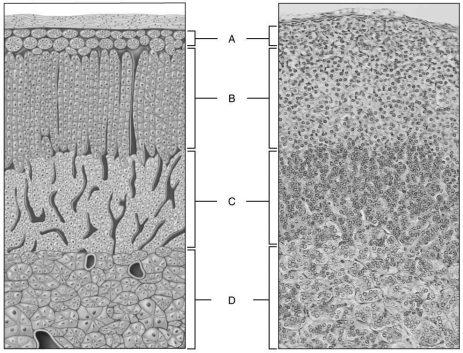 Figure 16.3Using Figure 16.3, match the following:
-Excess hormone levels result in Cushing's syndrome.
Figure 16.3Using Figure 16.3, match the following:
-Excess hormone levels result in Cushing's syndrome. (Short Answer)
4.7/5 (84)
(84) Growth hormone solely exerts its influence by targeting other endocrine glands to produce hormones.
(True/False)
4.7/5 (78)
(78) 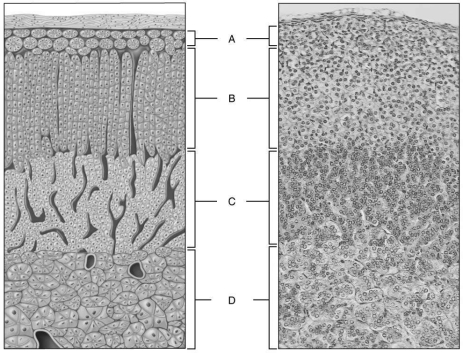 Figure 16.3Using Figure 16.3, match the following:
-List the four mechanisms involved in the regulation of aldosterone secretion.
Figure 16.3Using Figure 16.3, match the following:
-List the four mechanisms involved in the regulation of aldosterone secretion. (Essay)
4.8/5 (76)
(76) 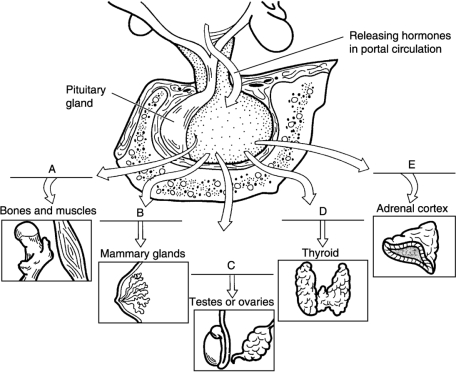 Figure 16.2Using Figure 16.2, match the following hypothalamic hormones with the pituitary hormone targets:
-How is the heart involved as an endocrine gland?
Figure 16.2Using Figure 16.2, match the following hypothalamic hormones with the pituitary hormone targets:
-How is the heart involved as an endocrine gland? (Essay)
4.8/5 (92)
(92) A 25- year- old male was admitted to the medical/surgical unit with a blood glucose of 600 mg/dl. On assessment, the nurse observed his breathing was deep and rapid, and his breath smelled of acetone. His face was flushed and his skin was dry. His pH was low. Describe the physiological response that is occurring.
(Essay)
4.8/5 (78)
(78) All adenohypophyseal hormones except GH affect their target cells via a cyclic AMP second messenger.
(True/False)
4.9/5 (70)
(70) Which of the following is not a category of endocrine gland stimulus?
(Multiple Choice)
5.0/5 (84)
(84) All peptide hormone synthesis requires gene activation that produces mRNA.
(True/False)
4.9/5 (72)
(72) Both "turn on" factors (hormonal, humoral, and neural stimuli) and "turn off" factors (feedback inhibition and others) may be modulated by the activity of the nervous system.
(True/False)
4.8/5 (91)
(91) 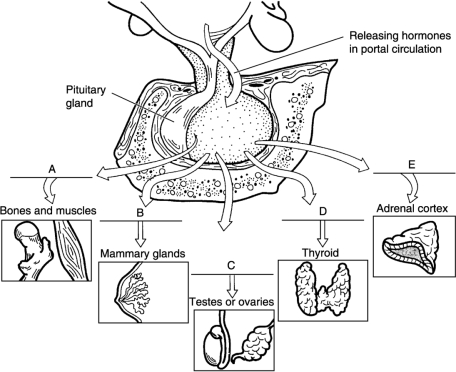 Figure 16.2Using Figure 16.2, match the following hypothalamic hormones with the pituitary hormone targets:
-Adrenocorticotropic hormone
Figure 16.2Using Figure 16.2, match the following hypothalamic hormones with the pituitary hormone targets:
-Adrenocorticotropic hormone (Short Answer)
4.9/5 (84)
(84) The endocrine gland that is probably malfunctioning if a person has a high metabolic rate is the parathyroid.
(True/False)
4.9/5 (81)
(81) Enteroendocrine cells of the GI tract produce some hormones that are chemically identical to neurotransmitters.
(True/False)
4.7/5 (80)
(80) 
Filters
- Essay(0)
- Multiple Choice(0)
- Short Answer(0)
- True False(0)
- Matching(0)