



 Chat with AI
Exam 15: The Special Senses

Exam 1: The Human Body: an Orientation100 Questions
Exam 2: Chemistry Comes Alive120 Questions
Exam 3: Cells: the Living Units119 Questions
Exam 4: Tissue: the Living Fabric97 Questions
Exam 5: The Integumentary System107 Questions
Exam 6: Bones and Skeletal Tissues94 Questions
Exam 7: The Skeleton102 Questions
Exam 8: Joints105 Questions
Exam 9: Muscles and Muscle Tissue109 Questions
Exam 10: The Muscular System109 Questions
Exam 11: Fundamentals of the Nervous System and Nervous Tissue95 Questions
Exam 12: The Central Nervous System132 Questions
Exam 13: The Peripheral Nervous System and Reflex Activity97 Questions
Exam 14: The Autonomic Nervous System96 Questions
Exam 15: The Special Senses127 Questions
Exam 16: The Endocrine System119 Questions
Exam 17: Blood99 Questions
Exam 18: The Cardiovascular System: the Heart94 Questions
Exam 19: The Cardiovascular System: Blood Vessels107 Questions
Exam 20: The Lymphatic System and Lymphoid Organs and Tissues95 Questions
Exam 21: The Immune System: Innate and Adaptive Body Defensives118 Questions
Exam 22: The Respiratory System120 Questions
Exam 23: The Digestive System145 Questions
Exam 24: Nutrition, Metabolism, and Body Temperature Regulation114 Questions
Exam 25: The Urinary System116 Questions
Exam 26: Fluid, Electrolyte, and Acid-Base Balance94 Questions
Exam 27: The Reproductive System126 Questions
Exam 28: Pregnancy and Human Development97 Questions
Exam 29: Heredity90 Questions
Select questions type


Contraction of the ciliary muscle causes the lens to bend the light less.

Free
(True/False)
4.8/5  (67)
(67) Correct Answer: Verified
False
Which of the following structures is not part of the external ear?
Free
(Multiple Choice)
4.9/5 (68)
(68) Correct Answer:Verified
VerifiedA
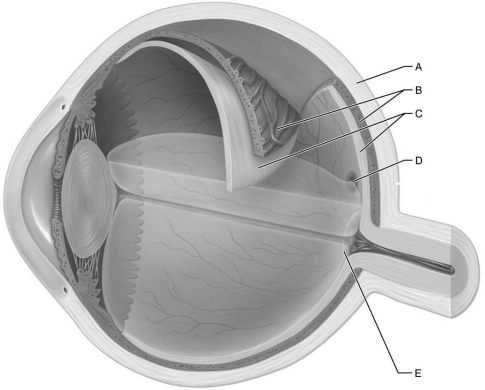 Figure 15.2Using Figure 15.2, match the following:
-Consists of a pigmented layer and a neural layer.
Figure 15.2Using Figure 15.2, match the following:
-Consists of a pigmented layer and a neural layer.Free
(Short Answer)
4.8/5 (94)
(94) Correct Answer:Verified
VerifiedC
A 60- year- old woman is experiencing vertigo. She ignores the symptoms initially, but now her attacks are accompanied by severe nausea and vomiting. Following an attack, she hears a roaring in her ears that causes temporary deafness for some time after. What do you think her problem is, and what is its suspected cause?
(Essay)
4.9/5 (82)
(82) Tinnitus, vertigo, and gradual hearing loss typify the disorder called .
(Multiple Choice)
4.7/5 (82)
(82) Sound is generally perceived in the occipital lobe of the cerebral cortex.
(True/False)
4.8/5 (68)
(68) 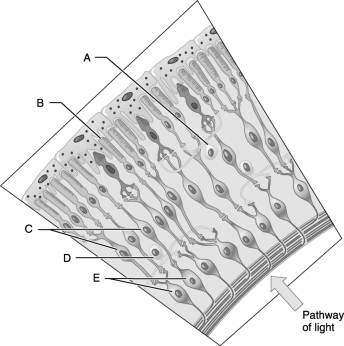 Figure 15.1Using Figure 15.1, match the following:
-Taste is solely a response to chemicals dissolved in .
Figure 15.1Using Figure 15.1, match the following:
-Taste is solely a response to chemicals dissolved in . (Short Answer)
4.8/5 (74)
(74) Theoretically, an individual born without a middle ear would be able to hear by bone conduction with a hearing aid.
(True/False)
4.9/5 (76)
(76) The mucous membrane that lines the eyelids and is reflected over the anterior surface of the eyeball is the conjunctiva.
(True/False)
4.8/5 (78)
(78) The eye muscle that elevates and turns the eye laterally is the .
(Multiple Choice)
4.9/5 (80)
(80) 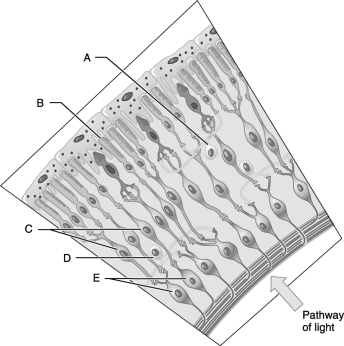 Figure 15.1Using Figure 15.1, match the following:
-Bipolar cells.
Figure 15.1Using Figure 15.1, match the following:
-Bipolar cells. (Short Answer)
4.9/5 (87)
(87) The quality of a sound is based on the atmospheric pressure at the time the sound is generated.
(True/False)
4.9/5 (80)
(80) The neural layer of the retina prevents excessive scattering of light within the eye.
(True/False)
4.9/5 (77)
(77) An essential part of the maculae involved in static equilibrium is (are) the _ _.
(Multiple Choice)
4.7/5 (73)
(73) There are three layers of neurons in the retina. The axons of which of these neuron layers form the optic nerves?
(Multiple Choice)
4.8/5 (85)
(85) Olfactory cells and taste buds are normally stimulated by .
(Multiple Choice)
4.9/5 (77)
(77) Which statement about malnutrition- induced night blindness is most accurate?
(Multiple Choice)
4.8/5 (74)
(74) 
Filters
- Essay(0)
- Multiple Choice(0)
- Short Answer(0)
- True False(0)
- Matching(0)