



 Chat with AI
Exam 23: The Digestive System

Exam 1: The Human Body: an Orientation100 Questions
Exam 2: Chemistry Comes Alive120 Questions
Exam 3: Cells: the Living Units119 Questions
Exam 4: Tissue: the Living Fabric97 Questions
Exam 5: The Integumentary System107 Questions
Exam 6: Bones and Skeletal Tissues94 Questions
Exam 7: The Skeleton102 Questions
Exam 8: Joints105 Questions
Exam 9: Muscles and Muscle Tissue109 Questions
Exam 10: The Muscular System109 Questions
Exam 11: Fundamentals of the Nervous System and Nervous Tissue95 Questions
Exam 12: The Central Nervous System132 Questions
Exam 13: The Peripheral Nervous System and Reflex Activity97 Questions
Exam 14: The Autonomic Nervous System96 Questions
Exam 15: The Special Senses127 Questions
Exam 16: The Endocrine System119 Questions
Exam 17: Blood99 Questions
Exam 18: The Cardiovascular System: the Heart94 Questions
Exam 19: The Cardiovascular System: Blood Vessels107 Questions
Exam 20: The Lymphatic System and Lymphoid Organs and Tissues95 Questions
Exam 21: The Immune System: Innate and Adaptive Body Defensives118 Questions
Exam 22: The Respiratory System120 Questions
Exam 23: The Digestive System145 Questions
Exam 24: Nutrition, Metabolism, and Body Temperature Regulation114 Questions
Exam 25: The Urinary System116 Questions
Exam 26: Fluid, Electrolyte, and Acid-Base Balance94 Questions
Exam 27: The Reproductive System126 Questions
Exam 28: Pregnancy and Human Development97 Questions
Exam 29: Heredity90 Questions
Select questions type


The major means of propulsion through the alimentary canal is peristalsis.
(True/False)
4.9/5  (87)
(87) The salivary glands are composed of which two types of secretory cells?
(Multiple Choice)
4.8/5 (86)
(86) In addition to storage and mechanical breakdown of food, the stomach .
(Multiple Choice)
4.9/5 (75)
(75) The mechanical and chemical receptors that control digestive activity are located .
(Multiple Choice)
5.0/5 (69)
(69) From the esophagus to the anal canal, the walls of every organ of the alimentary canal are made up of the same four basic layers. Arrange them in order from the lumen.
(Multiple Choice)
4.7/5 (69)
(69) Which of the following is not a factor that helps create the stomach mucosal barrier?
(Multiple Choice)
4.8/5 (75)
(75) All the chemical and mechanical phases of digestion from the mouth through the small intestine are directed toward changing food into forms that can pass through the epithelial cells lining the mucosa into the underlying blood and lymphatic vessels.
(True/False)
4.8/5 (72)
(72) A patient is 67 years old and has had a hiatal hernia for three years. In the last year, she has complained of worsening heartburn, especially at night. What are the characteristic symptoms of a hiatal hernia and which of these symptoms did the patient have?
(Essay)
4.8/5 (88)
(88) 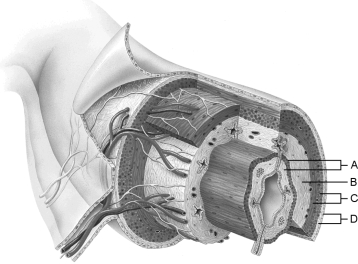 Figure 23.1Using Figure 23.1, match the following:
-The chief bile pigment is .
Figure 23.1Using Figure 23.1, match the following:
-The chief bile pigment is . (Short Answer)
4.9/5 (78)
(78) The major stimulus for production of intestinal fluid is distention or irritation of the intestinal mucosa by hypertonic or acidic chyme.
(True/False)
4.8/5 (72)
(72)  Figure 23.1Using Figure 23.1, match the following:
-Mucosa.
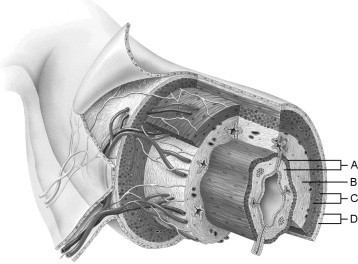 Figure 23.1Using Figure 23.1, match the following:
-Serosa.
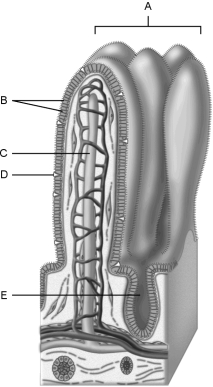 Figure 23.2Using Figure 23.2, match the following:
-Wide lymph capillary located in the villus.
Figure 23.2Using Figure 23.2, match the following:
-Wide lymph capillary located in the villus. (Short Answer)
4.8/5 (87)
(87)  Figure 23.1Using Figure 23.1, match the following:
-Area of the lamina propria.
Figure 23.1Using Figure 23.1, match the following:
-Area of the lamina propria. (Short Answer)
4.8/5 (74)
(74) The soft palate rises reflexively to open the nasopharynx when we swallow food.
(True/False)
4.9/5 (68)
(68) Figure 23.1Using Figure 23.1, match the following:
-MALT found here.
Figure 23.1Using Figure 23.1, match the following:
-MALT found here. (Short Answer)
5.0/5 (77)
(77) 
Filters
- Essay(0)
- Multiple Choice(0)
- Short Answer(0)
- True False(0)
- Matching(0)