



 Chat with AI
Exam 28: Pregnancy and Human Development

Exam 1: The Human Body: an Orientation100 Questions
Exam 2: Chemistry Comes Alive120 Questions
Exam 3: Cells: the Living Units119 Questions
Exam 4: Tissue: the Living Fabric97 Questions
Exam 5: The Integumentary System107 Questions
Exam 6: Bones and Skeletal Tissues94 Questions
Exam 7: The Skeleton102 Questions
Exam 8: Joints105 Questions
Exam 9: Muscles and Muscle Tissue109 Questions
Exam 10: The Muscular System109 Questions
Exam 11: Fundamentals of the Nervous System and Nervous Tissue95 Questions
Exam 12: The Central Nervous System132 Questions
Exam 13: The Peripheral Nervous System and Reflex Activity97 Questions
Exam 14: The Autonomic Nervous System96 Questions
Exam 15: The Special Senses127 Questions
Exam 16: The Endocrine System119 Questions
Exam 17: Blood99 Questions
Exam 18: The Cardiovascular System: the Heart94 Questions
Exam 19: The Cardiovascular System: Blood Vessels107 Questions
Exam 20: The Lymphatic System and Lymphoid Organs and Tissues95 Questions
Exam 21: The Immune System: Innate and Adaptive Body Defensives118 Questions
Exam 22: The Respiratory System120 Questions
Exam 23: The Digestive System145 Questions
Exam 24: Nutrition, Metabolism, and Body Temperature Regulation114 Questions
Exam 25: The Urinary System116 Questions
Exam 26: Fluid, Electrolyte, and Acid-Base Balance94 Questions
Exam 27: The Reproductive System126 Questions
Exam 28: Pregnancy and Human Development97 Questions
Exam 29: Heredity90 Questions
Select questions type


The formation of endodermal and ectodermal germ layers occurs at .
(Multiple Choice)
4.8/5  (88)
(88) When do we begin to call the developing individual a fetus rather than an embryo?
(Essay)
4.8/5 (76)
(76) Of the three germ layers, the mesoderm forms the most body parts.
(True/False)
4.9/5 (74)
(74) How long is the egg viable and capable of being fertilized after it is ovulated?
(Multiple Choice)
4.7/5 (68)
(68) A premature separation of the placenta from the uterine wall is called .
(Multiple Choice)
4.9/5 (87)
(87) Mrs. Phang, eight months pregnant with her first child, makes an appointment with her obstetrician to investigate the cause of vaginal bleeding. Because it is actually more "spotting" than frank bleeding, and painless, she is becoming worried. Ultrasound visualization of her abdomen shows that the placenta is formed across the internal os of the cervix, and she is ordered to her bed for the remainder of the pregnancy. What name is given to Mrs. Phang's condition? Why is it an extremely serious condition? Why was she ordered to have complete bed rest for the remainder of her pregnancy?
(Essay)
4.8/5 (82)
(82) Relaxin is a hormone produced by the placenta and ovaries. The function of this hormone is to
)
(Multiple Choice)
4.7/5 (69)
(69) As the newborn suckles, the mother's pituitary produces to assist in producing milk.
(Short Answer)
4.8/5 (78)
(78) It is impossible for sperm to be functional (able to fertilize the egg) until after .
(Multiple Choice)
4.8/5 (83)
(83) The body systems of the developing embryo are present in at least rudimentary form at eight weeks.
(True/False)
4.9/5 (84)
(84) By 72 hours after fertilization, the egg has divided into more than 160 cells and is called the morula.
(True/False)
4.8/5 (83)
(83) 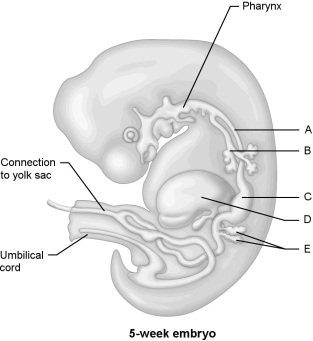 Figure 28.1Using Figure 28.1, match the following:
-Trachea.
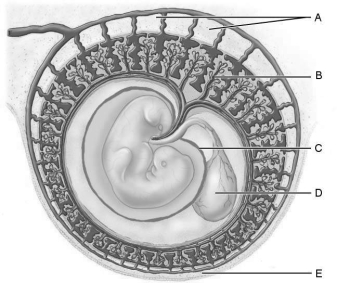 Figure 28.2Using Figure 28.2, match the following:
-The part of the endometrium destined to be a part of the placenta.
Figure 28.2Using Figure 28.2, match the following:
-The part of the endometrium destined to be a part of the placenta. (Short Answer)
4.9/5 (72)
(72) Sperm move to the uterine tube through uterine contractions and the energy of their own flagella. What other factor is involved in sperm movement?
(Multiple Choice)
4.8/5 (78)
(78) 
Filters
- Essay(0)
- Multiple Choice(0)
- Short Answer(0)
- True False(0)
- Matching(0)