



 Chat with AI
Exam 12: The Central Nervous System

Exam 1: The Human Body: an Orientation100 Questions
Exam 2: Chemistry Comes Alive120 Questions
Exam 3: Cells: the Living Units119 Questions
Exam 4: Tissue: the Living Fabric97 Questions
Exam 5: The Integumentary System107 Questions
Exam 6: Bones and Skeletal Tissues94 Questions
Exam 7: The Skeleton102 Questions
Exam 8: Joints105 Questions
Exam 9: Muscles and Muscle Tissue109 Questions
Exam 10: The Muscular System109 Questions
Exam 11: Fundamentals of the Nervous System and Nervous Tissue95 Questions
Exam 12: The Central Nervous System132 Questions
Exam 13: The Peripheral Nervous System and Reflex Activity97 Questions
Exam 14: The Autonomic Nervous System96 Questions
Exam 15: The Special Senses127 Questions
Exam 16: The Endocrine System119 Questions
Exam 17: Blood99 Questions
Exam 18: The Cardiovascular System: the Heart94 Questions
Exam 19: The Cardiovascular System: Blood Vessels107 Questions
Exam 20: The Lymphatic System and Lymphoid Organs and Tissues95 Questions
Exam 21: The Immune System: Innate and Adaptive Body Defensives118 Questions
Exam 22: The Respiratory System120 Questions
Exam 23: The Digestive System145 Questions
Exam 24: Nutrition, Metabolism, and Body Temperature Regulation114 Questions
Exam 25: The Urinary System116 Questions
Exam 26: Fluid, Electrolyte, and Acid-Base Balance94 Questions
Exam 27: The Reproductive System126 Questions
Exam 28: Pregnancy and Human Development97 Questions
Exam 29: Heredity90 Questions
Select questions type


 Figure 12.3Using Figure 12.3, match the following:
-Gray commissure.
Figure 12.3Using Figure 12.3, match the following:
-Gray commissure. (Short Answer)
4.9/5  (86)
(86) Which brain waves are not normal for awake adults but are common for children?
(Multiple Choice)
5.0/5 (92)
(92) 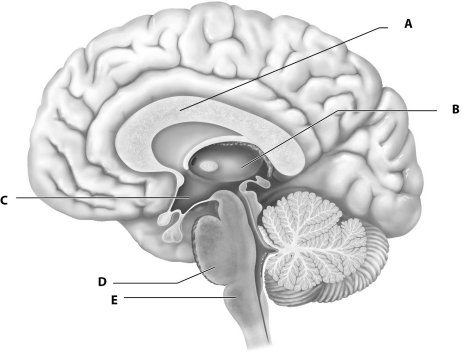 Figure 12.1Using Fig. 12.1, Match the following:
-White fiber tracts
Figure 12.1Using Fig. 12.1, Match the following:
-White fiber tracts (Short Answer)
4.8/5 (79)
(79) 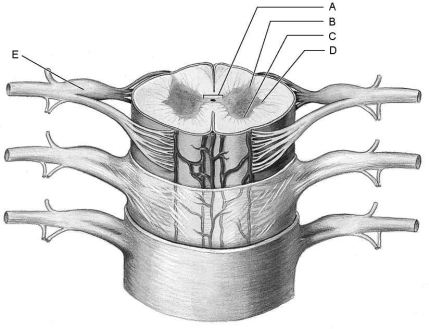 Figure 12.3Using Figure 12.3, match the following:
-What is the cauda equina and why is it given this name?
Figure 12.3Using Figure 12.3, match the following:
-What is the cauda equina and why is it given this name? (Essay)
4.8/5 (73)
(73) The is a protective mechanism that helps maintain a stable environment for the brain.
(Short Answer)
4.9/5 (77)
(77) Susan and Robert are the parents of three children. One night while the family was sleeping, a fire broke out next door. Susan and Robert heard the fire trucks and rushed out to see what was happening. None of the children woke up, even with the sound of sirens close to the house. Why did the parents wake up, but the children didn't wake up?
(Essay)
4.8/5 (78)
(78) Projection fibers in the brain mainly connect the right and left hemispheres.
(True/False)
4.8/5 (80)
(80) Robert was helping his son work on the son's car when he temporarily lost the ability to speak in a normal manner and had difficulty handing his son the requested tools. This episode lasted for several minutes and then he was himself again. Robert's son insisted that his dad see his doctor after this episode. What might be the doctor's diagnosis of Robert's episode and what could be the cause?
(Essay)
4.8/5 (77)
(77)  Figure 12.1Using Fig. 12.1, Match the following:
-Which ventricle is continuous with the central canal of the spinal cord.
Figure 12.1Using Fig. 12.1, Match the following:
-Which ventricle is continuous with the central canal of the spinal cord. (Short Answer)
4.8/5 (88)
(88) The RAS is comprised of specific pathways primarily in the limbic system.
(True/False)
5.0/5 (82)
(82)  Figure 12.1Using Fig. 12.1, Match the following:
-Hypothalamus
Figure 12.1Using Fig. 12.1, Match the following:
-Hypothalamus (Short Answer)
4.8/5 (77)
(77) 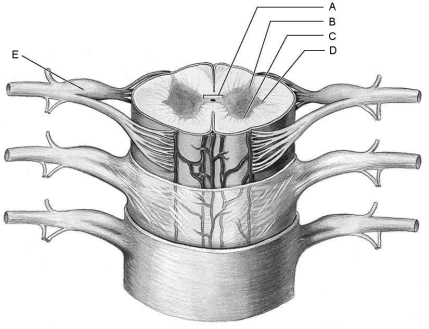 Figure 12.3Using Figure 12.3, match the following:
-Which brain areas lack a blood- brain barrier, and what purpose does this absence serve?
Figure 12.3Using Figure 12.3, match the following:
-Which brain areas lack a blood- brain barrier, and what purpose does this absence serve? (Essay)
4.9/5 (70)
(70) Nondeclarative memories preserve the circumstances in which they are learned.
(True/False)
4.8/5 (68)
(68) 
Filters
- Essay(0)
- Multiple Choice(0)
- Short Answer(0)
- True False(0)
- Matching(0)