



 Chat with AI
Exam 19: The Cardiovascular System: Blood Vessels

Exam 1: The Human Body: an Orientation100 Questions
Exam 2: Chemistry Comes Alive120 Questions
Exam 3: Cells: the Living Units119 Questions
Exam 4: Tissue: the Living Fabric97 Questions
Exam 5: The Integumentary System107 Questions
Exam 6: Bones and Skeletal Tissues94 Questions
Exam 7: The Skeleton102 Questions
Exam 8: Joints105 Questions
Exam 9: Muscles and Muscle Tissue109 Questions
Exam 10: The Muscular System109 Questions
Exam 11: Fundamentals of the Nervous System and Nervous Tissue95 Questions
Exam 12: The Central Nervous System132 Questions
Exam 13: The Peripheral Nervous System and Reflex Activity97 Questions
Exam 14: The Autonomic Nervous System96 Questions
Exam 15: The Special Senses127 Questions
Exam 16: The Endocrine System119 Questions
Exam 17: Blood99 Questions
Exam 18: The Cardiovascular System: the Heart94 Questions
Exam 19: The Cardiovascular System: Blood Vessels107 Questions
Exam 20: The Lymphatic System and Lymphoid Organs and Tissues95 Questions
Exam 21: The Immune System: Innate and Adaptive Body Defensives118 Questions
Exam 22: The Respiratory System120 Questions
Exam 23: The Digestive System145 Questions
Exam 24: Nutrition, Metabolism, and Body Temperature Regulation114 Questions
Exam 25: The Urinary System116 Questions
Exam 26: Fluid, Electrolyte, and Acid-Base Balance94 Questions
Exam 27: The Reproductive System126 Questions
Exam 28: Pregnancy and Human Development97 Questions
Exam 29: Heredity90 Questions
Select questions type


A patient has an 80% blockage of his left anterior descending coronary artery. Describe what occurs in terms of myocardial oxygen supply and demand if his sympathetic nervous system is stimulated.
(Essay)
4.9/5  (84)
(84) The thick- walled arteries close to the heart are called muscular arteries.
(True/False)
4.9/5 (73)
(73) A woman in her early 50s appeared at a walk- in clinic, complaining of aching pain in her right leg following a fall. Visual examination revealed that the medial aspect of that leg was red and swollen. A diagnosis of phlebitis was made. What is phlebitis, and what more serious condition may result if proper healing does not occur?
(Essay)
4.9/5 (84)
(84) Which of the following signs of hypovolemic shock is a relatively late sign?
(Multiple Choice)
5.0/5 (90)
(90) Modified capillaries that are lined with phagocytes are called .
(Multiple Choice)
4.9/5 (81)
(81) 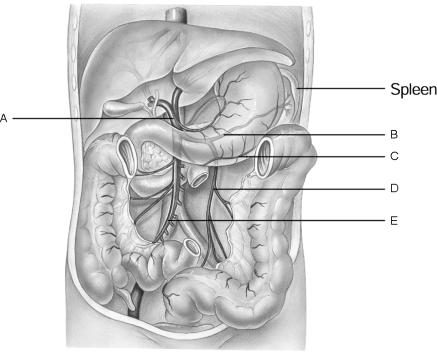 Figure 19.2Using Figure 19.2, match the following:
-Describe the forces that determine fluid movements across capillary walls.
Figure 19.2Using Figure 19.2, match the following:
-Describe the forces that determine fluid movements across capillary walls. (Essay)
4.8/5 (75)
(75) Figure 19.2Using Figure 19.2, match the following:
-Splenic vein.
Figure 19.2Using Figure 19.2, match the following:
-Splenic vein. (Short Answer)
4.7/5 (86)
(86) Which of the choices below reflects the balance (or imbalance) between the direction and amount of fluid that flows across the capillary walls?
(Multiple Choice)
4.7/5 (72)
(72) Which of the choices below does not explain why low capillary pressures are desirable?
(Multiple Choice)
4.8/5 (78)
(78) Which of the following do not influence arterial pulse rate?
(Multiple Choice)
4.8/5 (87)
(87) 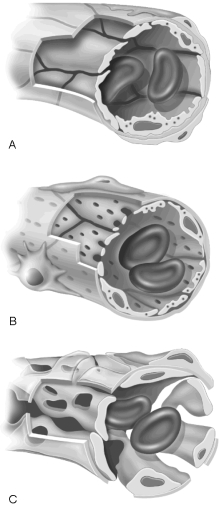 Figure 19.1Using Figure 19.1, match the following:
-A family of peptides called are released by the endothelium and are among the most potent vasoconstrictors known.
Figure 19.1Using Figure 19.1, match the following:
-A family of peptides called are released by the endothelium and are among the most potent vasoconstrictors known. (Short Answer)
4.9/5 (72)
(72) Which of the following blood pressure readings would be indicative of hypertension?
(Multiple Choice)
4.7/5 (61)
(61) Figure 19.1Using Figure 19.1, match the following:
-The type of circulatory shock due to abnormal expansion of blood vessels and a rapid drop in blood pressure is _ .
Figure 19.1Using Figure 19.1, match the following:
-The type of circulatory shock due to abnormal expansion of blood vessels and a rapid drop in blood pressure is _ . (Short Answer)
5.0/5 (74)
(74) What do the ductus arteriosus and the foramen ovale become at birth?
(Multiple Choice)
4.9/5 (80)
(80) 
Filters
- Essay(0)
- Multiple Choice(0)
- Short Answer(0)
- True False(0)
- Matching(0)