



 Chat with AI
Exam 2: Molecules and Cells in Animal Physiology

Exam 1: Animals and Environments: Function on the Ecological Stage66 Questions
Exam 2: Molecules and Cells in Animal Physiology65 Questions
Exam 3: Genomics, Proteomics, and Related Approaches to Physiology64 Questions
Exam 4: Physiological Development and Epigenetics59 Questions
Exam 5: Transport of Solutes and Water67 Questions
Exam 6: Nutrition, Feeding, and Digestion77 Questions
Exam 7: Energy Metabolism68 Questions
Exam 8: Aerobic and Anaerobic Forms of Metabolism75 Questions
Exam 9: The Energetics of Aerobic Activity72 Questions
Exam 10: Thermal Relations84 Questions
Exam 11: Food, Energy, and Temperature at Work: The Lives of Mammals in Frigid Places76 Questions
Exam 12: Neurons59 Questions
Exam 13: Synapses58 Questions
Exam 14: Sensory Processes67 Questions
Exam 15: Nervous System Organization and Biological Clocks59 Questions
Exam 16: Endocrine and Neuroendocrine Physiology69 Questions
Exam 17: Reproduction68 Questions
Exam 18: Integrating Systems at Work: Animal Navigation61 Questions
Exam 19: Control of Movement71 Questions
Exam 20: Muscle78 Questions
Exam 21: Movement and Muscle at Work: Plasticity in Response to Use and Disuse67 Questions
Exam 22: Introduction to Oxygen and Carbon Dioxide in Physiology65 Questions
Exam 23: External Respiration: the Physiology of Breathing70 Questions
Exam 24: Transport of Oxygen and Carbon Dioxide in Body Fluids With an Introduction to Acid- Base Physiology68 Questions
Exam 25: Circulation72 Questions
Exam 26: Oxygen, Carbon Dioxide, and Internal Transport at Work: Diving by Marine Mammals63 Questions
Exam 27: Water and Salt Physiology: Introduction and Mechanisms72 Questions
Exam 29: Kidneys and Excretion With Notes on Nitrogen Excretion89 Questions
Exam 30: Water, Salts, and Excretion at Work: Mammals of Deserts and Dry Savannas64 Questions
Exam 28: Water and Salt Physiology of Animals in Their Environments87 Questions
Select questions type


Define the law of mass action and apply it to a real biochemical reaction.
(Essay)
5.0/5  (87)
(87) 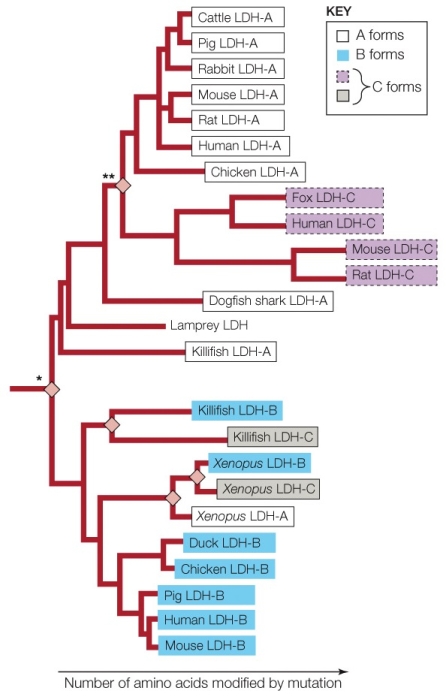 The diamonds refer to
The amount of substrate converted to product per unit of time is called the
(Multiple Choice)
4.8/5 (78)
(78) How does venom permit a slow-moving predator to feed on prey capable of high-speed escape?
(Multiple Choice)
4.9/5 (69)
(69) Provide a specific example of how a membrane protein can be categorized as more than one functional type.
(Essay)
4.7/5 (67)
(67) Compared to fish found in lower temperature habitats, fish that inhabit higher temperatures tend to have more
(Multiple Choice)
4.9/5 (66)
(66) How can amino acids in a protein be any closer to one another than their spaced positions in the linear string?
(Multiple Choice)
4.9/5 (89)
(89) Compare and contrast the factors affecting the rate of an enzymatic reaction in a substrate that is subsaturated and one that is saturated or at Vmax.
(Essay)
4.9/5 (85)
(85) Which of the following is considered a communicating junction?
(Multiple Choice)
4.8/5 (80)
(80) Refer to the figure shown.
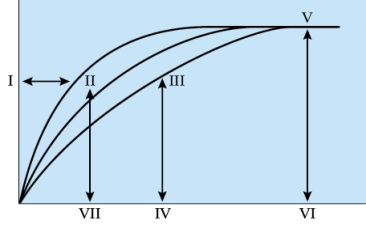 Which of the following represent the best labels for the x axis and the y axis in the figure?
 (Multiple Choice)
4.8/5 (81)
(81) The process of absorbing preexisting light and re-emitting it at longer wavelengths is called
(Multiple Choice)
4.7/5 (85)
(85) Refer to the figure shown.
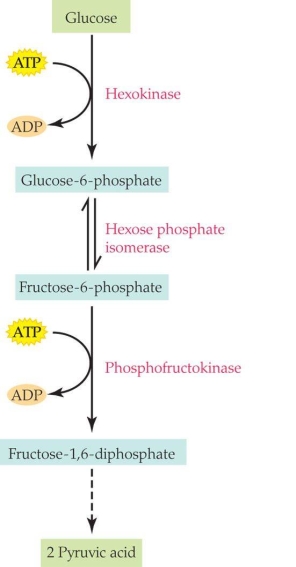 According to the figure, a high number of products from the Kreb's cycle could act as _______ and result in _______ of the overall reaction.
 (Multiple Choice)
4.8/5 (65)
(65) The ability of animals to change color in seconds or minutes depends on the function of
(Multiple Choice)
4.9/5 (103)
(103) Receptor proteins can bring about all of the following cellular actions except
(Multiple Choice)
4.8/5 (81)
(81) 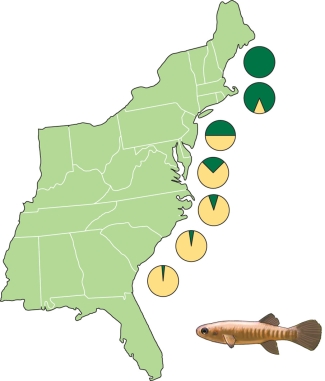 The figure shows the
Steroid hormones bind to _______ and ultimately cause _______.
(Multiple Choice)
4.9/5 (66)
(66) _______ is(are) the specific set of processes by which complex chemical compounds are broken down to release energy, create smaller chemical building blocks, or prepare chemical constituents for elimination.
(Multiple Choice)
4.8/5 (82)
(82) The likelihood that an enzyme will form a complex with the substrate during a collision is called the
(Multiple Choice)
4.8/5 (76)
(76) The α-conotoxin injected into fish by the cone snail binds to and therefore blocks receptor sites on the muscle membrane. This prevents a(n)
(Multiple Choice)
4.9/5 (76)
(76) 
Filters
- Essay(0)
- Multiple Choice(0)
- Short Answer(0)
- True False(0)
- Matching(0)