



 Chat with AI
Exam 17: Reproduction

Exam 1: Animals and Environments: Function on the Ecological Stage66 Questions
Exam 2: Molecules and Cells in Animal Physiology65 Questions
Exam 3: Genomics, Proteomics, and Related Approaches to Physiology64 Questions
Exam 4: Physiological Development and Epigenetics59 Questions
Exam 5: Transport of Solutes and Water67 Questions
Exam 6: Nutrition, Feeding, and Digestion77 Questions
Exam 7: Energy Metabolism68 Questions
Exam 8: Aerobic and Anaerobic Forms of Metabolism75 Questions
Exam 9: The Energetics of Aerobic Activity72 Questions
Exam 10: Thermal Relations84 Questions
Exam 11: Food, Energy, and Temperature at Work: The Lives of Mammals in Frigid Places76 Questions
Exam 12: Neurons59 Questions
Exam 13: Synapses58 Questions
Exam 14: Sensory Processes67 Questions
Exam 15: Nervous System Organization and Biological Clocks59 Questions
Exam 16: Endocrine and Neuroendocrine Physiology69 Questions
Exam 17: Reproduction68 Questions
Exam 18: Integrating Systems at Work: Animal Navigation61 Questions
Exam 19: Control of Movement71 Questions
Exam 20: Muscle78 Questions
Exam 21: Movement and Muscle at Work: Plasticity in Response to Use and Disuse67 Questions
Exam 22: Introduction to Oxygen and Carbon Dioxide in Physiology65 Questions
Exam 23: External Respiration: the Physiology of Breathing70 Questions
Exam 24: Transport of Oxygen and Carbon Dioxide in Body Fluids With an Introduction to Acid- Base Physiology68 Questions
Exam 25: Circulation72 Questions
Exam 26: Oxygen, Carbon Dioxide, and Internal Transport at Work: Diving by Marine Mammals63 Questions
Exam 27: Water and Salt Physiology: Introduction and Mechanisms72 Questions
Exam 29: Kidneys and Excretion With Notes on Nitrogen Excretion89 Questions
Exam 30: Water, Salts, and Excretion at Work: Mammals of Deserts and Dry Savannas64 Questions
Exam 28: Water and Salt Physiology of Animals in Their Environments87 Questions
Select questions type


In temperate climates, temperature often _______ photoperiod timing in the coordination of reproductive events.

Free
(Multiple Choice)
4.8/5  (85)
(85) Correct Answer: Verified
C
Which of the following is not considered prenatal provisioning?
Free
(Multiple Choice)
5.0/5 (98)
(98) Correct Answer:Verified
VerifiedA
Refer to the figure shown.
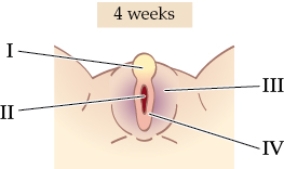 Which statement regarding the figure is true?
Free
(Multiple Choice)
4.8/5 (92)
(92) Correct Answer:Verified
VerifiedB
Which aspect of reproduction is not typically studied by physiologists?
(Multiple Choice)
4.9/5 (79)
(79) For sperm to be capable of fertilizing the oocyte, they must undergo a process of
(Multiple Choice)
4.9/5 (68)
(68) Refer to the figure shown.
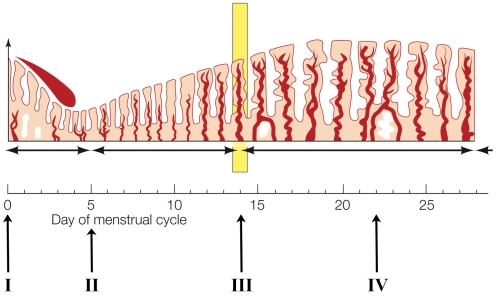 What process is occurring at arrow I in the figure?
 (Multiple Choice)
4.9/5 (84)
(84) Refer to the figure shown.
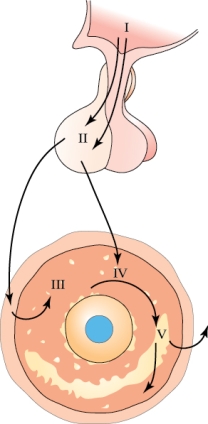 A hormone released from location _______ stimulates the granulosa cells to convert androgens to estrogens using the action of the enzyme at location _______.
 (Multiple Choice)
4.8/5 (90)
(90) Describe the positive feedback loop during birth and how this feedback ends.
(Essay)
4.9/5 (86)
(86) Refer to the figure shown.
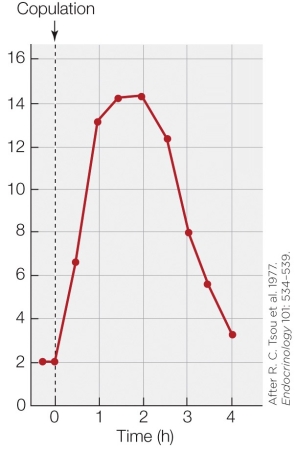 The figure shows a classic example of
 (Multiple Choice)
4.7/5 (89)
(89) Which statement regarding embryonic diapause in the Antarctic fur seal is true?
(Multiple Choice)
4.9/5 (87)
(87) Refer to the figure shown.
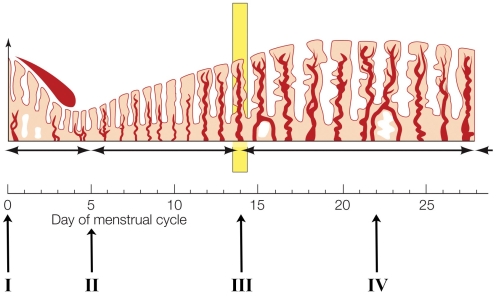 Which arrow in the figure best corresponds to the time of the most likely success of implantation?
 (Multiple Choice)
4.8/5 (80)
(80) What is the functional significance of embryonic diapause? Provide an example.
(Essay)
4.8/5 (75)
(75) In fish species where males control harems of females, the highest reproductive output would be likely in
(Multiple Choice)
4.9/5 (88)
(88) Androgens are classified as "male hormones," yet they are produced in the female mammal. Why are they important in the female mammal?
(Essay)
4.7/5 (98)
(98) 
Filters
- Essay(0)
- Multiple Choice(0)
- Short Answer(0)
- True False(0)
- Matching(0)