



 Chat with AI
Exam 16: Endocrine and Neuroendocrine Physiology

Exam 1: Animals and Environments: Function on the Ecological Stage66 Questions
Exam 2: Molecules and Cells in Animal Physiology65 Questions
Exam 3: Genomics, Proteomics, and Related Approaches to Physiology64 Questions
Exam 4: Physiological Development and Epigenetics59 Questions
Exam 5: Transport of Solutes and Water67 Questions
Exam 6: Nutrition, Feeding, and Digestion77 Questions
Exam 7: Energy Metabolism68 Questions
Exam 8: Aerobic and Anaerobic Forms of Metabolism75 Questions
Exam 9: The Energetics of Aerobic Activity72 Questions
Exam 10: Thermal Relations84 Questions
Exam 11: Food, Energy, and Temperature at Work: The Lives of Mammals in Frigid Places76 Questions
Exam 12: Neurons59 Questions
Exam 13: Synapses58 Questions
Exam 14: Sensory Processes67 Questions
Exam 15: Nervous System Organization and Biological Clocks59 Questions
Exam 16: Endocrine and Neuroendocrine Physiology69 Questions
Exam 17: Reproduction68 Questions
Exam 18: Integrating Systems at Work: Animal Navigation61 Questions
Exam 19: Control of Movement71 Questions
Exam 20: Muscle78 Questions
Exam 21: Movement and Muscle at Work: Plasticity in Response to Use and Disuse67 Questions
Exam 22: Introduction to Oxygen and Carbon Dioxide in Physiology65 Questions
Exam 23: External Respiration: the Physiology of Breathing70 Questions
Exam 24: Transport of Oxygen and Carbon Dioxide in Body Fluids With an Introduction to Acid- Base Physiology68 Questions
Exam 25: Circulation72 Questions
Exam 26: Oxygen, Carbon Dioxide, and Internal Transport at Work: Diving by Marine Mammals63 Questions
Exam 27: Water and Salt Physiology: Introduction and Mechanisms72 Questions
Exam 29: Kidneys and Excretion With Notes on Nitrogen Excretion89 Questions
Exam 30: Water, Salts, and Excretion at Work: Mammals of Deserts and Dry Savannas64 Questions
Exam 28: Water and Salt Physiology of Animals in Their Environments87 Questions
Select questions type


Why do steroid-secreting cells take longer to initiate secretion than do peptide-secreting hormones?

Free
(Multiple Choice)
4.9/5  (76)
(76) Correct Answer: Verified
C
Which of the following occurs after a significant blood loss?
Free
(Multiple Choice)
4.8/5 (80)
(80) Correct Answer:Verified
VerifiedB
Which hormone related to mammalian nutrient metabolism is secreted continuously?
Free
(Multiple Choice)
4.8/5 (85)
(85) Correct Answer:Verified
VerifiedC
What is the physiological importance of the hypothalamo-hypophysial portal system?
(Essay)
4.8/5 (88)
(88) Which statement about the mammalian stress response is true?
(Multiple Choice)
4.9/5 (86)
(86) Refer to the figure shown.
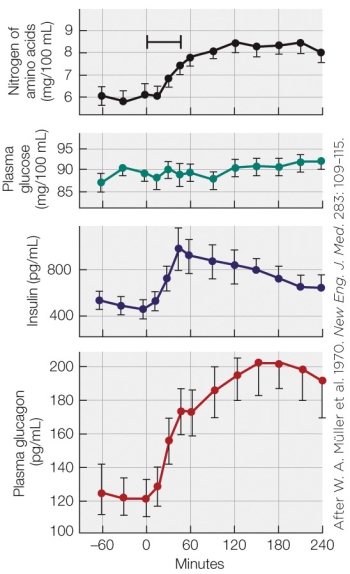 Which statement best explains the increase in insulin levels seen in the figure?
 (Multiple Choice)
4.9/5 (100)
(100) An anatomically distinct site for the release of neurohormones is called a(n)
(Multiple Choice)
4.8/5 (72)
(72) Which molecule must be present for the direct production of angiotensin II?
(Multiple Choice)
4.9/5 (76)
(76) Which statement regarding the feedback mechanisms of the HPA axis is true?
(Multiple Choice)
4.9/5 (81)
(81) Refer to the figure shown.
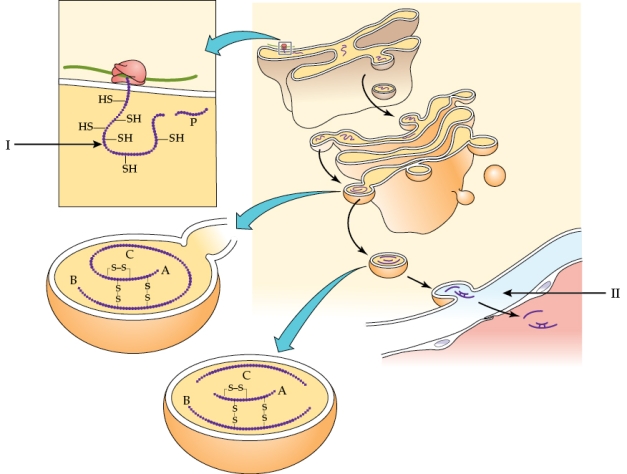 Arrow I in the diagram points to
 (Multiple Choice)
5.0/5 (76)
(76) Which best explains the formation of a goiter from iodine deficiency?
(Multiple Choice)
4.9/5 (80)
(80) Injections of _______ would likely result in the highest blood glucose levels in a mammal when measured 1 hour post injection.
(Multiple Choice)
4.9/5 (65)
(65) How did many countries significantly reduce iodine deficiency?
(Multiple Choice)
4.9/5 (78)
(78) Refer to the figure shown.
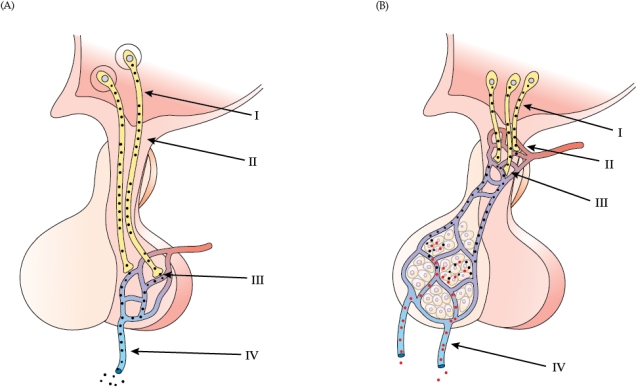 Which statement regarding the arrows is true in both figures?
 (Multiple Choice)
4.8/5 (82)
(82) How can the same hormone can have a completely different function in 2 different species?
(Multiple Choice)
4.8/5 (93)
(93) 
Filters
- Essay(0)
- Multiple Choice(0)
- Short Answer(0)
- True False(0)
- Matching(0)