



 Chat with AI
Exam 15: Nervous System Organization and Biological Clocks

Exam 1: Animals and Environments: Function on the Ecological Stage66 Questions
Exam 2: Molecules and Cells in Animal Physiology65 Questions
Exam 3: Genomics, Proteomics, and Related Approaches to Physiology64 Questions
Exam 4: Physiological Development and Epigenetics59 Questions
Exam 5: Transport of Solutes and Water67 Questions
Exam 6: Nutrition, Feeding, and Digestion77 Questions
Exam 7: Energy Metabolism68 Questions
Exam 8: Aerobic and Anaerobic Forms of Metabolism75 Questions
Exam 9: The Energetics of Aerobic Activity72 Questions
Exam 10: Thermal Relations84 Questions
Exam 11: Food, Energy, and Temperature at Work: The Lives of Mammals in Frigid Places76 Questions
Exam 12: Neurons59 Questions
Exam 13: Synapses58 Questions
Exam 14: Sensory Processes67 Questions
Exam 15: Nervous System Organization and Biological Clocks59 Questions
Exam 16: Endocrine and Neuroendocrine Physiology69 Questions
Exam 17: Reproduction68 Questions
Exam 18: Integrating Systems at Work: Animal Navigation61 Questions
Exam 19: Control of Movement71 Questions
Exam 20: Muscle78 Questions
Exam 21: Movement and Muscle at Work: Plasticity in Response to Use and Disuse67 Questions
Exam 22: Introduction to Oxygen and Carbon Dioxide in Physiology65 Questions
Exam 23: External Respiration: the Physiology of Breathing70 Questions
Exam 24: Transport of Oxygen and Carbon Dioxide in Body Fluids With an Introduction to Acid- Base Physiology68 Questions
Exam 25: Circulation72 Questions
Exam 26: Oxygen, Carbon Dioxide, and Internal Transport at Work: Diving by Marine Mammals63 Questions
Exam 27: Water and Salt Physiology: Introduction and Mechanisms72 Questions
Exam 29: Kidneys and Excretion With Notes on Nitrogen Excretion89 Questions
Exam 30: Water, Salts, and Excretion at Work: Mammals of Deserts and Dry Savannas64 Questions
Exam 28: Water and Salt Physiology of Animals in Their Environments87 Questions
Select questions type


Which is the most primitive organism that contains genes for nervous system organization?
(Multiple Choice)
4.8/5  (72)
(72) Refer to the figure shown.
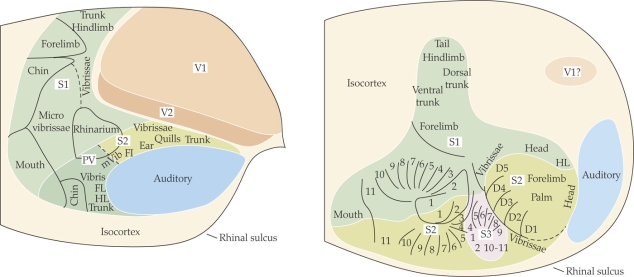 Which statement about the figure is false?
 (Multiple Choice)
4.7/5 (73)
(73) The preganglionic neuron of the sympathetic system releases the neurotransmitter
(Multiple Choice)
4.8/5 (81)
(81) What would be the effect of applying epinephrine/norepinephrine to the paravertebral ganglia in the upper thoracic area?
(Multiple Choice)
4.9/5 (87)
(87) Refer to the figure shown.
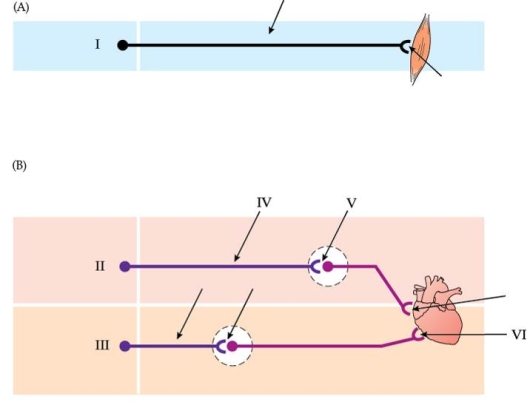 The labels in the figure correspond to which parts of the nervous system?
 (Multiple Choice)
4.8/5 (68)
(68) A surprise phone call at 3 AM would likely cause which physiological reaction?
(Multiple Choice)
4.9/5 (71)
(71) Refer to the figure shown.
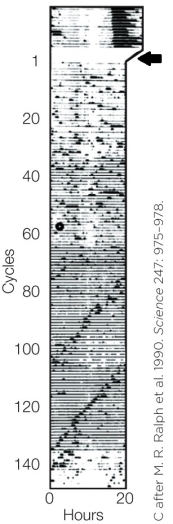 What is the likely experimental procedure is indicated by the arrow in the figure?
 (Multiple Choice)
4.9/5 (90)
(90) Describe the two major trends in nervous system evolution once animal lineages became bilaterally symmetrical.
(Essay)
4.9/5 (74)
(74) Explain how the pineal gland may operate differently in nonmammalian vertebrates compared to mammals.
(Essay)
5.0/5 (79)
(79) Refer to the figure shown.
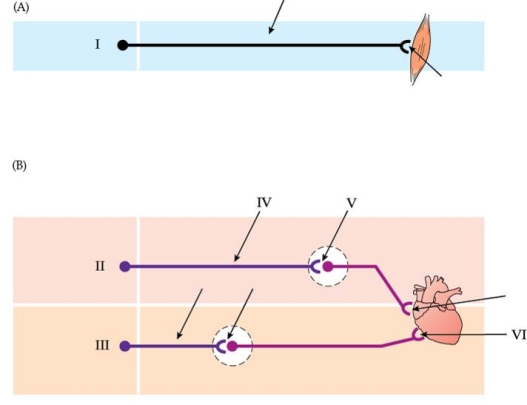 Describe the effect of adding acetylcholine to the area indicated by arrow IV in the figure.
 (Multiple Choice)
5.0/5 (72)
(72) Which of the following is the effector in the startle response of the cockroach?
(Multiple Choice)
4.7/5 (83)
(83) How do star-nosed moles exemplify the principles of brain functional organization?
(Essay)
4.8/5 (86)
(86) Rhythms that continue in the absence of environmental information about time are called
(Multiple Choice)
5.0/5 (74)
(74) Refer to the figure shown.
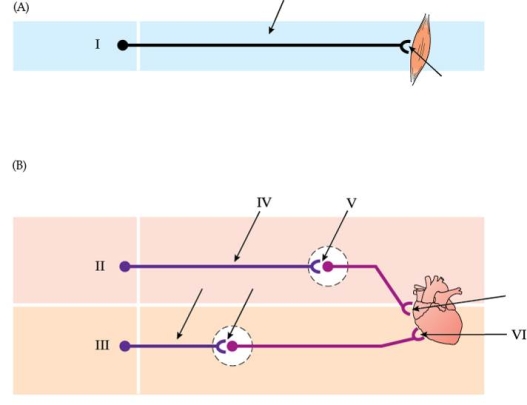 Which neurotransmitter is being released at arrow V?
 (Multiple Choice)
4.8/5 (66)
(66) Refer to the figure shown.
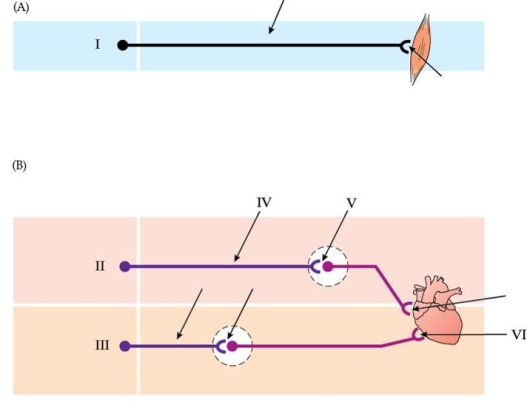 Describe the effect of adding acetylcholine to the area indicated by arrow V in the figure.
 (Multiple Choice)
4.8/5 (90)
(90) 
Filters
- Essay(0)
- Multiple Choice(0)
- Short Answer(0)
- True False(0)
- Matching(0)