



 Chat with AI
Exam 24: The Adaptive Immune Response

Exam 1: Microbial Life: Origin and Discovery70 Questions
Exam 2: Observing the Microbial Cell69 Questions
Exam 3: Cell Structure and Function72 Questions
Exam 4: Bacterial Culture, Growth, and Development70 Questions
Exam 5: Environmental Influences and Control of Microbial Growth70 Questions
Exam 6: Viruses70 Questions
Exam 7: Genomes and Chromosomes70 Questions
Exam 8: Transcription, Translation, and Bioinformatics76 Questions
Exam 9: Gene Transfer, Mutations, and Genome Evolution72 Questions
Exam 10: Molecular Regulation73 Questions
Exam 11: Viral Molecular Biology70 Questions
Exam 12: Biotechniques and Synthetic Biology72 Questions
Exam 13: Energetics and Catabolism77 Questions
Exam 14: Electron Flow in Organotrophy, Lithotrophy, and Phototrophy73 Questions
Exam 15: Biosynthesis73 Questions
Exam 16: Food and Industrial Microbiology73 Questions
Exam 17: Origins and Evolution70 Questions
Exam 18: Bacterial Diversity71 Questions
Exam 19: Archaeal Diversity70 Questions
Exam 20: Eukaryotic Diversity69 Questions
Exam 21: Microbial Ecology70 Questions
Exam 22: Microbes in Global Elemental Cycles70 Questions
Exam 23: Human Microbiota and Innate Immunity70 Questions
Exam 24: The Adaptive Immune Response70 Questions
Exam 25: Microbial Pathogenesis70 Questions
Exam 26: Microbial Diseases69 Questions
Exam 27: Antimicrobial Therapy72 Questions
Exam 28: Clinical Microbiology and Epidemiology75 Questions
Select questions type


X-linked hyper IgM syndrome (XHIM) is an immunodeficiency disorder caused by mutations of the gene encoding CD154. Why is this disease characterized by recurrent infections (starting in childhood) and elevated serum levels of IgM?
(Essay)
4.9/5  (78)
(78) Which of the following is NOT associated with overall human health?
(Multiple Choice)
4.8/5 (70)
(70) A threshold dose of antigen is best described as the dose needed to
(Multiple Choice)
4.8/5 (71)
(71) A typical antibody molecule has ________ antigen-binding sites.
(Multiple Choice)
4.7/5 (85)
(85) Using the information presented in the table below, discuss why most vaccines are given between birth and 24 months.
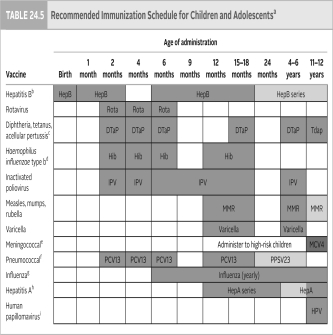
(Essay)
4.8/5 (77)
(77) There are ________ polypeptide chains in the typical antibody.
(Multiple Choice)
4.8/5 (81)
(81) 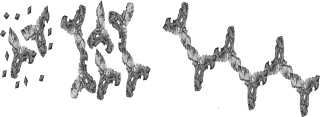
A mutation that caused a person to have an ineffective complement C6 protein would have a direct effect on formation of
(Multiple Choice)
4.9/5 (72)
(72) Which of the following is most likely to elicit the strongest antigen-specific immune response if injected intravenously into a mouse?
(Multiple Choice)
4.8/5 (71)
(71) Systemic lupus erythematosus (SLE) is a chronic, inflammatory autoimmune disorder affecting the skin, joints, kidneys, and other organs. A hallmark of lupus is the production of an array of autoantibodies. Some scientists believe that the autoantibody formation seen in lupus is a result of Epstein-Barr virus molecular mimicry. What do these scientists believe has happened in the case of lupus? Give one example as evidential support.
(Essay)
4.9/5 (82)
(82) Why are macrophages, monocytes, mast cells, and dendritic cells considered "professional" antigen-presenting cells, whereas fibroblasts are considered "nonprofessional" antigen-presenting cells?
(Essay)
4.8/5 (75)
(75) If a person is infected with the cold virus one year, why can he or she still catch a cold again the next year, even if his or her immune system is working properly?
(Essay)
4.9/5 (93)
(93) A complete T-cell receptor on a helper T cell contains both the antigen-binding receptor molecule and a ________ protein for signal transduction.
(Multiple Choice)
4.8/5 (85)
(85) The five classes of antibodies (IgG, IgA, IgM, IgE, and IgD) that can be produced during an immune response are based on differences in ________ chain regions.
(Multiple Choice)
4.9/5 (83)
(83) 
Filters
- Essay(0)
- Multiple Choice(0)
- Short Answer(0)
- True False(0)
- Matching(0)