



 Chat with AI
Exam 24: The Adaptive Immune Response

Exam 1: Microbial Life: Origin and Discovery70 Questions
Exam 2: Observing the Microbial Cell69 Questions
Exam 3: Cell Structure and Function72 Questions
Exam 4: Bacterial Culture, Growth, and Development70 Questions
Exam 5: Environmental Influences and Control of Microbial Growth70 Questions
Exam 6: Viruses70 Questions
Exam 7: Genomes and Chromosomes70 Questions
Exam 8: Transcription, Translation, and Bioinformatics76 Questions
Exam 9: Gene Transfer, Mutations, and Genome Evolution72 Questions
Exam 10: Molecular Regulation73 Questions
Exam 11: Viral Molecular Biology70 Questions
Exam 12: Biotechniques and Synthetic Biology72 Questions
Exam 13: Energetics and Catabolism77 Questions
Exam 14: Electron Flow in Organotrophy, Lithotrophy, and Phototrophy73 Questions
Exam 15: Biosynthesis73 Questions
Exam 16: Food and Industrial Microbiology73 Questions
Exam 17: Origins and Evolution70 Questions
Exam 18: Bacterial Diversity71 Questions
Exam 19: Archaeal Diversity70 Questions
Exam 20: Eukaryotic Diversity69 Questions
Exam 21: Microbial Ecology70 Questions
Exam 22: Microbes in Global Elemental Cycles70 Questions
Exam 23: Human Microbiota and Innate Immunity70 Questions
Exam 24: The Adaptive Immune Response70 Questions
Exam 25: Microbial Pathogenesis70 Questions
Exam 26: Microbial Diseases69 Questions
Exam 27: Antimicrobial Therapy72 Questions
Exam 28: Clinical Microbiology and Epidemiology75 Questions
Select questions type


The small segment of antigen that is capable of eliciting an immune response is called a(n)
(Multiple Choice)
4.9/5  (85)
(85) Chlamydia trachomatis is a bacterial STD that lives intracellularly within human host cells. What immune response would most likely prevail in this infection?
(Multiple Choice)
4.7/5 (88)
(88) The cells involved in shutting down immune responses that help prevent autoimmunity are
(Multiple Choice)
4.8/5 (80)
(80) If infections are spread by person-to-person contact, what percentage of the population will be protected against herd immunity if people are not vaccinated?
(Multiple Choice)
4.8/5 (86)
(86) Why is type AB blood considered to be the "universal recipient"? Explain what this means in terms of the antigens and antibodies present in blood types.
(Essay)
4.7/5 (84)
(84) Which of the following could be categorized as an example of humoral immunity?
(Multiple Choice)
4.8/5 (69)
(69) 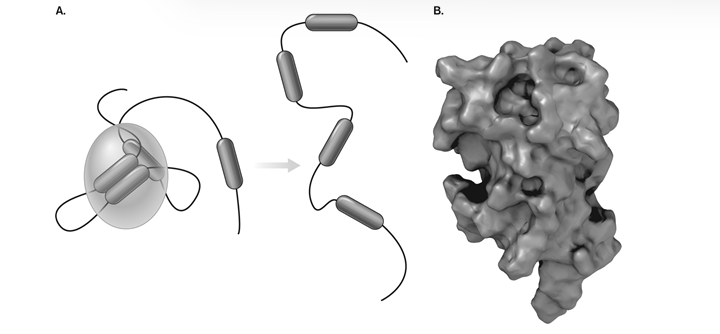
In a radial immunodiffusion assay, immunoprecipitation rings will be created within the agar dish based on
(Multiple Choice)
4.8/5 (69)
(69) Some patients suffering from bare lymphocyte syndrome (BLS), a rare immunodeficiency, have a genetic mutation in their TAP1/TAP2 genes causing the production of a defective TAP transporter. Describe what effect this has on antigen processing and in what cells.
(Essay)
4.9/5 (84)
(84) A surgical patient infected with a blood-borne Staphylococcus would initially produce an anti-staphylococcal antibody of the IgM class. Why is that?
(Essay)
4.9/5 (79)
(79) During the course of an intestinal infection with Salmonella enteritidis, the B cells undergo class switching. ________ switching is most likely to occur, which is caused by ________ cytokines.
(Multiple Choice)
4.7/5 (77)
(77) Bacteremia is a condition in which live bacteria enter the bloodstream, but not the cells of the body. Which form of processing would occur to stimulate a cell-mediated immune response?
(Multiple Choice)
4.8/5 (70)
(70) An example of an antigen that could stimulate naïve B-cell proliferation and differentiation without the help of a T cell would be a(n) ________ molecule from ________.
(Multiple Choice)
4.7/5 (69)
(69) In 2004, doctors successfully used gene therapy with a severely defective leukemia virus to insert a cytokine receptor gene needed for T-cell development into the bone marrow of four children with severe combined immunodeficiency (SCID). What is SCID, and how did doing this procedure address the disease?
(Essay)
4.8/5 (77)
(77) Capping of B-cell receptors on the surface of an antigen-exposed B cell immediately causes
(Multiple Choice)
4.8/5 (71)
(71) Which of the following is most likely to elicit the strongest antigen-specific immune response within a human?
(Multiple Choice)
4.7/5 (73)
(73) RAG1 and RAG2 are enzymes that control gene splicing on B-cell antibody genes. Which order are segments worked on in the creation of the heavy-chain gene segment?
(Multiple Choice)
4.9/5 (80)
(80) 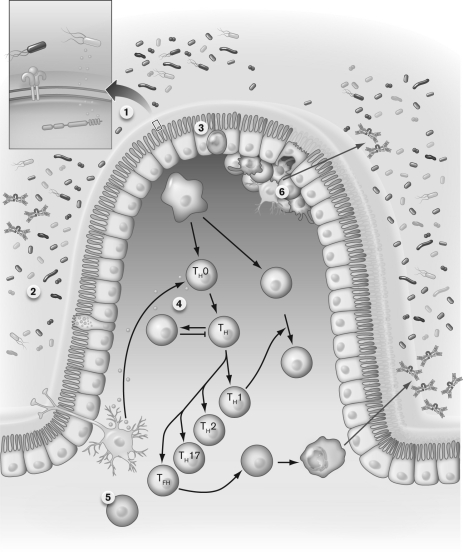
A baby will receive ________ class of antibodies from his or her mother before birth through the umbilical cord, and then ________ class of antibodies through the breast milk after birth.
(Multiple Choice)
4.9/5 (81)
(81) 
Filters
- Essay(0)
- Multiple Choice(0)
- Short Answer(0)
- True False(0)
- Matching(0)