



 Chat with AI
Exam 26: Microbial Diseases

Exam 1: Microbial Life: Origin and Discovery70 Questions
Exam 2: Observing the Microbial Cell69 Questions
Exam 3: Cell Structure and Function72 Questions
Exam 4: Bacterial Culture, Growth, and Development70 Questions
Exam 5: Environmental Influences and Control of Microbial Growth70 Questions
Exam 6: Viruses70 Questions
Exam 7: Genomes and Chromosomes70 Questions
Exam 8: Transcription, Translation, and Bioinformatics76 Questions
Exam 9: Gene Transfer, Mutations, and Genome Evolution72 Questions
Exam 10: Molecular Regulation73 Questions
Exam 11: Viral Molecular Biology70 Questions
Exam 12: Biotechniques and Synthetic Biology72 Questions
Exam 13: Energetics and Catabolism77 Questions
Exam 14: Electron Flow in Organotrophy, Lithotrophy, and Phototrophy73 Questions
Exam 15: Biosynthesis73 Questions
Exam 16: Food and Industrial Microbiology73 Questions
Exam 17: Origins and Evolution70 Questions
Exam 18: Bacterial Diversity71 Questions
Exam 19: Archaeal Diversity70 Questions
Exam 20: Eukaryotic Diversity69 Questions
Exam 21: Microbial Ecology70 Questions
Exam 22: Microbes in Global Elemental Cycles70 Questions
Exam 23: Human Microbiota and Innate Immunity70 Questions
Exam 24: The Adaptive Immune Response70 Questions
Exam 25: Microbial Pathogenesis70 Questions
Exam 26: Microbial Diseases69 Questions
Exam 27: Antimicrobial Therapy72 Questions
Exam 28: Clinical Microbiology and Epidemiology75 Questions
Select questions type


Why is antibiotic treatment NOT recommended for the enterohemorrhagic E. coli O157:H7, or EHEC?

Free
(Essay)
4.9/5  (77)
(77) Correct Answer: Verified
EHEC produces Shiga toxins 1 and 2 and can result in hemolytic uremic syndrome (HUS) and thrombotic thrombocytopenic purpura (TPP). In HUS, microclots in the kidney lead to decreased urine output and, ultimately, kidney failure. HUS can only be treated with supportive care until kidney function resumes. Antibiotics can actually increase the release of Shiga toxins and trigger HUS.
Which of the following respiratory infections is caused by a viral pathogen?
Free
(Multiple Choice)
4.9/5 (76)
(76) Correct Answer:Verified
VerifiedE
What evidence suggests that Columbus did not bring syphilis back from the New World, but instead brought it from Europe to the New World?
Free
(Essay)
4.7/5 (74)
(74) Correct Answer:Verified
VerifiedNative Americans buried before Columbus arrived in America show no signs of syphilis. Pre-Columbian skeletons in England, however, do show signs of syphilis. It is now thought that Columbus brought syphilis, smallpox, and measles to the Americas.
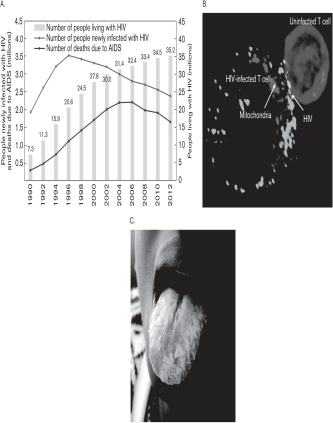
A commonly implicated causative agent of subacute endocarditis (SBE) is
(Multiple Choice)
4.9/5 (70)
(70) One major source of Clostridium botulinum infection in infants is
(Multiple Choice)
4.9/5 (88)
(88) Strains of Escherichia coli that cause about 75% of all urinary tract infections use ________ to latch on to proteins coating the urinary tract epithelium.
(Multiple Choice)
4.9/5 (91)
(91) Diarrhea associated with the intake of nonabsorbable substrates is categorized as
(Multiple Choice)
5.0/5 (86)
(86) The presence of leukocytes in a fecal smear would best indicate ________ infection.
(Multiple Choice)
4.9/5 (79)
(79) Why is anthrax primarily, though uncommonly, found in people who work with sheep and sheep-related products?
(Essay)
4.9/5 (85)
(85) Explain the mechanism by which meningococci get to the brain and spinal fluid to cause disease.
(Essay)
5.0/5 (85)
(85) People who come down with STDs and do not get treated, frequently end up with co-STD infections. Why is this? Explain.
(Essay)
4.9/5 (88)
(88) Name and describe the role of the three domains found in tetanus and botulism neurotoxins.
(Essay)
5.0/5 (91)
(91) Bacterial infections of the lung that arise secondary to viral disease are attributable in part to
(Multiple Choice)
4.7/5 (75)
(75) Predict how a chest X-ray and blood counts differ for a fungal versus bacterial lung infection in children and adults.
(Essay)
5.0/5 (59)
(59) 
Filters
- Essay(0)
- Multiple Choice(0)
- Short Answer(0)
- True False(0)
- Matching(0)