



 Chat with AI
Exam 23: Human Microbiota and Innate Immunity

Exam 1: Microbial Life: Origin and Discovery70 Questions
Exam 2: Observing the Microbial Cell69 Questions
Exam 3: Cell Structure and Function72 Questions
Exam 4: Bacterial Culture, Growth, and Development70 Questions
Exam 5: Environmental Influences and Control of Microbial Growth70 Questions
Exam 6: Viruses70 Questions
Exam 7: Genomes and Chromosomes70 Questions
Exam 8: Transcription, Translation, and Bioinformatics76 Questions
Exam 9: Gene Transfer, Mutations, and Genome Evolution72 Questions
Exam 10: Molecular Regulation73 Questions
Exam 11: Viral Molecular Biology70 Questions
Exam 12: Biotechniques and Synthetic Biology72 Questions
Exam 13: Energetics and Catabolism77 Questions
Exam 14: Electron Flow in Organotrophy, Lithotrophy, and Phototrophy73 Questions
Exam 15: Biosynthesis73 Questions
Exam 16: Food and Industrial Microbiology73 Questions
Exam 17: Origins and Evolution70 Questions
Exam 18: Bacterial Diversity71 Questions
Exam 19: Archaeal Diversity70 Questions
Exam 20: Eukaryotic Diversity69 Questions
Exam 21: Microbial Ecology70 Questions
Exam 22: Microbes in Global Elemental Cycles70 Questions
Exam 23: Human Microbiota and Innate Immunity70 Questions
Exam 24: The Adaptive Immune Response70 Questions
Exam 25: Microbial Pathogenesis70 Questions
Exam 26: Microbial Diseases69 Questions
Exam 27: Antimicrobial Therapy72 Questions
Exam 28: Clinical Microbiology and Epidemiology75 Questions
Select questions type


Which structure engulfs microbes by phagocytosis? 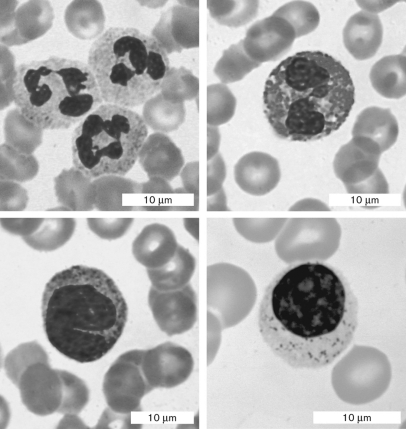

Free
(Multiple Choice)
4.9/5  (65)
(65) Correct Answer: Verified
C
Natural killer cells target ________ cells that ________.
Free
(Multiple Choice)
5.0/5 (86)
(86) Correct Answer:Verified
VerifiedA
Describe how natural killer cells work in response to a bacterial infection.
Free
(Essay)
4.8/5 (73)
(73) Correct Answer:Verified
VerifiedThe mission of NK cells is to kill host cells that harbor microorganisms. NK cells recognize changes in cell-surface proteins of infected cells and then degranulate to release chemicals that kill those cells.
Are the Langerhans cells of skin-associated lymphoid tissue (SALT) related to the islets of Langerhans of the pancreas that secrete insulin? What is the function of Langerhans cells?
(Essay)
4.8/5 (79)
(79) Microbes in and on humans sharpen immunity and protect from infection. Explain why these benefits also come with considerable risk.
(Essay)
4.9/5 (73)
(73) Which of the following innate immunity mechanisms is mismatched with its associated structure or body fluid?
(Multiple Choice)
4.8/5 (67)
(67) Detection of high levels of mannose-binding lectin in the blood could signify
(Multiple Choice)
4.9/5 (84)
(84) Which of the following types of cells are antigen-presenting cells?
(Multiple Choice)
4.7/5 (89)
(89) An organism found on human skin that derives benefit from but does not harm the host is described as a(n)
(Multiple Choice)
4.9/5 (95)
(95) What explains the ability of Helicobacter pylori to defy stomach acidity?
(Essay)
5.0/5 (78)
(78) Extravasation is the process by which ________ move(s) from the bloodstream into surrounding tissues.
(Multiple Choice)
4.8/5 (70)
(70) Much of the ________ is normally free from microbes in a healthy individual.
(Multiple Choice)
4.7/5 (74)
(74) Opsonization is a process whereby the innate and adaptive immune mechanisms work together
(Multiple Choice)
4.9/5 (71)
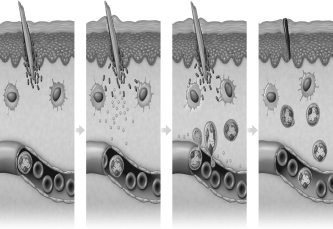
(71) Explain the steps of the basic inflammatory response as pictured in the figure below.
(Essay)
4.8/5 (72)
(72) 
Filters
- Essay(0)
- Multiple Choice(0)
- Short Answer(0)
- True False(0)
- Matching(0)