



 Chat with AI
Exam 24: Nutrition, Metabolism, and Body Temperature Regulation

Exam 1: The Human Body: an Orientation100 Questions
Exam 2: Chemistry Comes Alive120 Questions
Exam 3: Cells: the Living Units119 Questions
Exam 4: Tissue: the Living Fabric97 Questions
Exam 5: The Integumentary System107 Questions
Exam 6: Bones and Skeletal Tissues94 Questions
Exam 7: The Skeleton102 Questions
Exam 8: Joints105 Questions
Exam 9: Muscles and Muscle Tissue109 Questions
Exam 10: The Muscular System109 Questions
Exam 11: Fundamentals of the Nervous System and Nervous Tissue95 Questions
Exam 12: The Central Nervous System132 Questions
Exam 13: The Peripheral Nervous System and Reflex Activity97 Questions
Exam 14: The Autonomic Nervous System96 Questions
Exam 15: The Special Senses127 Questions
Exam 16: The Endocrine System119 Questions
Exam 17: Blood99 Questions
Exam 18: The Cardiovascular System: the Heart94 Questions
Exam 19: The Cardiovascular System: Blood Vessels107 Questions
Exam 20: The Lymphatic System and Lymphoid Organs and Tissues95 Questions
Exam 21: The Immune System: Innate and Adaptive Body Defensives118 Questions
Exam 22: The Respiratory System120 Questions
Exam 23: The Digestive System145 Questions
Exam 24: Nutrition, Metabolism, and Body Temperature Regulation114 Questions
Exam 25: The Urinary System116 Questions
Exam 26: Fluid, Electrolyte, and Acid-Base Balance94 Questions
Exam 27: The Reproductive System126 Questions
Exam 28: Pregnancy and Human Development97 Questions
Exam 29: Heredity90 Questions
Select questions type


Minerals required by the body in moderate amounts include all but which of the following?
(Multiple Choice)
4.8/5  (67)
(67) Which of the choices below is not a fate of carbohydrate taken into the body?
(Multiple Choice)
5.0/5 (69)
(69) 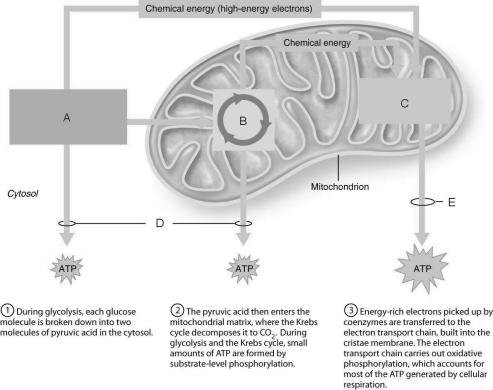 Figure 24.1Using Figure 24.1, match the following:
-What is obesity, and what health problems accompany or follow its onset?
Figure 24.1Using Figure 24.1, match the following:
-What is obesity, and what health problems accompany or follow its onset? (Essay)
4.8/5 (73)
(73) When blood glucose levels are low, the body begins to use more noncarbohydrate fuels for energy production. This process is called glucose activation.
(True/False)
4.9/5 (88)
(88) Hypervitaminosis may have serious consequences. Which vitamin group, water or fat soluble, is most likely to be involved in such cases and why?
(Essay)
4.8/5 (87)
(87) After chopping wood for about 2 hours, on a hot but breezy afternoon, John stumbled into the house and immediately fainted. His T- shirt was wringing wet with perspiration, and his pulse was faint and rapid. What is your tentative diagnosis? Explain your reasoning and note what you should do to help John's recovery.
(Essay)
4.8/5 (79)
(79) Which nutritional state constitutes the period during and shortly after eating when nutrients are flushing into the bloodstream from the GI tract?
(Short Answer)
4.8/5 (72)
(72) Which of the following is not an important function of the liver?
(Multiple Choice)
4.8/5 (85)
(85) Explain why the elderly more easily gain weight, even though they may actually eat very little.
(Essay)
5.0/5 (79)
(79) Which of the following nutrients yield the highest amount of energy per gram when metabolized?
(Multiple Choice)
4.9/5 (94)
(94) The patient is a 28- year- old female with insulin- dependent diabetes. She developed viral gastroenteritis with nausea and vomiting. She did not take her insulin and she became increasingly nonresponsive. Her husband called 911 and she was taken to the emergency room. Her pulse rate was 128 and her respiratory rate was 28, deep, and smelled fruity (Kussmaul breathing). Her urinary glucose and ketone levels were both 4+. Her pH was dangerously low. Explain how the body attempted to compensate for the low serum pH.
(Essay)
4.8/5 (84)
(84) 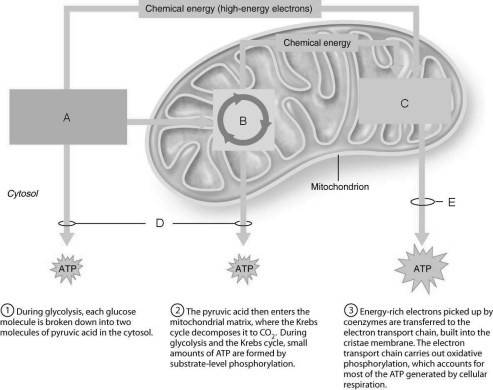 Figure 24.1Using Figure 24.1, match the following:
-In the Krebs cycle, citric acid is followed by acid.
Figure 24.1Using Figure 24.1, match the following:
-In the Krebs cycle, citric acid is followed by acid. (Short Answer)
5.0/5 (95)
(95) 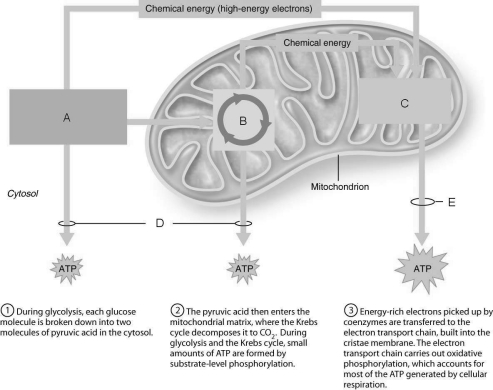 Figure 24.1Using Figure 24.1, match the following:
-Ten- step enzymatically driven process that converts glucose into pyruvic acid.
Figure 24.1Using Figure 24.1, match the following:
-Ten- step enzymatically driven process that converts glucose into pyruvic acid. (Short Answer)
4.7/5 (75)
(75) 
Filters
- Essay(0)
- Multiple Choice(0)
- Short Answer(0)
- True False(0)
- Matching(0)