



 Chat with AI
Exam 24: Nutrition, Metabolism, and Body Temperature Regulation

Exam 1: The Human Body: an Orientation100 Questions
Exam 2: Chemistry Comes Alive120 Questions
Exam 3: Cells: the Living Units119 Questions
Exam 4: Tissue: the Living Fabric97 Questions
Exam 5: The Integumentary System107 Questions
Exam 6: Bones and Skeletal Tissues94 Questions
Exam 7: The Skeleton102 Questions
Exam 8: Joints105 Questions
Exam 9: Muscles and Muscle Tissue109 Questions
Exam 10: The Muscular System109 Questions
Exam 11: Fundamentals of the Nervous System and Nervous Tissue95 Questions
Exam 12: The Central Nervous System132 Questions
Exam 13: The Peripheral Nervous System and Reflex Activity97 Questions
Exam 14: The Autonomic Nervous System96 Questions
Exam 15: The Special Senses127 Questions
Exam 16: The Endocrine System119 Questions
Exam 17: Blood99 Questions
Exam 18: The Cardiovascular System: the Heart94 Questions
Exam 19: The Cardiovascular System: Blood Vessels107 Questions
Exam 20: The Lymphatic System and Lymphoid Organs and Tissues95 Questions
Exam 21: The Immune System: Innate and Adaptive Body Defensives118 Questions
Exam 22: The Respiratory System120 Questions
Exam 23: The Digestive System145 Questions
Exam 24: Nutrition, Metabolism, and Body Temperature Regulation114 Questions
Exam 25: The Urinary System116 Questions
Exam 26: Fluid, Electrolyte, and Acid-Base Balance94 Questions
Exam 27: The Reproductive System126 Questions
Exam 28: Pregnancy and Human Development97 Questions
Exam 29: Heredity90 Questions
Select questions type


Which of the choices below happens during the absorptive state?
(Multiple Choice)
4.9/5  (82)
(82) When proteins undergo deamination, the waste substance found in the urine is mostly .
(Multiple Choice)
4.7/5 (71)
(71) The enzymes that catalyze oxidation- reduction reactions by removing hydrogen are specifically called .
(Short Answer)
5.0/5 (69)
(69) Many factors influence BMR. What is the most critical factor?
(Multiple Choice)
4.8/5 (84)
(84) The molecule that serves as the major source of readily available fuel for neurons and blood cells is
)
(Multiple Choice)
4.8/5 (80)
(80) Triglycerides and cholesterol do not circulate freely in the bloodstream.
(True/False)
5.0/5 (77)
(77) Ghrelin, produced by the stomach, is a powerful appetite stimulant.
(True/False)
4.9/5 (82)
(82) All athletes require diets high in protein and calories in order to perform and to maintain their muscle mass.
(True/False)
4.8/5 (81)
(81) The amount of protein needed by each person is determined by the age, size, and metabolic rate of the person.
(True/False)
4.9/5 (84)
(84) Which of the following food groups are considered good sources of complete proteins?
(Multiple Choice)
4.8/5 (69)
(69) The process of breaking triglycerides down into glycerol and fatty acids is known as .
(Multiple Choice)
4.9/5 (86)
(86) Glycogenesis begins when ATP levels are high, and glucose entering cells is phosphorylated to glucose- 6- phosphate and converted to its isomer, glucose- 1- phosphate.
(True/False)
4.9/5 (80)
(80) 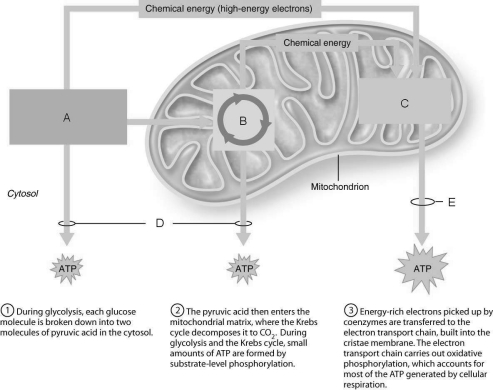 Figure 24.1Using Figure 24.1, match the following:
-Where the hydrogen atoms removed during the oxidation of food fuels are combined with O2.
Figure 24.1Using Figure 24.1, match the following:
-Where the hydrogen atoms removed during the oxidation of food fuels are combined with O2. (Short Answer)
4.7/5 (88)
(88) Fat burning causes an accumulation of acetyl CoA, which the liver converts to .
(Short Answer)
4.9/5 (81)
(81) Which of the following is a normal consequence of the activation of the heat- promoting center?
(Multiple Choice)
4.7/5 (71)
(71) 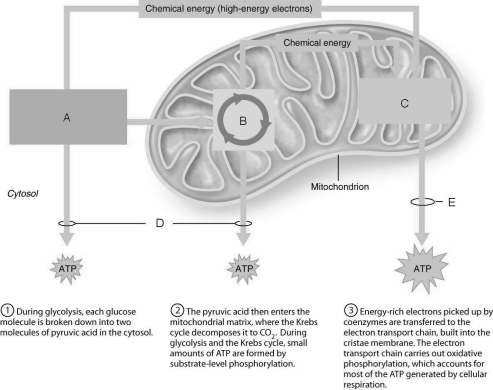 Figure 24.1Using Figure 24.1, match the following:
-Contains ATP synthases, small rotary motors.
Figure 24.1Using Figure 24.1, match the following:
-Contains ATP synthases, small rotary motors. (Short Answer)
4.9/5 (89)
(89) Which of the choices below is not a mechanism of heat production?
(Multiple Choice)
4.8/5 (75)
(75) 
Filters
- Essay(0)
- Multiple Choice(0)
- Short Answer(0)
- True False(0)
- Matching(0)