



 Chat with AI
Exam 3: Cells: the Living Units

Exam 1: The Human Body: an Orientation100 Questions
Exam 2: Chemistry Comes Alive120 Questions
Exam 3: Cells: the Living Units119 Questions
Exam 4: Tissue: the Living Fabric97 Questions
Exam 5: The Integumentary System107 Questions
Exam 6: Bones and Skeletal Tissues94 Questions
Exam 7: The Skeleton102 Questions
Exam 8: Joints105 Questions
Exam 9: Muscles and Muscle Tissue109 Questions
Exam 10: The Muscular System109 Questions
Exam 11: Fundamentals of the Nervous System and Nervous Tissue95 Questions
Exam 12: The Central Nervous System132 Questions
Exam 13: The Peripheral Nervous System and Reflex Activity97 Questions
Exam 14: The Autonomic Nervous System96 Questions
Exam 15: The Special Senses127 Questions
Exam 16: The Endocrine System119 Questions
Exam 17: Blood99 Questions
Exam 18: The Cardiovascular System: the Heart94 Questions
Exam 19: The Cardiovascular System: Blood Vessels107 Questions
Exam 20: The Lymphatic System and Lymphoid Organs and Tissues95 Questions
Exam 21: The Immune System: Innate and Adaptive Body Defensives118 Questions
Exam 22: The Respiratory System120 Questions
Exam 23: The Digestive System145 Questions
Exam 24: Nutrition, Metabolism, and Body Temperature Regulation114 Questions
Exam 25: The Urinary System116 Questions
Exam 26: Fluid, Electrolyte, and Acid-Base Balance94 Questions
Exam 27: The Reproductive System126 Questions
Exam 28: Pregnancy and Human Development97 Questions
Exam 29: Heredity90 Questions
Select questions type


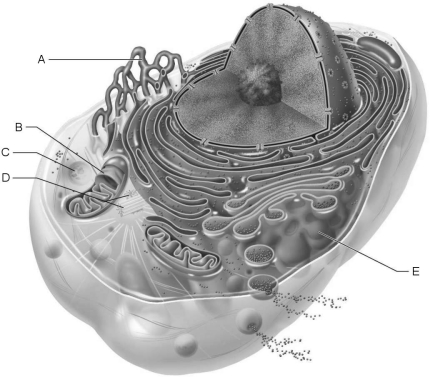 Figure 3.1Using Figure 3.1, match the following:
-What are lipid rafts? What are their functions?
Figure 3.1Using Figure 3.1, match the following:
-What are lipid rafts? What are their functions? (Essay)
4.9/5  (79)
(79) Your patient has the flu and reports 5-6 loose stools a day. He has experienced an isotonic fluid volume loss. Explain what an isotonic fluid loss means.
(Essay)
4.9/5 (87)
(87) The electron microscope has revealed that one of the components within the cell consists of pinwheel array of 9 triplets of microtubules arranged to form a hollow tube. This structure is a
)
(Multiple Choice)
4.8/5 (80)
(80) Which of the following statements is correct regarding RNA?
(Multiple Choice)
4.8/5 (87)
(87) Which structures are fingerlike projections that greatly increase the absorbing surface of cells?
(Multiple Choice)
4.9/5 (84)
(84) The genetic information is coded in DNA by the regular alternation of sugar and phosphate molecules.
(True/False)
4.9/5 (85)
(85) Which of the following is NOT a function of the smooth endoplasmic reticulum?
(Multiple Choice)
4.9/5 (78)
(78) Figure 3.1Using Figure 3.1, match the following:
-Produces ATP aerobically.
Figure 3.1Using Figure 3.1, match the following:
-Produces ATP aerobically. (Short Answer)
4.8/5 (82)
(82) 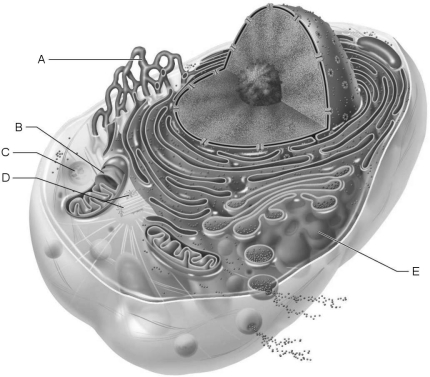 Figure 3.1Using Figure 3.1, match the following:
-The metabolic or growth phase of a cell life cycle is called .
Figure 3.1Using Figure 3.1, match the following:
-The metabolic or growth phase of a cell life cycle is called . (Short Answer)
4.9/5 (66)
(66) Diffusion movement always occurs from areas of greater to areas of lesser concentration.
(True/False)
5.0/5 (79)
(79) What moves cell organelles from one location to another inside a cell?
(Multiple Choice)
4.8/5 (80)
(80) Which of the following is not a factor that binds cells together?
(Multiple Choice)
4.9/5 (80)
(80) Crenation (shrinking) is likely to occur in blood cells immersed in .
(Multiple Choice)
4.8/5 (67)
(67) 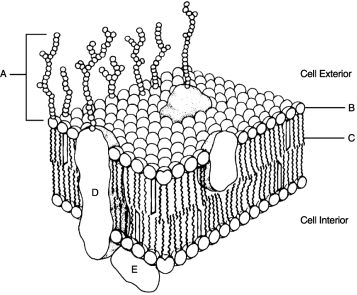 Figure 3.2Using Figure 3.2, match the following:
-List possible causes of aging.
Figure 3.2Using Figure 3.2, match the following:
-List possible causes of aging. (Essay)
5.0/5 (78)
(78) Ribosomes, endoplasmic reticulum, and the Golgi apparatus functionally act in sequence to synthesize and modify proteins for secretory use (export) only, never for use by the cell. This statement is _ .
(Multiple Choice)
4.8/5 (93)
(93) 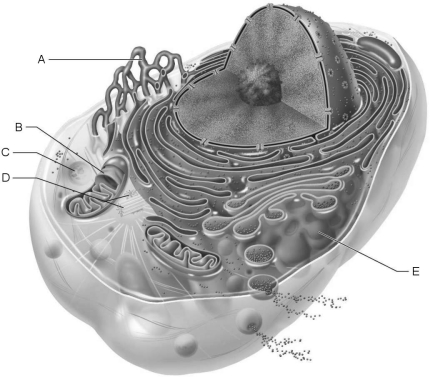 Figure 3.1Using Figure 3.1, match the following:
-Source of cell autolysis.
Figure 3.1Using Figure 3.1, match the following:
-Source of cell autolysis. (Short Answer)
4.9/5 (90)
(90) Once solid material is phagocytized and taken into a vacuole, which of the following statements best describes what happens?
(Multiple Choice)
4.8/5 (75)
(75) 
Filters
- Essay(0)
- Multiple Choice(0)
- Short Answer(0)
- True False(0)
- Matching(0)