



 Chat with AI
Exam 3: Cells: the Living Units

Exam 1: The Human Body: an Orientation100 Questions
Exam 2: Chemistry Comes Alive120 Questions
Exam 3: Cells: the Living Units119 Questions
Exam 4: Tissue: the Living Fabric97 Questions
Exam 5: The Integumentary System107 Questions
Exam 6: Bones and Skeletal Tissues94 Questions
Exam 7: The Skeleton102 Questions
Exam 8: Joints105 Questions
Exam 9: Muscles and Muscle Tissue109 Questions
Exam 10: The Muscular System109 Questions
Exam 11: Fundamentals of the Nervous System and Nervous Tissue95 Questions
Exam 12: The Central Nervous System132 Questions
Exam 13: The Peripheral Nervous System and Reflex Activity97 Questions
Exam 14: The Autonomic Nervous System96 Questions
Exam 15: The Special Senses127 Questions
Exam 16: The Endocrine System119 Questions
Exam 17: Blood99 Questions
Exam 18: The Cardiovascular System: the Heart94 Questions
Exam 19: The Cardiovascular System: Blood Vessels107 Questions
Exam 20: The Lymphatic System and Lymphoid Organs and Tissues95 Questions
Exam 21: The Immune System: Innate and Adaptive Body Defensives118 Questions
Exam 22: The Respiratory System120 Questions
Exam 23: The Digestive System145 Questions
Exam 24: Nutrition, Metabolism, and Body Temperature Regulation114 Questions
Exam 25: The Urinary System116 Questions
Exam 26: Fluid, Electrolyte, and Acid-Base Balance94 Questions
Exam 27: The Reproductive System126 Questions
Exam 28: Pregnancy and Human Development97 Questions
Exam 29: Heredity90 Questions
Select questions type


The orderly sequence of the phases of mitosis is prophase, metaphase, anaphase, and telophase.
(True/False)
4.9/5  (87)
(87) Apoptosis is programmed cell suicide; cancer cells do not undergo this process.
(True/False)
4.9/5 (68)
(68) 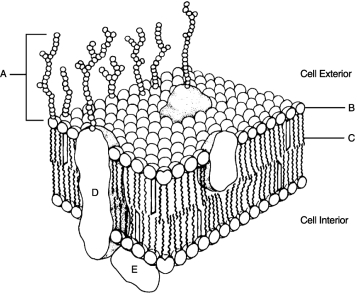 Figure 3.2Using Figure 3.2, match the following:
-In order for the DNA molecule to get "short and fat" to become a chromosome, it must first wrap around small molecules called .
Figure 3.2Using Figure 3.2, match the following:
-In order for the DNA molecule to get "short and fat" to become a chromosome, it must first wrap around small molecules called . (Short Answer)
4.9/5 (93)
(93) Microtubules are hollow tubes made of subunits of the protein tubulin.
(True/False)
4.8/5 (80)
(80) Telomeres are the regions of chromosomes that code for the protein ubiquitin.
(True/False)
4.8/5 (78)
(78) Which of the following is NOT a role of cell adhesion molecules:
(Multiple Choice)
4.9/5 (76)
(76) 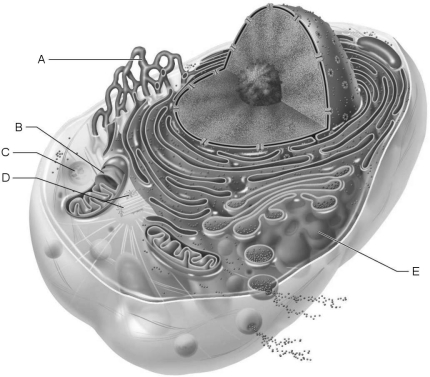 Figure 3.1Using Figure 3.1, match the following:
-Are Brownian motion, diffusion, and osmosis seen only in living tissue?
Figure 3.1Using Figure 3.1, match the following:
-Are Brownian motion, diffusion, and osmosis seen only in living tissue? (Essay)
4.9/5 (79)
(79) The process of discharging particles from inside a cell to the outside is called _ .
(Short Answer)
4.9/5 (87)
(87) Nitric oxide is known to be the first gas to act as a biological messenger.
(True/False)
4.7/5 (77)
(77) 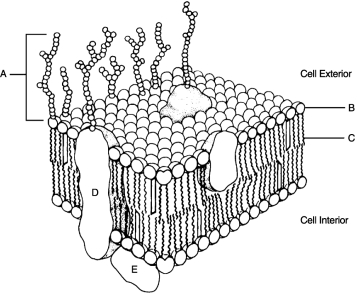 Figure 3.2Using Figure 3.2, match the following:
-are hollow tubes made of spherical protein subunits called tubulins.
Figure 3.2Using Figure 3.2, match the following:
-are hollow tubes made of spherical protein subunits called tubulins. (Short Answer)
4.8/5 (90)
(90) What factors contribute to the fragility of the lysosome and subsequent cell autolysis?
(Essay)
4.9/5 (73)
(73) 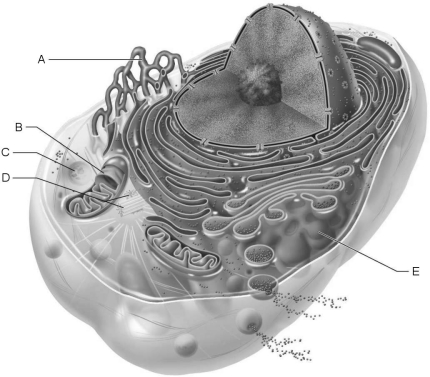 Figure 3.1Using Figure 3.1, match the following:
-Site of enzymatic breakdown of phagocytized material.
Figure 3.1Using Figure 3.1, match the following:
-Site of enzymatic breakdown of phagocytized material. (Short Answer)
4.8/5 (81)
(81) Figure 3.2Using Figure 3.2, match the following:
-Why are free radicals so dangerous to cells, and how are they dealt with by the body?
Figure 3.2Using Figure 3.2, match the following:
-Why are free radicals so dangerous to cells, and how are they dealt with by the body? (Essay)
4.8/5 (61)
(61) 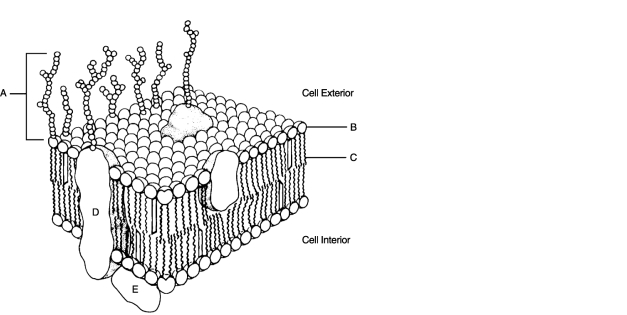 Figure 3.2Using Figure 3.2, match the following:
-What processes maintain a steady state "resting" membrane potential?
Figure 3.2Using Figure 3.2, match the following:
-What processes maintain a steady state "resting" membrane potential? (Essay)
4.8/5 (75)
(75) Most organelles are bounded by a membrane that is quite different in structure from the lipid bilayer of the plasma membrane.
(True/False)
4.9/5 (87)
(87) Concentration differences cause ionic imbalances that polarize the cell membrane, and active transport processes.
(True/False)
4.8/5 (77)
(77) 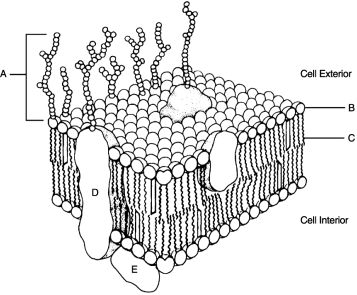 Figure 3.2Using Figure 3.2, match the following:
-Integral protein.
Figure 3.2Using Figure 3.2, match the following:
-Integral protein. (Short Answer)
4.8/5 (70)
(70) 
Filters
- Essay(0)
- Multiple Choice(0)
- Short Answer(0)
- True False(0)
- Matching(0)