



 Chat with AI
Exam 18: The History of Life

Exam 1: An Introduction to Life on Earth85 Questions
Exam 2: Atoms, Molecules, and Life90 Questions
Exam 3: Biological Molecules98 Questions
Exam 4: Cell Structure and Function90 Questions
Exam 5: Cell Membrane Structure and Function95 Questions
Exam 6: Energy Flow in the Life of a Cell90 Questions
Exam 7: Capturing Solar Energy: Photosynthesis102 Questions
Exam 8: Harvesting Energy: Glycolysis and Cellular Respiration97 Questions
Exam 9: Cellular Reproduction133 Questions
Exam 10: Meiosis: the Basis of Sexual Reproduction103 Questions
Exam 11: Patterns of Inheritance98 Questions
Exam 12: Dna: the Molecule of Heredity97 Questions
Exam 13: Gene Expression and Regulation93 Questions
Exam 14: Biotechnology91 Questions
Exam 15: Principles of Evolution97 Questions
Exam 16: How Populations Evolve109 Questions
Exam 17: The Origin of Species89 Questions
Exam 18: The History of Life125 Questions
Exam 19: Systematics: Seeking Order Amid Diversity90 Questions
Exam 20: The Diversity of Prokaryotes and Viruses97 Questions
Exam 21: The Diversity of Protists102 Questions
Exam 22: The Diversity of Plants115 Questions
Exam 23: The Diversity of Fungi107 Questions
Exam 24: Animal Diversity I: Invertebrates101 Questions
Exam 25: Animal Diversity II: Vertebrates118 Questions
Exam 26: Animal Behavior116 Questions
Exam 27: Population Growth and Regulation114 Questions
Exam 28: Community Interactions125 Questions
Exam 29: Energy Flow and Nutrient Cycling in Ecosystems122 Questions
Exam 30: Earths Diverse Ecosystems126 Questions
Exam 31: Conserving Earths Biodiversity109 Questions
Exam 32: Homeostasis and the Organization of the Animal Body95 Questions
Exam 33: Circulation89 Questions
Exam 34: Respiration92 Questions
Exam 35: Nutrition and Digestion91 Questions
Exam 36: The Urinary System99 Questions
Exam 37: Defenses Against Disease104 Questions
Exam 38: Chemical Control of the Animal Body: the Endocrine System133 Questions
Exam 39: The Nervous System118 Questions
Exam 40: The Senses94 Questions
Exam 41: Action and Support: the Muscles and Skeleton90 Questions
Exam 42: Animal Reproduction120 Questions
Exam 43: Animal Development122 Questions
Exam 44: Plant Anatomy and Nutrient Transport95 Questions
Exam 45: Plant Reproduction and Development90 Questions
Exam 46: Plant Responses to the Environment87 Questions
Select questions type


Miller and Urey's experiments attempting to re- create the prebiotic environment produced prokaryotic cells.
(True/False)
4.8/5  (72)
(72) Miller and Urey's experiments attempting to re- create the prebiotic environment produced a rich mixture of complex organic chemicals from simple chemicals.
(True/False)
4.8/5 (76)
(76) If you open a can of chicken noodle soup and immediately examine it microscopically, you will find no microorganisms. If you let the open can sit on the shelf for a few weeks and then examine it, you will find many microorganisms. The origin of these microorganisms is most likely
(Multiple Choice)
4.8/5 (84)
(84) One advantage that enabled the seed plants to greatly surpass the ferns in colonizing the land was the evolution of
(Multiple Choice)
4.9/5 (68)
(68) All the life- forms found in the Silurian fossil record are still alive today.
(True/False)
4.8/5 (77)
(77) Arthropods were able to move onto land because their _ prevented dehydration and provided support.
(Short Answer)
4.8/5 (82)
(82) 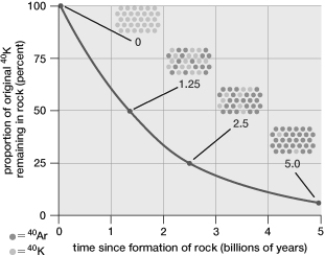 -The figure illustrates
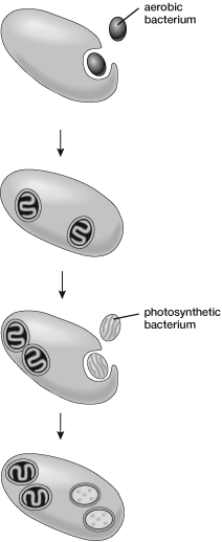
About 530 million years ago, what adaptation evolved to make fish the dominant predators of the sea?
(Multiple Choice)
4.9/5 (76)
(76) The scientists usually given credit for disproving the theory of spontaneous generation of bacteria are
(Multiple Choice)
4.9/5 (86)
(86) Oxygen has a negative influence on the formation of complex organic molecules because it _ with them and changes their structure.
(Short Answer)
4.9/5 (69)
(69) Which is the correct series of events in the evolution of life on Earth?
(Multiple Choice)
4.7/5 (74)
(74) The "pre- adaptations" of early arthropods that allowed them to evolve into terrestrial forms were
(Multiple Choice)
4.8/5 (76)
(76) Based on current knowledge about the conditions of early Earth, the first organisms were most likely
(Multiple Choice)
5.0/5 (84)
(84) Explain why an organism that carries on aerobic metabolism has an advantage over an organism that uses anaerobic metabolism.
(Essay)
4.8/5 (71)
(71) Ferns and club mosses had an advantage over earlier plants because they developed
(Multiple Choice)
4.8/5 (71)
(71) The largest mass extinction event of all time occurred at the end of the
(Multiple Choice)
4.8/5 (81)
(81) What adaptations did ancient algae have to make as they washed ashore and evolved into land plants?
(Essay)
4.9/5 (79)
(79) Arthropods were the first terrestrial animals because their exoskeletons allowed them to withstand
(Multiple Choice)
4.7/5 (77)
(77) 
Filters
- Essay(0)
- Multiple Choice(0)
- Short Answer(0)
- True False(0)
- Matching(0)