



 Chat with AI
Exam 21: The Diversity of Protists

Exam 1: An Introduction to Life on Earth85 Questions
Exam 2: Atoms, Molecules, and Life90 Questions
Exam 3: Biological Molecules98 Questions
Exam 4: Cell Structure and Function90 Questions
Exam 5: Cell Membrane Structure and Function95 Questions
Exam 6: Energy Flow in the Life of a Cell90 Questions
Exam 7: Capturing Solar Energy: Photosynthesis102 Questions
Exam 8: Harvesting Energy: Glycolysis and Cellular Respiration97 Questions
Exam 9: Cellular Reproduction133 Questions
Exam 10: Meiosis: the Basis of Sexual Reproduction103 Questions
Exam 11: Patterns of Inheritance98 Questions
Exam 12: Dna: the Molecule of Heredity97 Questions
Exam 13: Gene Expression and Regulation93 Questions
Exam 14: Biotechnology91 Questions
Exam 15: Principles of Evolution97 Questions
Exam 16: How Populations Evolve109 Questions
Exam 17: The Origin of Species89 Questions
Exam 18: The History of Life125 Questions
Exam 19: Systematics: Seeking Order Amid Diversity90 Questions
Exam 20: The Diversity of Prokaryotes and Viruses97 Questions
Exam 21: The Diversity of Protists102 Questions
Exam 22: The Diversity of Plants115 Questions
Exam 23: The Diversity of Fungi107 Questions
Exam 24: Animal Diversity I: Invertebrates101 Questions
Exam 25: Animal Diversity II: Vertebrates118 Questions
Exam 26: Animal Behavior116 Questions
Exam 27: Population Growth and Regulation114 Questions
Exam 28: Community Interactions125 Questions
Exam 29: Energy Flow and Nutrient Cycling in Ecosystems122 Questions
Exam 30: Earths Diverse Ecosystems126 Questions
Exam 31: Conserving Earths Biodiversity109 Questions
Exam 32: Homeostasis and the Organization of the Animal Body95 Questions
Exam 33: Circulation89 Questions
Exam 34: Respiration92 Questions
Exam 35: Nutrition and Digestion91 Questions
Exam 36: The Urinary System99 Questions
Exam 37: Defenses Against Disease104 Questions
Exam 38: Chemical Control of the Animal Body: the Endocrine System133 Questions
Exam 39: The Nervous System118 Questions
Exam 40: The Senses94 Questions
Exam 41: Action and Support: the Muscles and Skeleton90 Questions
Exam 42: Animal Reproduction120 Questions
Exam 43: Animal Development122 Questions
Exam 44: Plant Anatomy and Nutrient Transport95 Questions
Exam 45: Plant Reproduction and Development90 Questions
Exam 46: Plant Responses to the Environment87 Questions
Select questions type


When a red tide occurs, huge numbers of microscopic organisms are filtered out of coastal waters by oysters and clams. This sometimes causes the shellfish to become toxic to people who eat them. The organisms that create the red tide are classified as

Free
(Multiple Choice)
4.8/5  (77)
(77) Correct Answer: Verified
B
Free- floating, photosynthetic, unicellular protists include
Free
(Multiple Choice)
5.0/5 (78)
(78) Correct Answer:Verified
VerifiedD
A parasitic protist that presents a major health problem to backpackers and hikers if they drink unfiltered stream or lake water is
Free
(Multiple Choice)
4.8/5 (78)
(78) Correct Answer:Verified
VerifiedB
Both Trichomonas and Giardia are parasitic protists in the group called
(Multiple Choice)
5.0/5 (74)
(74) While exploring a newly exposed shoreline, you find a new protist. It appears to be multicellular, it uses carbon dioxide from the air to carry out photosynthesis, and its chloroplasts closely resemble those of ferns and grasses. This organism is most likely to belong to the group
(Multiple Choice)
4.9/5 (88)
(88) Which of the following is the parasite apicomplexans that causes malaria if it infects a human host?
(Multiple Choice)
4.8/5 (78)
(78) 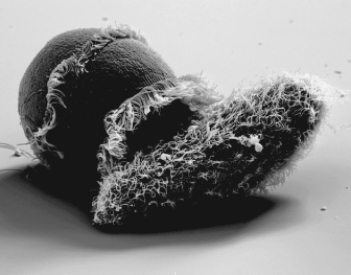
A _ forms when an acellular slime mold is exposed to dry conditions or starvation.
(Multiple Choice)
4.9/5 (84)
(84) The way that Giardia normally infects a host is when the host ingests _ in contaminated water.
(Short Answer)
4.9/5 (69)
(69) Which group comprises a significant portion of phytoplankton and therefore is important to marine food webs?
(Multiple Choice)
4.9/5 (86)
(86) The coral that make up a tropical coral reef can survive only in clear, well- lit waters because of the symbiotic, photosynthetic that live within the tissues of the coral.
(Short Answer)
4.9/5 (77)
(77) Which protist group includes organisms that can reach heights of hundreds of feet and grow more than half a foot per day?
(Multiple Choice)
4.8/5 (84)
(84) Which protozoan group consists entirely of parasitic forms?
(Multiple Choice)
4.9/5 (65)
(65) The oomycete that nearly destroyed the French wine industry in the late 1870s was
(Multiple Choice)
4.8/5 (80)
(80) Both Didinium and Paramecium are protists in the group called
(Multiple Choice)
4.7/5 (86)
(86) 
Filters
- Essay(0)
- Multiple Choice(0)
- Short Answer(0)
- True False(0)
- Matching(0)